
Custom Printed Die-Cut Mylar Bags for Cannabis Products
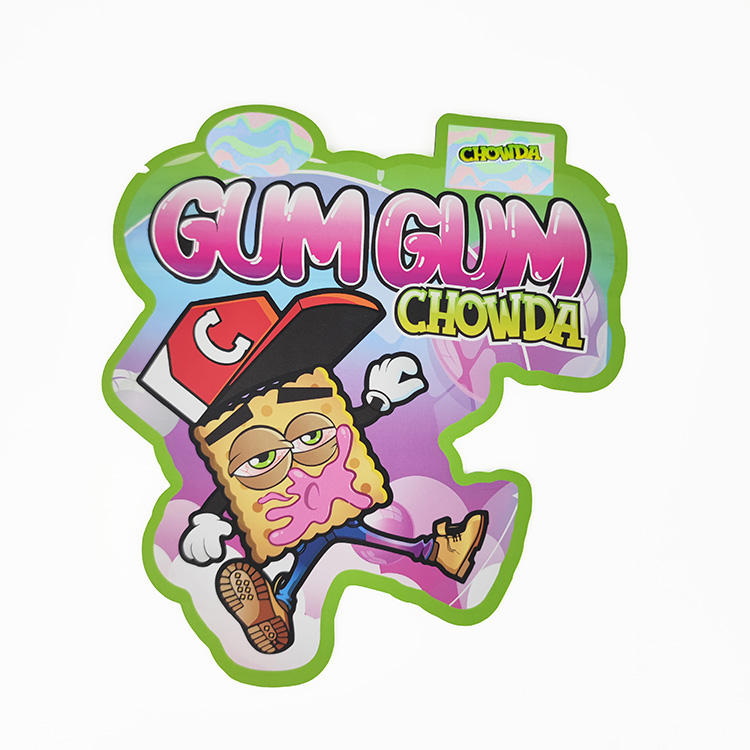
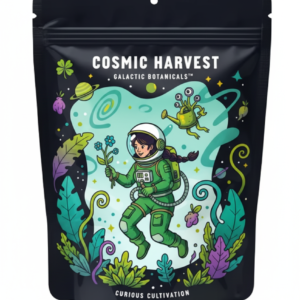
Custom printed die-cut Mylar bags are flexible packaging pouches produced with a specified cut profile or die-cut feature and brand-specific graphics. They can be configured for cannabis flower, edibles, pre-rolls, or other appropriately sized products, subject to the selected laminate, pouch geometry, closure, and destination-market requirements. This format is relevant to cannabis brands, private-label programs, distributors, wholesalers, and multi-SKU buyers seeking packaging that differs visually from a conventional rectangular bag.
Product Specifications
| Product | Custom printed die-cut Mylar bags |
|---|---|
| Packaging format | Flexible pouch with a custom die-cut profile or feature; final dieline must be confirmed |
| Material | Flexible laminate sold under the Mylar bag category; exact film layers and thickness require specification |
| Printing | Custom printed; printing method, color requirements, artwork limits, and color references must be confirmed |
| Intended contents | May be configured for cannabis flower, pre-rolls, edibles, or related products after compatibility review |
| Closure | Zipper, heat-seal area, tear notch, or other closure features may be specified where compatible with the pouch shape |
| Barrier performance | Depends on the complete laminate, seals, closure, and storage conditions |
| Dimensions and capacity | Buyer confirmation required based on the product, fill weight, density, headspace, and die-cut geometry |
| Finish | Surface appearance and finish are subject to the selected substrate and print specification |
| Compliance | Destination market, labeling, child-resistance, and product-contact requirements must be identified before quotation |
Match the Die-Cut Shape to the Packaged Product
Die-cut cannabis packaging pouches should be specified around the physical product rather than a nominal fill weight alone. Cannabis flower varies in density and needs sufficient usable volume and headspace so the zipper and top seal are not obstructed. Pre-roll packaging must account for stick length, diameter, internal movement, and potential crush exposure. Edible packaging may require consideration of moisture, grease, serving information, and product-contact requirements.
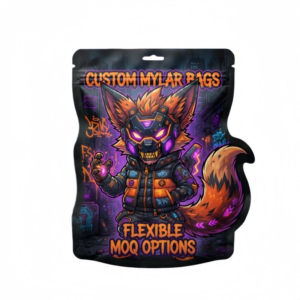
A distinctive outer silhouette can support brand recognition, but the cut shape reduces or redistributes usable internal area. Narrow sections, corners, and curved edges may limit filling access or create less room for graphics and mandatory text. Buyers should evaluate the actual internal fill area, opening position, seal width, and product removal path from the final dieline rather than relying only on the maximum outside dimensions.
Laminate, Aroma Control, and Seal Performance
The term Mylar bag is commonly used for flexible barrier packaging, but it does not identify one universal laminate. A custom printed flexible Mylar packaging structure can be configured with different film layers depending on the required stiffness, puncture resistance, heat sealability, opacity, and moisture or oxygen protection. The exact layer composition and thickness should be agreed during specification.
For cannabis flower, an appropriate barrier structure and properly formed seals can help contain aroma and reduce exposure to external moisture and oxygen. These results depend on the entire package system, including the laminate, zipper, perimeter seals, top seal, and storage conditions. Metallic appearance, matte finish, holographic graphics, or kraft-style artwork does not by itself establish barrier performance. If a clear window is requested, product visibility must be balanced against reduced light protection in that area.
Closure and Filling Decisions
A resealable zipper provides convenient repeated access, but an ordinary zipper must not be represented as child-resistant. If child-resistant packaging is required, the buyer should request a closure or package format intended for that purpose and confirm the testing, documentation, labeling, and market rules applicable to the finished package. The requirement should be defined before the die line and artwork are approved.
A heat-seal area above the zipper may provide tamper evidence when correctly sealed with compatible equipment and settings. Tear notches can help users open the sealed section, although their placement must work with the die-cut profile. Manual filling, semi-automatic filling, and automated filling can require different opening widths, pouch stiffness, orientation, and seal areas, so the planned filling method belongs in the RFQ.
Custom Printing and Multi-SKU Artwork
Custom printing can place logos, strain names, product identifiers, warnings, instructions, and other required information directly on the pouch. Available colors, white ink, metallic effects, varnishes, and finish options depend on the printing process and substrate. Artwork must follow the approved dieline, including seal zones, zipper areas, notches, curved edges, and any non-printable tolerances.
Private-label multi-SKU cannabis bags benefit from a controlled artwork system. A shared layout can preserve logo position, typography, warning areas, and color standards while variable graphics distinguish strains, flavors, strengths, or product categories. Buyers should identify the total quantity and quantity per artwork version because multiple designs may affect production planning and quotation.
Product-Specific Trade-Offs
Shaped weed bags offer stronger shelf differentiation than standard rectangular pouches, but the custom contour can sacrifice internal volume, print space, filling speed, or stacking efficiency. A highly detailed profile may also place more constraints on seal geometry than a simple shape. The best design is therefore not necessarily the most complex outline; it is the profile that protects the product, accommodates required information, fills reliably, and remains recognizable across the intended SKU range.
Compliance and Preproduction Review
Cannabis packaging rules vary by destination market and product category. Before production, buyers should identify applicable requirements for child resistance, tamper evidence, opacity, warning symbols, language, product-contact suitability, serving information, and restricted imagery. Packaging artwork alone does not establish compliance, and requirements for flower may differ from those for edibles or pre-rolls.
A preproduction review should cover the dieline, artwork orientation, barcode placement if supplied by the buyer, closure operation, fill fit, seal position, and finished appearance. Physical product dimensions or representative contents are more useful than fill weight alone when validating capacity.
Frequently Asked Questions
Does a stated cannabis fill weight determine the bag size?
No. Flower density, edible shape, pre-roll dimensions, required headspace, and the usable area inside the die-cut profile all affect the required pouch dimensions.
Are these die-cut bags automatically smell proof?
No permanent smell-proof claim should be assumed. An appropriate laminate and properly formed seals can help contain aroma, but performance depends on the complete structure, closure, sealing process, storage, and use.
Is a standard resealable zipper child-resistant?
No. A conventional resealable zipper is not automatically a tested child-resistant closure. Child-resistant requirements and supporting documentation must be specified for the destination market.
Can the same pouch design support multiple strains or SKUs?
Yes, a coordinated layout may be adapted for multiple artwork versions, subject to printing requirements and production planning. Provide the quantity for each strain, flavor, or SKU when requesting a quotation.
What should be checked before approving the die line?
Confirm external and usable internal dimensions, opening position, seal geometry, zipper and notch placement, artwork boundaries, filling access, product removal, and space for required labeling.
Request a B2B Quotation
For an accurate wholesale die-cut pouch supplier review, provide the packaged contents, fill weight and actual product dimensions, desired pouch dimensions or shape concept, total quantity, quantity per artwork version, preferred laminate or barrier objective, closure, finish, filling method, and destination market. Include any child-resistance, tamper-evidence, product-contact, labeling, or other compliance needs so the proposed structure and dieline can be evaluated before production.
Reviews
There are no reviews yet.