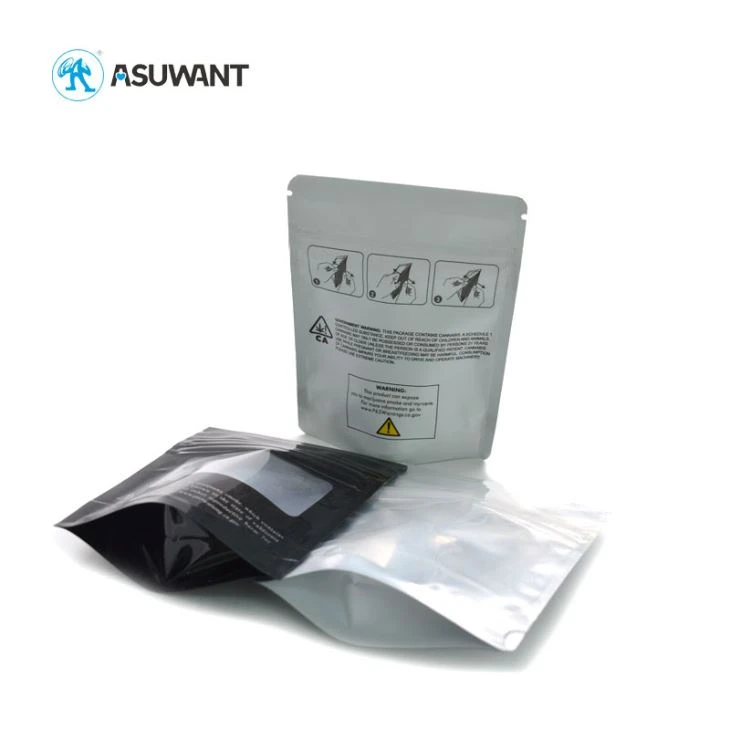
Opening Action
The closure uses a deliberate motion or sequence that is more complex than an ordinary easy-open pouch.
Child resistant packaging
Child resistant packaging is not just a special zipper. It is a complete opening system that has to work with the pouch construction, adult-use instructions and the requirements of the target market.
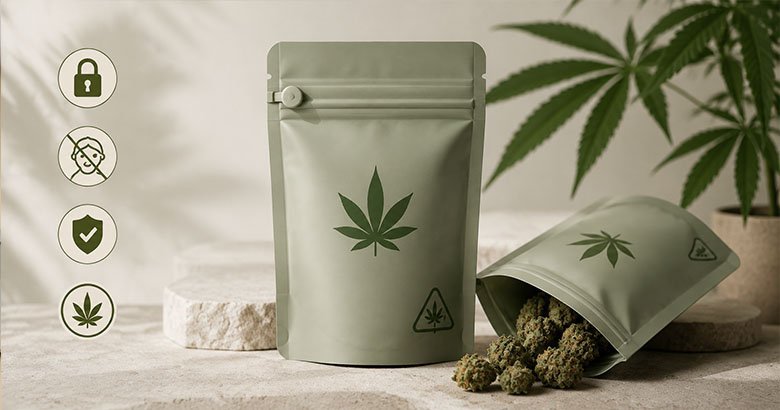
How it works
A child-resistant feature is intended to make access significantly difficult for young children while remaining usable by adults. The requirement applies to the package system and its tested configuration, not to a generic material name.
The closure uses a deliberate motion or sequence that is more complex than an ordinary easy-open pouch.
The package still needs to be usable and, where applicable, resecured correctly by adults.
Closure, pouch dimensions, seal area and instructions can all affect how the opening system performs.
Opening options
Flexible packaging can use several child-resistant closure options. The correct mechanism depends on whether the package is reclosable or single-use and how the intended adult user will open it.

Reclosable option
Requires more than a simple pull-apart motion before the zipper can be opened.
Package testing
Changing the pouch around a tested closure can change the way the system opens. Keep the final construction aligned with the configuration supported by the applicable evidence.
A wider or narrower pouch can change how the consumer holds and opens the package.
Top seals, tear features and surrounding film should not create an unintended easy-access path.
The laminate can influence how the opening mechanism flexes and how much grip is available.
Position and converting consistency matter because the CR feature must work the same way across production.
Adult usability
A controlled-access package still needs to work for the intended adult user. Opening instructions and repeated reclosure should be considered before the pouch graphics are finalized.
Use concise diagrams or wording where the opening action is not obvious.
Show the action at the point of use.For reclosable systems, the user should understand how to return the package to the intended closed position.
Check repeated opening and reclosure.Do not add a tear path or opening aid that defeats the intended child-resistant action.
Plan artwork around the opening and seal areas.PPPA testing
For PPPA special packaging in the United States, the test protocol evaluates both child resistance and adult usability. The purpose is not to make a package impossible to open, but to make it significantly difficult for young children while remaining usable by adults.
CPSC states that at least 85% of tested children must not be able to open the package during the first five minutes.
At least 80% of tested children must not open the package during the full ten-minute test.
At least 90% of adults must be able to open the package within five minutes.
For reclosable designs, adult testing also evaluates whether the package can be properly resecured.
Important: CPSC does not approve, certify or endorse specific package designs. The finished-product manufacturer is responsible for confirming the applicable requirements and supporting evidence.
View CPSC guidanceIt refers to packaging intended to be significantly difficult for young children to open while remaining usable by adults under the applicable test framework.
No. Child resistance depends on the complete finished package, so the closure, pouch dimensions and construction must work together.
No. CPSC states that it does not approve, certify or endorse specific package designs.
U.S. PPPA testing includes adult-use criteria because special packaging must remain practical for adults as well as difficult for young children.
Request a quote
Send the target market, package requirement, opening system, quantity and any existing test reference. We can recommend a suitable pouch configuration and sample option for custom production from 100 pcs.