
Custom 3.5g Shaped Cali Mylar Bags for Cookie Storage
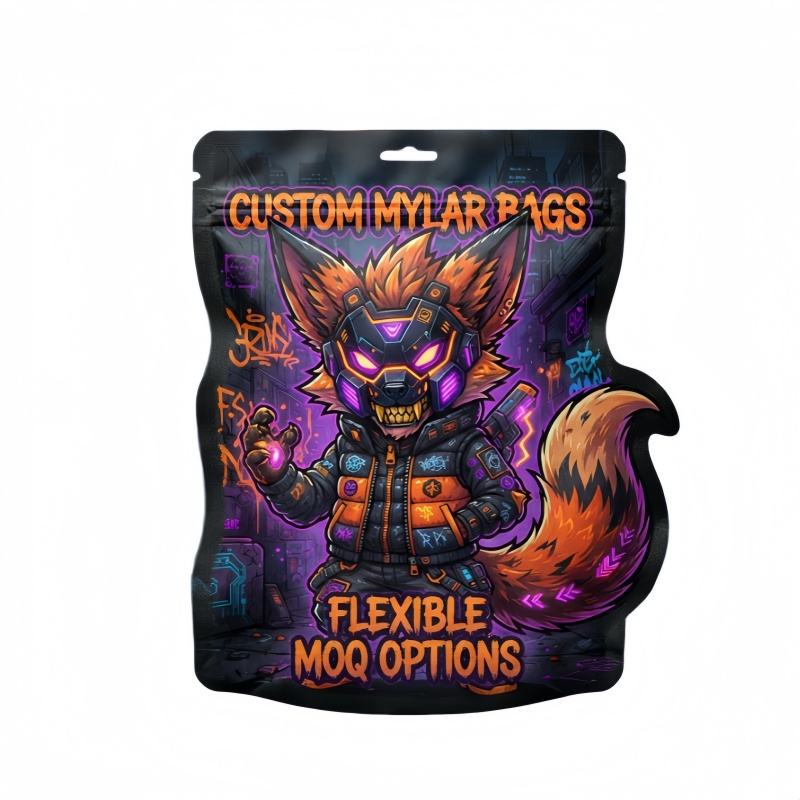
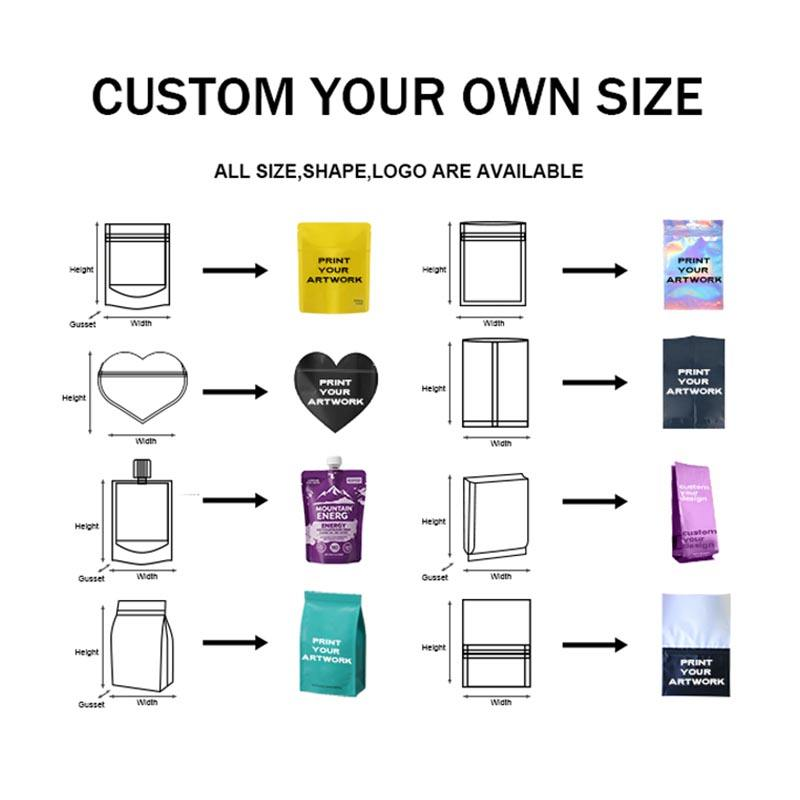
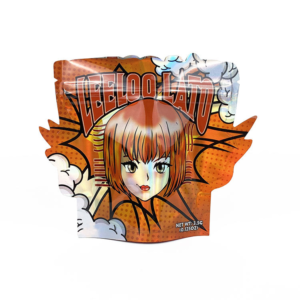
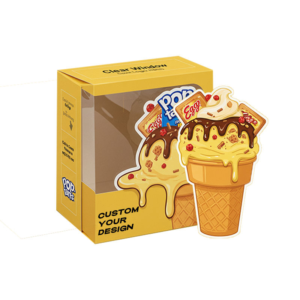
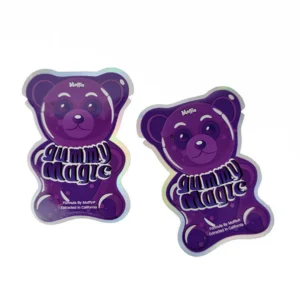
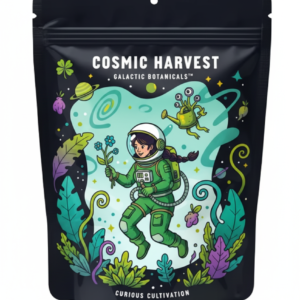
Custom 3.5g shaped Cali Mylar bags are flexible pouches made for storing and presenting a 3.5g cookie portion in distinctive, brand-specific packaging. Their defining feature is the shaped pouch format, which replaces a conventional rectangular outline with a custom profile. They are relevant to cannabis edible brands, distributors, wholesalers, private-label buyers, and multi-SKU programs that need the package shape and artwork to support product differentiation. Final dimensions, laminate, closure, seal geometry, and regulatory details must be matched to the actual cookie and destination market.
Product Specifications
| Product type | Custom shaped flexible Cali-style bag |
|---|---|
| Stated fill weight | 3.5g |
| Intended use | Cookie storage |
| Material description | Mylar flexible film or laminate; the complete layer structure requires buyer confirmation |
| Pouch dimensions | Must be established from the cookie dimensions, usable internal area, headspace, and selected die line |
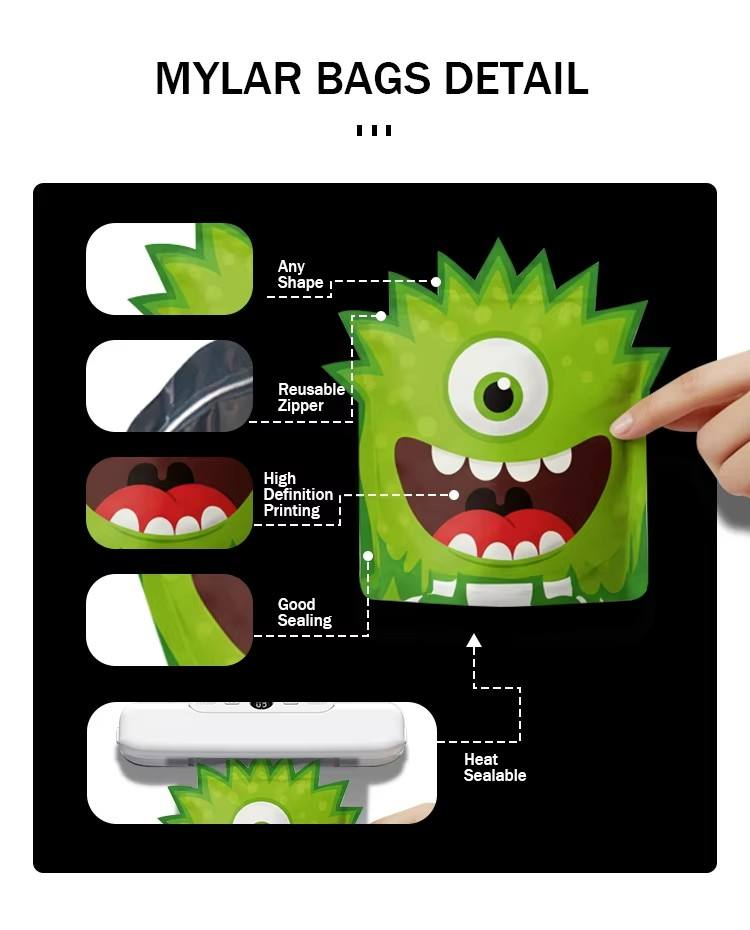
| Closure | To be specified; zipper and final heat-seal requirements depend on the selected configuration |
| Printing and finish | Custom artwork and finish can be specified subject to the substrate, print process, and shaped die line |
| Barrier performance | Depends on the complete laminate, seals, closure, storage conditions, and filling process |
| Compliance status | Buyer must confirm food-contact, cannabis-packaging, labeling, and child-resistant requirements for the destination market |
Fit, Capacity, and Cookie Protection
A stated 3.5g fill weight does not define one universal pouch size. Cookies with the same weight can differ in diameter, thickness, density, coating, and fragility. The RFQ should therefore include the actual cookie dimensions, piece count, orientation, and preferred headspace. A physical product sample or dimensional drawing can help establish whether the proposed shape provides enough usable internal volume.
These 3.5g shaped Mylar cookie storage pouches provide flexible containment, but flexible film does not by itself prevent crushing. A tightly fitted shape may reduce internal movement and excess material, while insufficient clearance can place pressure on a brittle cookie or interfere with sealing. Buyers should evaluate the filled pouch rather than approving dimensions from fill weight alone.
Laminate and Barrier Decisions
“Mylar” is commonly used in packaging searches for polyester-based flexible film, but the name alone does not establish the complete laminate. Depending on the selected structure, the pouch may combine printable, barrier, and heat-sealable layers. Each layer influences stiffness, puncture resistance, seal formation, moisture control, oxygen exposure, aroma retention, and light protection.
Buyers looking for smell resistant Cali bags for cookies should specify the required barrier level rather than assume permanent odor containment. A suitable laminate and correctly formed perimeter and top seals can help contain aroma when properly sealed. Actual performance also depends on the cookie formulation, storage period, temperature, zipper design, seal integrity, and handling. Metallic or opaque structures may improve light protection, while any clear area trades greater product visibility against reduced light shielding.
Shaped Pouch Geometry and Seal Area
The custom outline affects more than shelf appearance. Curves, narrow sections, and detailed contours can reduce usable internal area and constrain the position of artwork, tear features, zippers, and seals. The die line must reserve a continuous perimeter seal while leaving enough space for filling and the cookie itself. The opening should also be wide enough for loading without scraping, bending, or breaking the product.
A more intricate silhouette can create stronger visual recognition, but it may provide less filling clearance than a simpler shape with the same overall dimensions. This is a practical trade-off between branding impact and production efficiency. Before approval, review the die line, maximum artwork area, seal width, opening position, and filled-pouch appearance.
Custom Printing and Multi-SKU Control
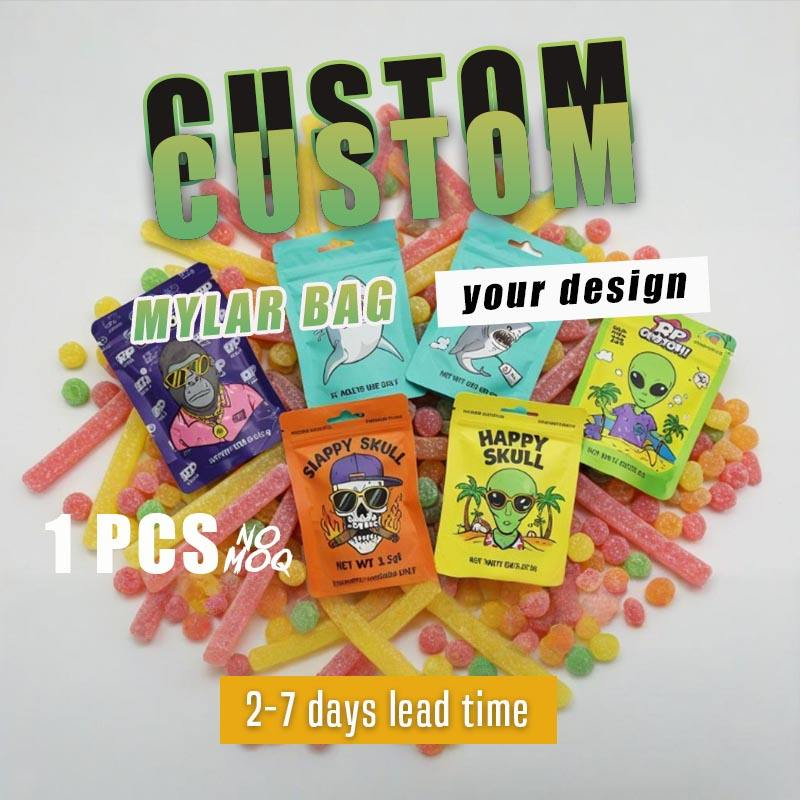
Custom printed shaped cannabis bags can be configured around brand graphics, flavor identification, potency or serving information, warnings, and other required copy. Print feasibility depends on the chosen film, finish, printing process, color expectations, and shape. Fine text and critical symbols should remain inside the approved safe area and away from seals, notches, and tightly curved edges.
For private label multi-SKU cookie pouches, use a controlled master die line across artwork versions whenever the same cookie format permits it. Standardizing the location of logos, net quantity, variable flavor details, warnings, and batch-information areas can reduce inconsistency. Buyers should identify the number of artwork versions and quantity per version because total volume alone does not describe the print program.
Closure, Heat Seal, and Child Resistance
A resealable zipper may be specified when repeated access is appropriate, but an ordinary zipper is not automatically child-resistant. If the packaged cookie is a regulated cannabis edible, the buyer must determine whether the destination market requires a tested child-resistant package, tamper-evident features, or both. Those requirements should be defined before the die line and closure are finalized.
A final heat seal above a zipper can support initial pack integrity and tamper evidence when the material and sealing process are correctly matched. Seal temperature, pressure, dwell time, contamination in the seal area, and the shaped perimeter can all affect results. Tear notches may improve opening convenience but must be positioned without weakening required seals or conflicting with a child-resistant opening system.
Destination-Market and Artwork Review
“Cali” describes useful market language and styling intent; it does not establish California compliance or approval. Cannabis edible rules can vary by jurisdiction and may address child resistance, opacity, resealability, universal symbols, ingredient and allergen statements, serving information, warnings, and variable production data. Food-contact suitability must also be confirmed for the selected film, inks, adhesives, and any direct-contact layer. Regulatory and artwork review remains the buyer’s responsibility for the intended market.
Buyer Questions
Does 3.5g determine the finished bag dimensions?
No. The cookie’s diameter, thickness, density, piece count, orientation, and required headspace must be reviewed before the pouch dimensions and die line are finalized.
Are these bags guaranteed to be smell proof?
No absolute odor claim should be inferred. The selected laminate, closure, heat seals, cookie formulation, storage conditions, and handling determine how effectively the package helps contain aroma.
Can the shaped pouch include a resealable zipper?
A zipper may be configured if the opening width, die line, laminate, and filling method support it. The zipper specification must be confirmed during package development.
Is a standard zipper child-resistant?
No. An ordinary resealable zipper is not automatically a tested child-resistant closure. Any child-resistant requirement must be specified and validated for the destination market.
What should be checked before approving custom artwork?
Check the final die line, safe area, seal zones, opening position, required warnings, variable-data area, color expectations, finish, and the number and quantity of artwork versions.
Request a Product-Specific B2B Quotation
When contacting a wholesale Cali Mylar bag supplier, provide the cookie type, 3.5g fill format, actual product dimensions, piece count, desired pouch dimensions or shape reference, order quantity, and quantity per artwork version. Also identify the required laminate or barrier objective, zipper or heat-seal configuration, finish, filling method, destination market, and applicable food-contact, cannabis-labeling, tamper-evident, or child-resistant needs. These inputs allow the shaped die line, material structure, printing plan, and closure to be evaluated without relying on unsupported assumptions.
Reviews
There are no reviews yet.