
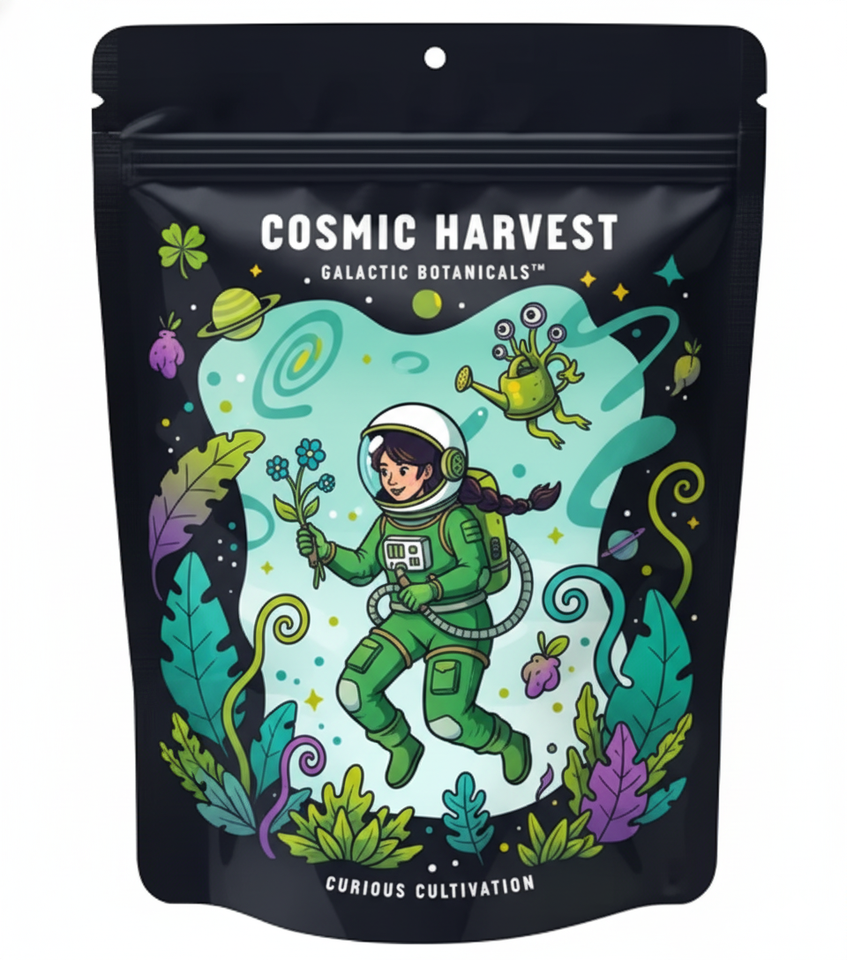
Custom 3.5g Resealable Stand-Up Mylar Pouches for Candy
Custom 3.5g resealable stand-up Mylar pouches are flexible bags intended to package a stated 3.5-gram candy fill while providing a reclosable opening and a bottom gusset that supports upright presentation. They are relevant to candy brands, cannabis-edible businesses, distributors, private-label programs, and wholesale buyers requiring branded packaging. Because candy density, shape, coating, and serving format vary, the 3.5g designation does not establish one universal pouch size.
Product Specifications
| Product type | Custom flexible pouch for candy |
|---|---|
| Stated fill weight | 3.5g; actual fit must be verified with the intended candy |
| Pouch format | Stand-up pouch with a bottom gusset |
| Material description | Mylar; exact film and laminate structure require confirmation |
| Closure | Resealable; the exact closure design must be specified |
| Intended contents | Candy, including cannabis-infused candy where permitted and appropriately specified |
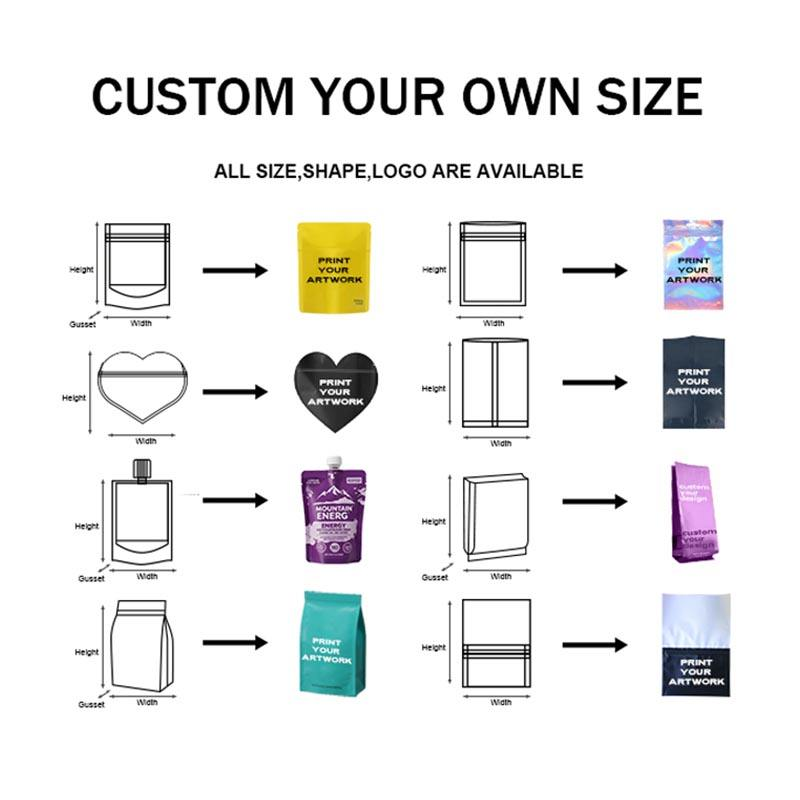
| Customization | Custom configuration; printing method, artwork coverage, colors, finish, and version count are subject to the final specification |
| Dimensions | To be confirmed from product volume, headspace, filling method, and required seal area |
| Barrier performance | Depends on the complete laminate, closure, and heat-seal system |
| Child-resistant status | Not established by the product name; specify and substantiate separately if required |
Laminate Selection and Candy Protection
“Mylar” is commonly used in packaging searches to describe polyester-based flexible packaging, but it does not identify the complete laminate. These 3.5g Mylar candy pouches may be configured with multiple layers selected for printability, stiffness, puncture resistance, barrier performance, and heat sealability. Buyers should confirm the actual film structure rather than relying on appearance or the Mylar label alone.
A suitable laminate can help limit moisture and oxygen transfer, contain aroma, and protect the candy from external odors when the pouch is properly sealed. Performance depends on every layer, the zipper or other reclosure, the perimeter seals, and production sealing conditions. Greasy, acidic, strongly flavored, or moisture-sensitive candy may require a different product-contact layer or barrier specification from dry, uncoated candy.
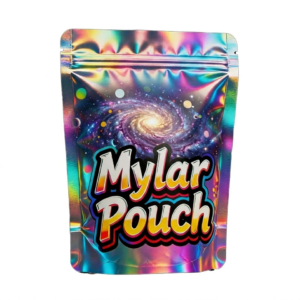
Metallic or opaque structures generally provide more light protection than a clear window. A window improves product visibility but creates a trade-off by reducing light shielding in that area. Matte, gloss, metallic, holographic, or kraft-style appearances do not by themselves establish barrier performance.
Fit, Gusset, and Filling Behavior
The bottom gusset allows these resealable stand-up candy bags to expand as they are filled and can support shelf presentation. Stable standing depends on pouch proportions, gusset geometry, candy distribution, and the filled product’s center of gravity. A very small or irregular candy portion may settle differently from a single dense piece.
Confirm fit with the actual candy rather than weight alone. A 3.5g hard candy, gummy, coated piece, or loose candy format can occupy a different usable volume. The selected dimensions must leave room for the product, required headspace, closure operation, and a clean heat-seal zone. Excess space can make the pack appear underfilled, while insufficient headspace can interfere with filling and sealing.
Resealable Closure Versus Child Resistance
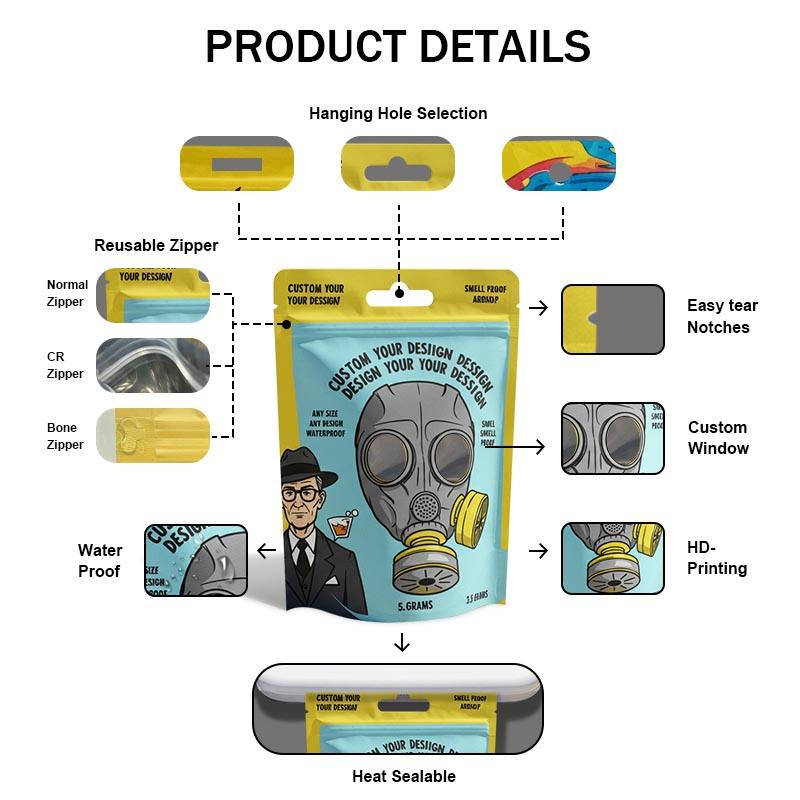
A resealable feature lets the user close the pouch again after opening, but “resealable” does not automatically mean child-resistant. The closure could be a conventional zipper or another reclosure system, subject to the approved specification. If the candy contains cannabis or another regulated ingredient, buyers must determine whether a tested child-resistant format is required in the destination market and request the appropriate documented closure system.
A final top heat seal may provide tamper evidence before first opening when the pouch and packing process are configured for it. Tear notches can support access after sealing, but their position must be coordinated with the top seal and reclosure. Seal temperature, pressure, dwell time, contamination in the seal area, and the filling process all affect package integrity.
Custom Printing and Multi-SKU Programs
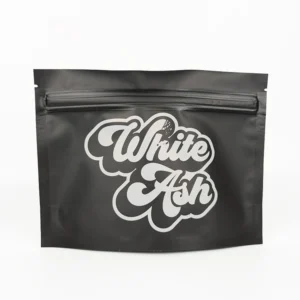
Custom printed edible pouches can be configured around brand graphics, flavor identification, warnings, ingredients, serving information, lot coding space, and other required content. Available printing method, color control, artwork coverage, finish, and substrate effects depend on the final construction and order specification. A dieline should be approved before artwork is finalized because gussets, seals, zipper areas, and tear features are not equivalent to flat printable space.
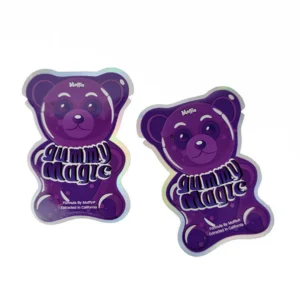
For private-label multi-SKU candy packaging, keep fixed elements such as logo placement, regulatory panels, and coding zones consistent while changing flavor colors, product names, or strain-specific graphics. Buyers should identify every artwork version in the RFQ because total quantity and quantity per design are separate production planning inputs. Metallic films and specialty finishes can alter color appearance, so artwork expectations should be reviewed against the selected substrate.
Food-Contact and Destination-Market Review
Candy packaging must be evaluated for its intended food-contact use. Cannabis-infused candy can also be subject to jurisdiction-specific rules covering child resistance, opacity, warning symbols, required statements, serving information, and restrictions on graphics that may appeal to children. The product name does not establish certification, approval, or compliance for any market.
Before production, the buyer should confirm the candy formulation, direct-contact layer, destination country or state, filling conditions, storage expectations, and applicable packaging rules. Final artwork and technical documentation should be reviewed by the buyer’s qualified compliance team.
Frequently Asked Questions
Does a 3.5g fill weight determine the pouch dimensions?
No. Candy shape, density, piece count, headspace, closure location, and filling method determine the required usable volume, so dimensions should be validated with the actual product.
Are these resealable pouches child-resistant?
Child resistance is not established by a resealable closure or by the product name. A suitable tested closure and supporting documentation must be separately specified when required.
Are Mylar candy pouches smell proof?
No permanent smell-proof guarantee should be assumed. A suitable laminate and properly formed seals can help contain aroma, but performance depends on the complete structure, closure, sealing process, and storage conditions.
Can several flavors or artwork versions use the same pouch format?
Yes, a multi-SKU program can be configured around a shared pouch format, subject to artwork review, printing capabilities, and the confirmed quantity for each version.
What information is needed for an accurate RFQ?
Provide the candy type, 3.5g fill format, product dimensions or sample details, desired pouch dimensions, total quantity, quantity per artwork, laminate or barrier needs, closure, finish, filling method, destination market, and compliance requirements.
Request a Product-Specific B2B Quotation
For an RFQ, submit the intended candy, whether it is conventional or cannabis-infused, actual product dimensions and density where available, required headspace, pouch dimensions, order quantity, artwork-version breakdown, preferred appearance, barrier priorities, resealable or child-resistant closure requirement, filling method, and destination market. These inputs allow the laminate, gusset, seal geometry, printable area, and closure specification to be evaluated for your 3.5g format before production.
Reviews
There are no reviews yet.