
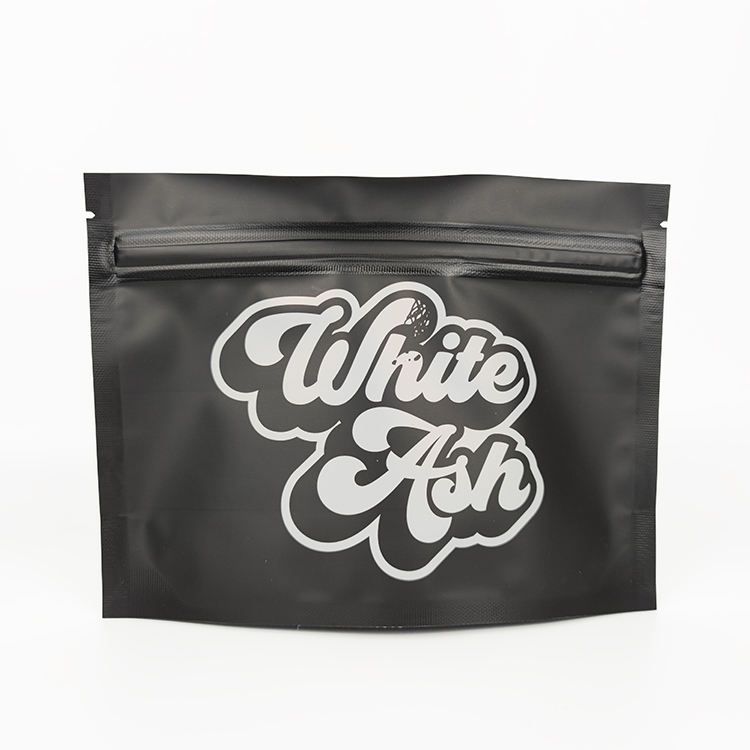
8×6 Matte Resealable Aluminum Foil Bags for Edible Packaging
8×6 matte resealable aluminum foil bags are flexible exit-style packages intended for cannabis edibles and related packaged goods. Their defining attributes are the stated 8×6 format, matte appearance, foil-based construction and resealable closure. They are relevant to cannabis brands, edible manufacturers, distributors, wholesalers, private-label programs and multi-SKU buyers that need compact packaging with space for branding, product information and market-required warnings.
The 8×6 designation does not provide the unit of measurement, orientation, seal width or usable internal dimensions. Those details must be confirmed before artwork, filling trials or production. Likewise, “resealable” does not automatically mean child-resistant. The exact closure and any required child-resistant performance must be specified and validated for the destination market.
Product Specifications
| Specification | Current product information |
|---|---|
| Product type | Exit-style flexible bags for edible packaging |
| Nominal format | 8×6; measurement unit, orientation and finished tolerances require confirmation |
| Material | Aluminum foil-based construction; complete laminate structure requires confirmation |
| Appearance | Matte |
| Closure | Resealable; exact closure design and child-resistant status require confirmation |
| Intended contents | Cannabis edibles or other suitable packaged goods |
| Pouch configuration | Final pouch style, gusset, opening position and seal geometry require confirmation |
| Printing | Custom printing may be configured subject to artwork, substrate and production specifications |
| Barrier performance | Depends on the complete laminate, seals and closure system; target requirements must be defined |
| Compliance | Food-contact, cannabis packaging, labeling and child-resistant requirements must be evaluated for the destination market |
Foil Structure and Edible Protection
Aluminum foil edible packaging bags can be specified to help limit exposure to light, moisture and oxygen. These factors matter because gummies, chocolates, baked products and other edibles can respond differently to humidity, grease, heat and oxygen. The foil layer may provide strong light-blocking and barrier properties, but performance cannot be determined from the metallic material description alone.
The complete laminate controls stiffness, puncture resistance, sealability and barrier performance. Depending on the selected structure, the package may include outer printing, barrier and inner sealant layers. The product formulation, expected shelf life, distribution conditions and filling process should guide that selection. Barrier values, food-contact suitability and seal performance should be confirmed through supplier documentation and appropriate testing rather than assumed.
Resealable Closure, Heat Seal and Exit-Bag Use
Resealable exit bags for cannabis edibles can support repeated opening and closing after the consumer breaks the initial package seal. A resealable feature may help contain aroma and protect the remaining portions when it is properly closed, but it is not a permanent odor-proof guarantee.
The closure must be defined during quotation. An ordinary press-to-close zipper or other resealable mechanism is not equivalent to a tested child-resistant closure. If the package must function as child-resistant cannabis packaging, buyers should specify the required protocol, age-grade considerations, documentation and destination jurisdiction. A heat-sealed area above the closure may also be requested for initial tamper evidence, but the seal width, sealing temperature window and tear-opening arrangement depend on the final structure.
Fit, Headspace and Filling Behavior
The stated 8×6 format does not establish a universal edible capacity. Usable volume is reduced by perimeter seals, closure placement, tear features and any gusset. Product density and shape also affect fit: individually wrapped gummies, loose candies, chocolate pieces and baked edibles can occupy very different volumes at the same net weight.
Buyers should compare the actual product dimensions and fill volume with the pouch’s confirmed internal space. Enough headspace is needed to keep product away from the closure and heat-seal area during filling. Too little headspace can interfere with sealing, while excessive headspace can create unnecessary internal movement and a less compact presentation. A filling trial with the intended edible is preferable before approving a production size.
Matte Finish and Custom Printing
The matte exterior reduces surface gloss and can create a subdued retail appearance. Matte appearance does not itself establish the barrier structure, print durability or rub resistance. Those properties depend on the substrate, ink system, surface treatment and whether the graphics are surface printed or protected within a laminate.
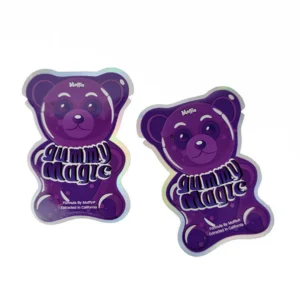
Custom printed 8×6 edible pouches may be configured with brand graphics, flavor or product identifiers, warnings, ingredients, net quantity statements, lot coding areas and other required information. Artwork should be developed only after receiving the confirmed die line, including seals, closure, tear area, folds and safe zones. Small text and regulatory panels should remain clear of distorted or non-printable areas.
For private label multi-SKU edible bags, a controlled master layout can keep logos, warnings and information hierarchy consistent while variable colors and graphics distinguish flavors or formulations. Buyers should identify the number of artwork versions and quantity per version because a total order quantity alone does not explain the production complexity.
Key Product-Specific Trade-Off
A foil-based, matte package can prioritize light protection and an opaque branded surface, but it prevents consumers and filling teams from viewing the product through the bag. Adding a clear window, if technically available, improves visibility while reducing light protection in that area. The decision should reflect the edible’s light sensitivity, retail presentation and labeling strategy rather than appearance alone.
There is also a closure trade-off. A simple resealable closure can be convenient and space-efficient, while a specialized child-resistant mechanism may require different opening instructions, seal geometry, material stiffness or qualification work. The required regulatory function should therefore be selected before the pouch structure and artwork are finalized.
Procurement and Destination-Market Review
A wholesale cannabis edible bag supplier should receive a complete packaging brief rather than only the phrase “8×6 bag.” Confirm the measurement unit, width-height orientation, outside and usable dimensions, pouch style, closure, desired barrier, matte finish, print coverage and filling method. If the bag is pre-made, manual and automated filling processes may impose different opening, stiffness and seal requirements.
Cannabis and food-packaging rules vary by market. The buyer is responsible for defining applicable food-contact, child-resistant, tamper-evident, opacity, warning, symbol, labeling and language requirements. Request documentation relevant to the selected material and destination instead of treating an exit-bag name or resealable closure as evidence of compliance.
Frequently Asked Questions
Does the 8×6 designation confirm inches and usable dimensions?
No. The input states an 8×6 format but does not identify the measurement unit, orientation or internal dimensions. Confirm finished outside dimensions, seal widths, closure position and usable space before ordering.
Are these resealable bags child-resistant?
Not necessarily. Resealable describes the ability to close the bag again, while child resistance requires a suitable closure design and applicable testing. Specify the required standard and destination market during the RFQ.
Will the aluminum foil structure keep edible products fresh?
A suitable foil-based laminate can help control light, moisture and oxygen exposure, but freshness depends on the complete laminate, sealing system, product formulation, storage conditions and required shelf life. Target barrier and seal requirements must be confirmed.
Can these bags be custom printed for multiple edible flavors?
Custom printing may be configured, subject to the selected substrate and production specification. Provide the number of artwork versions, quantity per version and a consistent regulatory layout for multi-SKU planning.
What should be checked before approving the 8×6 size?
Check the edible’s actual dimensions, net fill weight, density, fill volume, required headspace, closure clearance and heat-seal area. A physical filling and sealing trial is recommended before final size approval.
Request a Product-Specific B2B Quotation
For an accurate RFQ, provide the edible type, net fill weight, actual product dimensions or fill volume, requested 8×6 measurement unit and orientation, desired pouch style, quantity, number of artwork versions, barrier needs, closure type, child-resistant requirement if applicable, matte and printing specifications, filling method, destination market and relevant compliance needs. These inputs allow a wholesale cannabis edible bag supplier to review fit, structure, sealing and customization without relying on unsupported assumptions.
Reviews
There are no reviews yet.