
Custom Printed Spout Pouches for Beer Packaging
Custom printed spout pouches for beer are flexible packages configured with a dispensing spout and branded exterior graphics for beer filling and pouring. They are relevant to breweries, beverage brands, contract packers, distributors, importers, and OEM buyers seeking an alternative packaging format. Because beer may contain carbonation, alcohol, and aroma-sensitive ingredients, the pouch laminate, spout assembly, seals, headspace, and filling process must all be confirmed for the specific beverage before production.
Product Specifications
| Specification | Product Detail |
|---|---|
| Product type | Custom printed flexible spout pouch |
| Intended contents | Beer; the exact beer style, alcohol content, and carbonation level require confirmation |
| Dispensing format | Integrated spout; position, opening diameter, closure assembly, and tamper-evident requirements must be specified |
| Material | Flexible laminate structure to be selected according to barrier, seal, filling, and beverage-contact requirements |
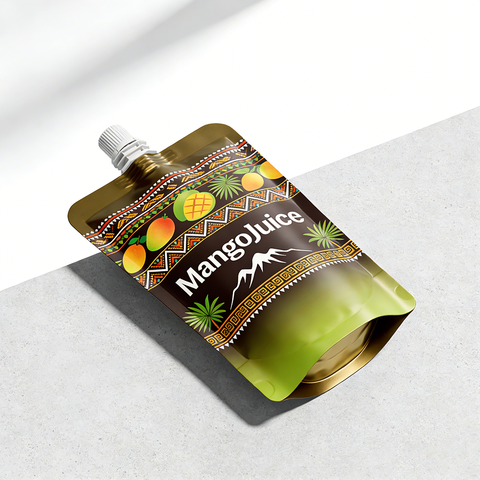
| Printing | Custom printed; artwork versions, colors, print method, and printable areas are subject to the approved specification and die line |
| Dimensions and capacity | Buyer confirmation required based on fill volume, product density, headspace, and filling process |
| Barrier performance | Depends on the complete laminate, spout interface, and sealing system; target oxygen, aroma, moisture, and light protection must be defined |
| Finish | To be confirmed; available appearance depends on the selected film and printing construction |
| Filling and sealing | Filling temperature, carbonation, equipment interface, seal method, and validation requirements must be confirmed |
| Compliance | Food-contact, alcoholic-beverage labeling, transport, and destination-market requirements are buyer-specific and require review |
Laminate Selection for Beer
Flexible laminate beer spout pouches can be configured with multiple film layers, but appearance alone does not establish performance. The complete laminate determines stiffness, puncture resistance, printability, heat sealability, and resistance to oxygen, moisture, aroma migration, and light. These factors can affect flavor stability and package handling.
A metallic-looking or opaque construction may help limit light exposure, depending on its actual layers. A clear area may improve product visibility but trades that visibility against light protection. Barrier performance must be evaluated across the pouch body, perimeter seals, and spout weld rather than inferred from one film layer. Final suitability should be established through testing with the intended beer and filling process.
Spout, Filling, and Seal Decisions
The spout turns the format into one of several possible pourable beer packaging pouches, but its diameter and position influence filling speed, pouring behavior, residual product, and compatibility with filling equipment. Buyers should identify whether the pouch will be filled through the spout or through an unsealed pouch opening before final closure.
A spout does not by itself prove pressure resistance, leak prevention, tamper evidence, or resealability. The spout body, closure assembly, weld geometry, pouch seals, and application torque must work as a system. If tamper evidence or repeated reclosure is required, those functions should be stated in the RFQ and verified in the final sample and production specification.
Carbonation, Capacity, and Headspace
Nominal beverage volume does not establish one universal pouch size. Usable capacity depends on pouch dimensions, gusset geometry, spout placement, seal widths, filling temperature, foam formation, and required headspace. Highly carbonated beer can create internal pressure that an unvalidated flexible package may not tolerate.
Provide the target fill volume, beer density where relevant, carbonation level, filling temperature, and expected distribution conditions. Flat dimensions alone are not enough; buyers should assess filled shape, expansion, stacking behavior, and the way the pouch is supported during filling and transport.
Custom Printing and Multi-SKU Control
Custom beer pouch printing can carry brand graphics, beer style, flavor or variant identification, serving information, warnings, barcodes, and market-specific text. The final artwork must follow the approved die line, including seal zones, spout clearance, gusset panels, registration tolerances, and any areas distorted after filling.
For OEM multi-SKU beer packaging, consistent dimensions, spout placement, color references, and shared artwork elements can simplify filling-line setup and portfolio recognition. Each SKU should still be checked for its own legal text, barcode, color layers, and version control. Print appearance can vary with film color, opacity, metallic effects, and finish, so physical proofs or samples may be needed before approval.
Key Product Trade-Off
A flexible spout pouch may reduce empty-package bulk and provide a distinctive pouring format, but beer creates more demanding pressure and barrier questions than a still beverage. Increasing laminate stiffness or barrier may improve handling and protection while reducing flexibility or affecting cost and recyclability objectives. A larger spout may accelerate filling and pouring, yet it also occupies artwork space and changes seal geometry. The correct specification balances product protection, equipment compatibility, user handling, and destination-market requirements.
Procurement and Compliance Review
A wholesale beer spout pouch supplier needs more than a requested volume and artwork file to prepare a reliable specification. Buyers should identify the beer type, carbonation, alcohol content, filling method, filling temperature, target shelf-life conditions, transport environment, and applicable market. Food-contact documentation, alcoholic-beverage statements, recycling claims, deposit rules, warnings, and language requirements vary by destination and are not established by the pouch name alone.
Frequently Asked Questions
Can any spout pouch safely package carbonated beer?
No. Suitability depends on carbonation pressure, filling conditions, laminate strength, seal design, spout attachment, headspace, and distribution conditions. The complete package should be validated with the intended beer.
What information is needed to determine pouch capacity?
Provide the target fill volume, beer characteristics, carbonation level, filling temperature, required headspace, filling method, and preferred filled format. Final dimensions should be confirmed through samples or filling trials.
Does custom printing determine the beer barrier?
No. Printed graphics and finish affect appearance, but oxygen, aroma, moisture, and light protection depend on the complete laminate and sealing system selected for the pouch.
Is an integrated spout automatically leakproof and resealable?
No. Those functions depend on the specified spout and closure assembly, weld, perimeter seals, application method, and actual use conditions. Reclosure and tamper-evident requirements must be defined and tested.
Which compliance details should beer pouch buyers provide?
Buyers should provide the destination market, beverage-contact requirements, alcohol labeling needs, required warnings, language versions, recycling or disposal claims, and any testing or documentation requested by their compliance team.
Request a Product-Specific B2B Quote
For an RFQ, provide the beer type, alcohol and carbonation details, target fill volume, desired pouch dimensions, headspace, quantity, artwork versions, preferred barrier or appearance, spout position and opening requirements, filling method and temperature, finish, destination market, and compliance documentation needs. These inputs allow the laminate, spout system, print layout, and sampling requirements to be reviewed without relying on unsupported assumptions.
Reviews
There are no reviews yet.