
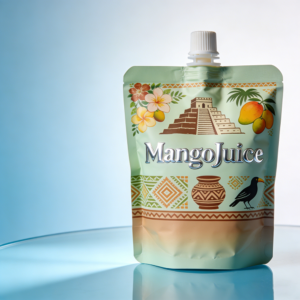
Custom Aluminum Foil Spout Pouches for Juice
Custom aluminum foil spout pouches for juice are flexible liquid-packaging pouches that combine a foil-based laminate with a dispensing spout. They are intended for juice brands, beverage producers, distributors, wholesalers, private-label programs and multi-SKU buyers seeking portable packaging with configurable artwork. Cannabis beverage companies may also evaluate this format for cannabinoid-infused juice where the complete package, labeling and closure meet destination-market requirements.
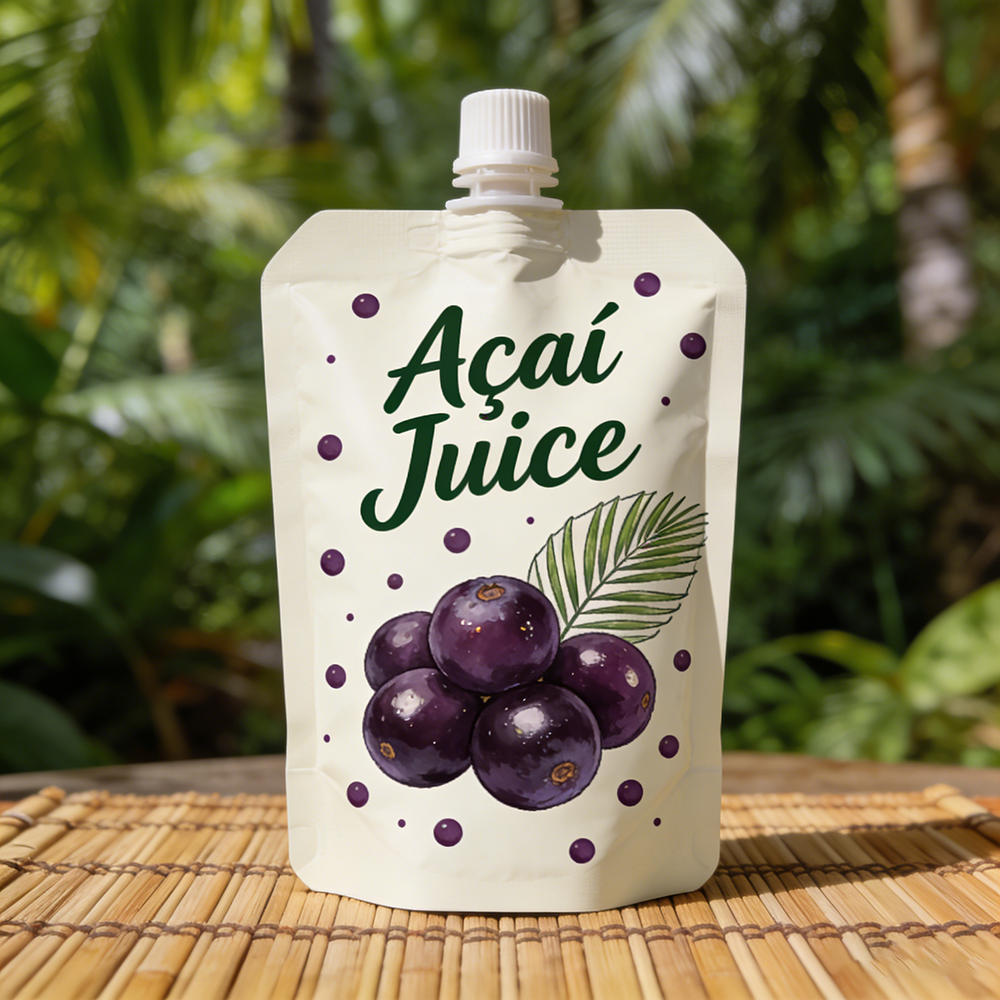
Product Specifications
| Specification | Product detail |
|---|---|
| Product type | Flexible spout pouch for juice |
| Defining material | Aluminum foil; the complete laminate structure must be confirmed |
| Dispensing format | Spout; fitment position, diameter and cap configuration require buyer confirmation |
| Customization | Custom configuration; printing method, colors, finish and artwork coverage are subject to final specification |
| Size and capacity | Not specified; select after evaluating fill volume, product density, headspace and filling process |
| Pouch geometry | Final dimensions, gusset format and seal geometry require confirmation |
| Intended contents | Juice; compatibility must be assessed for the specific formulation |
| Barrier performance | Depends on the complete laminate, foil continuity, seals, spout fitment and storage conditions |
| Compliance status | Must be confirmed for the intended contents, consumer group and destination market |
How the Foil Laminate Protects Juice
Aluminum foil laminate juice pouches can be configured to help manage light, oxygen, aroma and moisture exposure. A continuous foil layer provides strong opacity, which can be useful for light-sensitive juice ingredients. Actual protection does not come from the foil appearance alone: it depends on every film layer, adhesive interface, seal and spout connection in the finished pouch.
The inner contact layer must be compatible with the juice formulation and support reliable sealing. Acidity, flavor oils, pulp, sugar content, processing temperature and expected storage conditions can affect material selection. The outer layer may be selected for print quality, scuff resistance or stiffness. Buyers should request the proposed laminate structure and relevant technical data rather than assuming that every metallic-looking pouch has the same barrier.
A foil structure normally favors opacity and barrier performance but removes product visibility. A clear window, if technically available, would trade some light protection for visual access to the juice. Foil can also develop pinholes if a pouch is repeatedly flexed, sharply creased or mishandled, so distribution conditions and secondary packing should be considered during specification.
Spout, Filling Method and Pouch Geometry
These spouted liquid packaging pouches dispense through a fitment rather than a zipper opening. Spout diameter should be matched to viscosity and pulp size: a narrow opening may control pouring but can restrict thicker juice or suspended solids. The cap, fitment resin, thread design and tamper-evident features must be defined during development.
Filling equipment determines how the pouch should be supplied. Depending on the production line, a pouch may be filled through the spout or through an unsealed section that is closed after filling. Spout position, pouch orientation and fitment tolerances must therefore match the filler and capping equipment. A sample should be assessed on the intended line before a commercial order is finalized.
Capacity cannot be determined from face dimensions alone. Usable volume changes with pouch width, height, gusset depth, seal width, spout placement and required headspace. Juice foaming during filling may require additional headspace. Buyers should provide the target fill volume, product density and desired filled-pouch shape rather than requesting a nominal size without production context.
Closure and Leak-Control Considerations
The spout and cap provide the primary opening and reclosing mechanism, while the pouch seals contain the liquid around the perimeter. Leak resistance depends on fitment insertion, cap torque, seal integrity and compatibility between the liquid and contact materials. These elements should be evaluated together through appropriate buyer-approved testing.
A standard screw cap or tamper-evident cap must not be described as child-resistant unless the complete closure system has been tested to an applicable protocol. This distinction is especially important for cannabis-infused beverages. If child resistance is required, state the destination market and applicable package standard in the RFQ so a suitable closure route can be evaluated.
Custom Printing and Multi-SKU Programs
Custom printed juice spout bags may be configured with brand graphics, flavor identification, ingredients, directions, warnings, lot-code areas and other required copy. Printing process, color capability, finish and artwork coverage depend on the selected film structure and production specification. Metallic foil can influence color appearance, so artwork may require an opaque white layer where accurate or vivid colors are expected.
For OEM private label juice pouch packaging, use a controlled dieline and maintain fixed locations for the logo, spout, regulatory copy, coding zone and variable flavor information. A common structure across related SKUs can support visual consistency, but each artwork version still needs review. Buyers should report the number of designs and quantity per design because total volume does not by itself describe a multi-SKU order.
Juice and Cannabis Beverage Compliance Review
The package specification should be reviewed for the actual juice, filling process and sales destination. Confirm applicable food-contact requirements, labeling rules, net-content presentation, ingredient and allergen statements, recycling claims and any required tamper evidence. These requirements differ by jurisdiction and cannot be established from the pouch name or image.
For cannabinoid-infused juice, additional rules may govern child resistance, universal symbols, warning language, serving information, opacity and attractive-to-children restrictions. The buyer remains responsible for identifying the governing market and required standards. Do not approve artwork or closure selection based solely on ordinary beverage-packaging conventions.
Key RFQ Decisions and Trade-Offs
- Barrier versus visibility: a continuous foil layer supports opacity, while a clear feature can reduce light protection.
- Controlled pouring versus flow rate: smaller spouts may improve dispensing control but can be unsuitable for pulpy or viscous juice.
- Flexibility versus handling protection: flexible pouches reduce rigid-packaging bulk, but sharp folds and distribution pressure can challenge seals or foil integrity.
- Shared design versus SKU differentiation: common layouts aid consistency, while separate flavors or formulations require accurate version control.
- Headspace versus pack efficiency: minimal headspace can produce a compact pack, but the filling process and foaming behavior may require more room.
Frequently Asked Questions
Are these pouches suitable for every type of juice?
No. Suitability depends on acidity, pulp size, flavor oils, processing temperature, storage conditions and the selected contact layer. The actual formulation and filling process should be reviewed before the laminate is approved.
Does aluminum foil make the pouch completely oxygen-proof?
No absolute performance should be assumed. Barrier performance depends on the complete laminate, foil continuity, seals, spout assembly and handling conditions. Request technical data for the proposed structure.
Can the pouch be filled with pulpy juice?
Potentially, but pulp size and viscosity must be matched to the spout opening and filling equipment. Product trials can identify flow restrictions, clogging or dosing issues.
Is the spout closure child-resistant?
Child resistance is not established by the product description. A standard cap is different from a tested child-resistant closure. Buyers requiring child resistance must specify the applicable market and protocol.
What information is needed to determine pouch capacity?
Provide target fill volume, product density, juice characteristics, required headspace, desired pouch dimensions, spout position and filling method. Capacity should be confirmed using the final geometry and actual product.
Request a Product-Specific B2B Quotation
To request pricing from a wholesale juice spout pouch supplier, provide the juice type and formulation characteristics, target fill volume, product density, desired pouch dimensions, total quantity, quantity per artwork version, proposed laminate or barrier needs, spout and cap requirements, finish, filling method, processing temperature, destination market and applicable compliance needs. Include artwork files or the required print areas when available. These inputs allow the pouch structure, fitment and quotation scope to be evaluated without relying on unsupported assumptions.
Reviews
There are no reviews yet.