
Custom Printed Spout Pouches for Juice Packaging
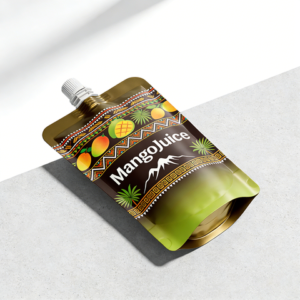
Custom printed spout pouches are flexible packages configured to hold and dispense juice through a fitted spout. They combine branded pouch graphics with a pourable opening and are relevant to beverage brands, private-label programs, distributors, importers and multi-SKU buyers. The final pouch dimensions, laminate, spout, cap and filling compatibility must be selected around the actual juice and packing process.
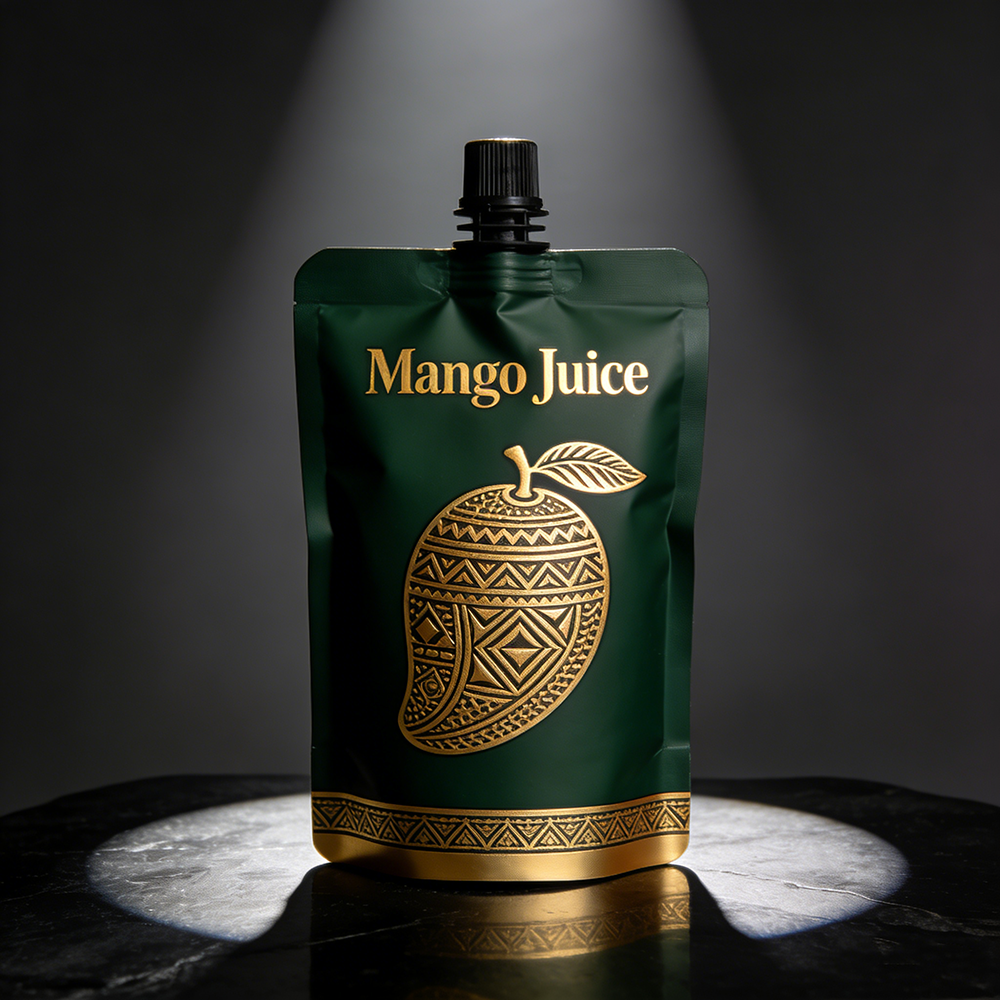
Product Specifications
| Product type | Custom printed flexible spout pouch |
|---|---|
| Intended use | Juice packaging; compatibility with the specific beverage must be confirmed |
| Dispensing format | Fitted spout; position, diameter and geometry are selected by specification |
| Material | Flexible laminate structure to be confirmed according to barrier, sealing, filling and destination-market requirements |
| Closure | Cap or other compatible spout closure may be configured; closure features require confirmation |
| Printing | Custom printing; print method, color targets, artwork area and finish are subject to the approved specification |
| Size and capacity | Not predetermined; specify desired pouch dimensions, target fill volume and required headspace |
| Pouch format | Spout pouch; base, gusset and standing requirements must be confirmed |
| Filling method | Manual or automated process compatibility must be evaluated before production |
| Customization | May be configured for private-label, OEM and multi-SKU artwork requirements |
What Products Fit This Pouch?
These juice packaging pouches with spout are intended for pourable beverages. Suitability depends on more than the stated fill volume. Juice density, viscosity, pulp or suspended particles, acidity, filling temperature and storage conditions can affect the required spout aperture, laminate and seal design. A smooth juice may flow through a smaller opening than a thick purée-style drink or a beverage containing pulp.
The pouch may also be evaluated for functional juice products or legally marketed cannabis-infused beverages, but this use is not established by the package name alone. Buyers must identify the exact formulation and destination market so that food-contact, labeling, child-resistant or other regulated packaging requirements can be reviewed. Packaging should not be assumed to make a formulation compliant.
Laminate Structure and Product Protection
Laminated spout pouch packaging can be configured with multiple flexible-film layers, depending on the required stiffness, puncture resistance, heat sealability and barrier performance. The complete structure matters: an attractive matte, gloss, metallic or transparent appearance does not by itself establish resistance to oxygen, moisture or light.
For juice, oxygen exposure can influence flavor, aroma and product quality, while light sensitivity may affect certain formulations. A higher-barrier or opaque structure may provide more protection, but it can increase material complexity and prevent consumers from seeing the contents. A clear panel improves product visibility but creates a trade-off in light protection. Buyers should specify which factor has priority rather than selecting the pouch only by appearance.
Barrier performance also depends on the seals around the pouch perimeter and spout fitment. The laminate, fitment and sealing process must function as one system. Leak resistance or shelf-life performance should be validated with the actual beverage, selected closure, filling conditions and distribution environment; it should not be inferred from the film description alone.
Spout, Cap and Filling Decisions
The spout controls dispensing and affects the filling line. Important choices include spout location, opening diameter, fitment profile, cap style and compatibility with filling and capping equipment. A corner spout and a top-centered spout can behave differently during filling, carton packing and consumer pouring. Cap dimensions may also affect the finished package footprint.
Hot-fill, cold-fill or aseptic compatibility cannot be assumed. If the juice is filled at an elevated temperature, specify the maximum product temperature, exposure time and cooling process. The film, seals, fitment and cap must all be evaluated for those conditions. For pulpy or viscous products, provide particle size and flow information so the spout and equipment path can be reviewed for blockage risk.
A conventional screw cap or resealable cap is not automatically child-resistant or tamper-evident. If the destination market or beverage category requires either function, request the appropriate closure system and supporting documentation or testing criteria before ordering.
Size, Usable Volume and Headspace
A stated liquid volume does not establish one universal pouch size. Desired capacity must be translated into dimensions using the juice density, pouch geometry, spout displacement and required headspace. Too little headspace can complicate sealing, capping or handling. Excess headspace can make the pouch appear underfilled and may increase movement inside the package.
Confirm whether the pouch must stand upright, hang, fit a retail carton or run through existing filling equipment. If a bottom gusset is required, its depth affects both usable volume and shelf presentation. Buyers should test production-representative samples with the real product instead of relying only on flat pouch measurements.
Custom Printing and Multi-SKU Control
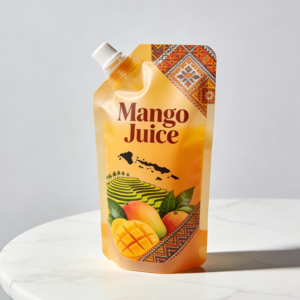
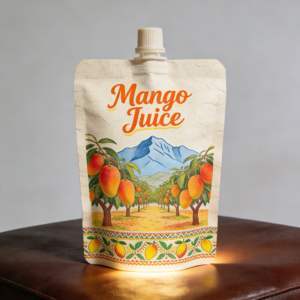
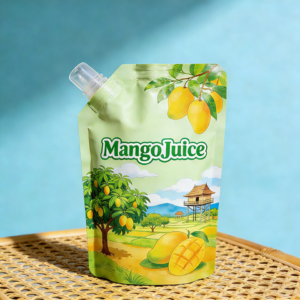
Custom branded drink pouches can carry logos, flavor identification, ingredients, preparation information, warnings, lot-code areas and market-specific labeling. The available artwork area depends on seals, gussets, spout placement and the approved die line. Critical text should remain outside seal zones, folds and areas that may distort when the pouch is filled.
Printing method, color capability, surface finish, metallic effects and white-ink requirements depend on the selected substrate and production specification. Brand owners should provide editable artwork, target colors and any required barcode dimensions for technical review. A physical or production-representative proof may reveal color and distortion differences that are not visible on a flat digital mockup.
For OEM multi-SKU beverage pouches, establish a shared layout system for logos, compliance panels and variable flavor elements. Consistent spout, pouch and laminate specifications can simplify filling-line setup, while clearly controlled artwork versions reduce the risk of mixing flavors, formulations or destination-market labels.
Compliance and Procurement Checks
- Identify the beverage formulation, acidity, viscosity, pulp content and expected shelf conditions.
- Confirm applicable food-contact and migration requirements for each destination market.
- Determine whether tamper-evident, child-resistant or other regulated closure functions are required.
- Reserve artwork space for ingredients, nutrition information, warnings, batch coding and other mandatory content.
- Validate the pouch, spout, cap and seals with the actual filling process and packed-product distribution tests.
- Request documentation applicable to the final material and closure specification rather than assuming compliance from a generic pouch description.
Frequently Asked Questions
What material is used for these custom printed spout pouches?
The material is not fixed by the product name. A flexible laminate can be configured according to the juice, barrier target, filling temperature, seal requirements, appearance and destination-market needs. The final layer structure should be confirmed in the quotation and technical specification.
Can the pouch package juice with pulp?
Potentially, but suitability depends on pulp or particle size, product viscosity, spout aperture and filling equipment. Provide representative product information and test the selected fitment to reduce blockage and dispensing problems.
Can these juice pouches be hot-filled?
Hot-fill suitability must be confirmed for the complete laminate, spout, cap and sealing system. State the maximum fill temperature, contact time and cooling method during the RFQ process; do not assume that every spout pouch supports hot filling.
Is a standard spout cap child-resistant?
No. An ordinary resealable or screw cap should not be treated as a tested child-resistant closure. If child resistance is required for a cannabis-infused beverage or another regulated product, specify the applicable market and closure requirement for evaluation.
What information is needed for an accurate RFQ?
Provide the juice type, target fill volume or weight, desired pouch dimensions, quantity, artwork versions, laminate or barrier needs, spout position and diameter, cap requirements, finish, filling method, filling temperature, destination market and applicable compliance needs.
Request a Product-Specific B2B Quotation
Contact a wholesale spout pouch supplier with the facts needed to engineer and quote the package: contents, target fill volume or weight, juice density or viscosity, pulp details, desired dimensions, required headspace, order quantity, number of artwork versions, barrier preference, spout and cap configuration, finish, filling method, filling temperature, destination market and compliance requirements. These inputs allow the proposed pouch structure and dispensing system to be assessed against your product and equipment before an RFQ is finalized.
Reviews
There are no reviews yet.