
Custom Printed Smell-Proof Cali Stand-Up Mylar Bags for Cannabis Brands
Custom printed smell-proof Cali stand-up Mylar bags are flexible cannabis pouches for brands, wholesalers, distributors, private-label programs, and multi-SKU buyers that need an upright bag with Cali-style visual branding. The stand-up format supports practical filling and shelf presentation, while the selected Mylar-based structure, closure, seal, and artwork determine the final packaging performance. These bags are suitable for discussing cannabis flower and other dry products when the required dimensions, barrier specification, and destination-market requirements have been confirmed.
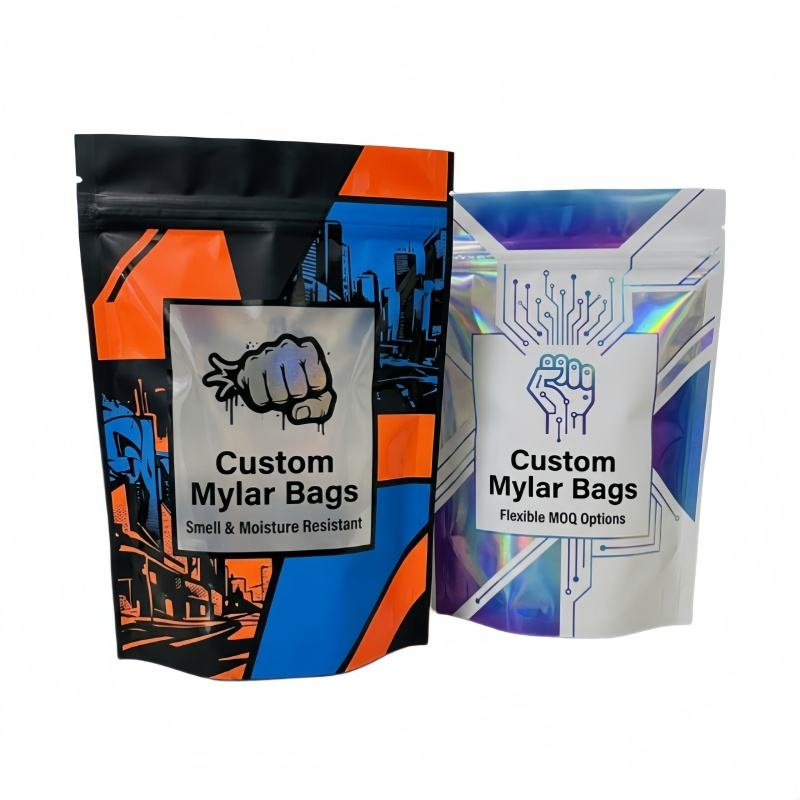
Product Specifications
| Product type | Custom printed stand-up Mylar bag |
|---|---|
| Product identity | Cali-style cannabis packaging bag with a smell-resistant positioning |
| Typical B2B use | Packaging discussions for cannabis flower, dry goods, private-label products, and multi-SKU programs |
| Material | Mylar-based packaging; the complete laminate or barrier structure requires confirmation |
| Bag format | Stand-up pouch with a bottom gusset; final gusset, dimensions, and seal geometry require confirmation |
| Printing | Custom printing; artwork process, printable area, colors, and substrate limits require confirmation |
| Closure | Closure configuration requires confirmation, such as a resealable zipper, heat seal, or another selected option |
| Size and fill | No universal size or fill weight is established; confirm actual product density, dimensions, target fill, and headspace |
| Performance | Odor, moisture, oxygen, light, puncture, and seal performance depend on the selected structure and finished sealing process |
How the Stand-Up Pouch Format Fits Cannabis Products
The bottom gusset allows the pouch to stand when filled, which can simplify manual or automated presentation and improve front-panel visibility. It does not, by itself, establish the usable volume. Flower density varies by cultivar, trim, moisture condition, and handling, so a stated fill weight cannot be used to select one universal bag size. Buyers should provide the target fill weight, approximate product dimensions, desired pouch width and height, and the amount of headspace needed above the contents.
Headspace affects filling behavior, closure alignment, compression, and the amount of air left inside the pouch. Too little working room can make zipper engagement and heat sealing inconsistent; excessive headspace can increase movement and reduce presentation efficiency. For cannabis flower, confirm whether the contents are loose flower, dense flower, or another dry format, then request a physical sample or dimensional review before approving a production specification.
Odor, Barrier, and Material Decisions
The phrase smell-proof is commonly used to describe packaging intended to help contain cannabis aroma, but it should not be treated as a permanent or absolute performance guarantee. Odor containment depends on the complete laminate, film thickness, seal design, zipper condition, heat-seal quality, and how the finished bag is handled. A correctly selected structure and properly sealed package may help reduce aroma release, while a weak seal or unsuitable closure can become the limiting factor.
Mylar identifies the product category and a commonly requested flexible packaging material, but appearance alone does not reveal the full barrier construction. Ask the supplier to confirm the complete laminate and its intended relationship to moisture, oxygen, light, aroma, stiffness, puncture resistance, and heat sealability. A metallic or opaque appearance may support light protection, while a window can improve product visibility but may trade away some light shielding. Matte, glossy, holographic, or other finishes should therefore be evaluated separately from barrier performance.
For dry cannabis flower, moisture and aroma control often need to be considered together. A stronger barrier may help protect the contents from external exposure, but it can also affect stiffness, fold behavior, seal settings, and converting limitations. Confirm the target barrier, seal temperature range, seal width, and any available technical documentation rather than assuming that a visual finish or the word Mylar establishes laboratory performance.
Closure, Opening, and Seal Configuration
A resealable zipper can support repeated opening and closing, but an ordinary zipper is not the same as a tested child-resistant closure. If the destination market or product category requires child-resistant packaging, identify that requirement at the RFQ stage and request the appropriate closure specification and supporting documentation. Do not assume that a Cali-style bag, zipper, or smell-resistant format satisfies a legal packaging requirement.
A heat seal can provide a separate tamper-evident or post-filling seal when the selected structure and equipment are compatible. A tear notch may improve opening convenience, but it can also affect the opening position and the area available for a secure seal. Confirm the zipper location, tear-notch position, seal geometry, opening direction, and filling equipment. For flower, these choices influence how easily the bag can be filled without catching material in the seal area.
Custom Printing and Multi-SKU Artwork
Custom printing turns the pouch into a branded packaging component for strains, product lines, private-label programs, and distributor portfolios. Before artwork approval, confirm the dieline, front and back printable areas, gusset visibility, registration tolerances, color references, barcode placement, and any limitations created by the selected film or finish. The bottom gusset may not display artwork in the same way as the front panel, so important regulatory or product information should be positioned only after the final layout is reviewed.
For multi-SKU purchasing, define which elements remain consistent across every bag and which elements change by strain, flavor, potency, size, or product name. A shared structure, closure, dimensions, and finish can simplify procurement, while variable artwork versions require careful file control and approval. Confirm the number of artwork versions, language requirements, lot or batch coding space, and whether a separate proof is required for each SKU. These details help reduce mix-ups during production and filling.
Destination-Market and Product Requirements
Cannabis packaging rules differ by destination, product type, and sales channel. The buyer should confirm required warning text, symbols, labeling area, child-resistance expectations, tamper evidence, recycling statements, food-contact considerations where relevant, and restrictions on colors or graphics. The pouch should not be described as compliant until the applicable market requirements and final packaging configuration have been reviewed.
For flower, provide the actual contents and target fill weight. For another dry product, also provide its density, moisture sensitivity, grease exposure, and any need for a wider opening or stronger seal. The final package should be selected around the contents and market—not simply around a nominal bag size or an attractive printed sample.
Trade-Offs Buyers Should Confirm Before Approval
The main procurement trade-off is between visual presentation, barrier protection, usability, and specification complexity. A highly opaque or metallic structure may support light protection but reduce product visibility. A clear window may help inspection and merchandising but can change light exposure. A thicker or stiffer structure may improve handling and puncture resistance while requiring different folding, sealing, or filling settings. Similarly, a zipper supports resealing but does not replace a heat seal or establish child resistance. Request samples that represent the proposed material, artwork, finish, closure, and dimensions before final approval.
Frequently Asked Questions
Are these bags suitable for cannabis flower?
They are intended for B2B discussions involving cannabis flower and other dry products. Confirm the flower density, fill weight, dimensions, headspace, barrier, closure, and destination-market requirements before selecting the final specification.
Does smell-proof mean the bag provides an absolute odor guarantee?
No. The smell-proof description indicates an intended odor-resistant packaging function. Aroma containment depends on the complete laminate, closure, seal quality, and handling, so the final performance should be evaluated against the agreed specification.
Does the stand-up format establish the bag capacity?
No. A bottom gusset supports upright presentation, but usable capacity depends on the pouch dimensions, gusset, product density, fill weight, and headspace. A sample or dimensional review is recommended.
Can the Cali bags use custom strain artwork for multiple SKUs?
Custom printing can be discussed for strain, product, or private-label artwork. Confirm the number of versions, dielines, printable areas, color requirements, barcode space, and destination-market information for each SKU.
Is the zipper child-resistant?
An ordinary resealable zipper should not be treated as child-resistant. If child-resistant packaging is required, state that requirement and confirm the selected closure and supporting documentation separately.
Request a B2B Specification and RFQ
For an accurate quotation, provide the intended contents, fill weight or actual product dimensions, desired pouch dimensions, estimated quantity, number of artwork versions, material or barrier preference, closure type, finish, filling method, destination market, and specific compliance needs. The supplier can then confirm the suitable structure, gusset, seal geometry, printing approach, sample requirements, and final production specification for your custom printed cannabis packaging program.
Reviews
There are no reviews yet.