
3.5g Cannabis Mylar Bags for Cali-Style Cannabis Packaging
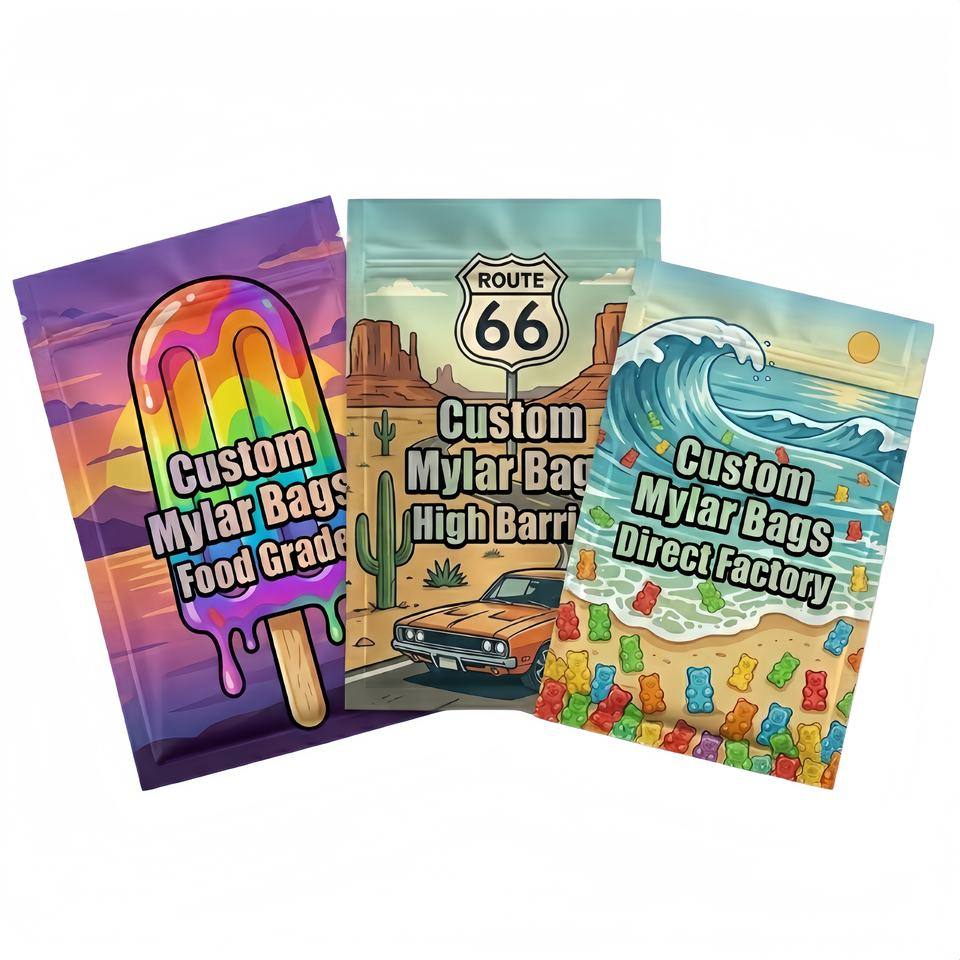
3.5g cannabis mylar bags are BPA-free, food-grade Cali Mylar bags intended for packaging a stated 3.5g fill of cannabis product, subject to confirming the product’s density, dimensions and required headspace. They are a relevant packaging option for cannabis brands, wholesalers, distributors, private-label buyers and multi-SKU procurement teams that need a consistent bag format across strains or product variations. The “smell-proof” description should be treated as a packaging function to validate against the final laminate, seal design and filling process rather than as an unconditional performance guarantee.
Product Specifications
| Product | 3.5g BPA-free food-grade smell-proof Cali Mylar bags |
|---|---|
| Stated fill reference | 3.5g; final usable volume and dimensions require confirmation with the packed product |
| Packaging format | Mylar bag; exact pouch geometry, seal area and opening configuration require confirmation |
| Material information | BPA-free and food-grade as stated; complete laminate structure is not specified |
| Odor function | Described as smell-proof; aroma containment depends on the complete structure, closure and seal quality |
| Application | Intended for cannabis packaging discussions, particularly a 3.5g product format |
| Printing and finish | Not specified; custom printing, artwork limits and finish should be confirmed before quotation |
Match the Bag to the Actual 3.5g Product
A nominal 3.5g fill does not identify one universal bag size. Flower density, nug size, moisture condition, grind, product settling and the amount of headspace all affect the required internal volume. A bag that fits a dense 3.5g fill may be unsuitable for larger flower pieces or a product that needs more headspace for clean filling and presentation.
For an accurate packaging recommendation, provide the actual product dimensions or a representative sample, not only the target weight. The buyer and supplier should confirm the desired external dimensions, usable internal area, seal width, opening position and whether the bag must stand, lie flat or accommodate a particular filling machine. Excess headspace can increase movement and reduce shelf presentation, while insufficient headspace can interfere with filling, zipper engagement or the heat-seal zone.
Material Structure and Odor Containment
Mylar is commonly used as a packaging term, but the product input does not identify the complete laminate or barrier construction. The total structure, sealant layer, thickness and manufacturing tolerances influence aroma containment, moisture transfer, oxygen exposure, light protection, stiffness, puncture resistance and heat sealability. The bag’s “smell-proof” positioning should therefore be evaluated as smell resistant or aroma containing when properly sealed, depending on the selected structure and closure.
For cannabis flower, ask for the proposed material structure and intended barrier performance during the RFQ process. A stronger barrier may help protect aroma and product condition, but it can also affect flexibility, appearance, seal settings and cost. A metallic or opaque appearance would not, by itself, prove a specific oxygen, moisture or light barrier. Likewise, any clear viewing area would improve product visibility while potentially reducing light protection in that area. These decisions should be made against the destination market, product sensitivity and brand presentation requirements.
Closure, Sealing and Filling Decisions
The input confirms bags but does not specify a zipper, tear notch, heat seal or child-resistant closure. Confirm each feature separately. An ordinary resealable zipper can support repeated opening, but it should not be described as a tested child-resistant system. A heat seal can provide a separate tamper-evident or secure closure point when the sealing equipment, seal area and process are correctly specified. A tear notch may improve opening convenience but can also influence the opening geometry and the available artwork area.
For a 3.5g cannabis format, the filling team should confirm whether bags will be filled manually, with a semi-automatic process or with automated equipment. The chosen opening width, gusset configuration, stiffness and seal placement can affect throughput and product handling. If the bag is intended to be resealed after opening, check that the packed product does not obstruct zipper tracks and that the upper seal remains clear during filling.
Custom Printing and Cali-Style Brand Presentation
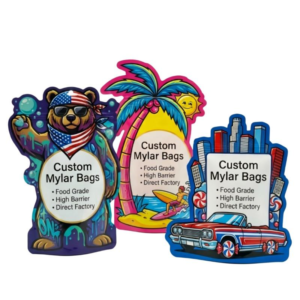
These Cali Mylar bags can be evaluated for a branded packaging program, but printing capability, print method, color count, finish and artwork limits are not stated and must be confirmed. Request the dieline before preparing final artwork. The dieline should show the safe artwork area, registration limits, seal exclusion zones, zipper or tear-notch location and any gusset or fold that may distort graphics.
Ask whether the selected structure supports the intended matte, gloss, metallic, holographic, opaque or other visual effect. A finish is an appearance choice, not proof of a particular barrier level. Also confirm whether variable strain names, potency panels, batch fields, barcodes or multiple language panels can be reproduced consistently across SKUs. For cannabis brands, the usable compliance and information area may be as important as the front-panel appearance.
Multi-SKU and Private-Label Procurement
For wholesalers, distributors, OEM buyers and private-label programs, the main purchasing question is often repeatability across several strains or product identities. Establish one approved specification covering bag dimensions, material structure, seal geometry, closure, artwork placement and color expectations. Then identify which elements vary by SKU, such as strain name, artwork, regulatory text or batch information.
Using one nominal 3.5g format across SKUs can simplify filling and storage, but product density may differ between strains. Confirm that the largest expected flower pieces, headspace target and label or print layout work across the range. Before committing to a production run, request the commercial and technical information relevant to the program, including minimum order quantity, sampling, production timing and delivery terms, because those business conditions are not provided in the product input.
Destination-Market and Specification Checks
“BPA-free” and “food-grade” are stated product attributes, but they do not automatically establish every cannabis-packaging, labeling, child-resistance, environmental or market-specific requirement. The buyer should identify the destination market and ask which declarations, tests, documentation or closure requirements apply there. Confirm that the final bag, inks, adhesives, seal system and printed information match the intended use and local rules.
Buyer FAQs
Are these bags sized for exactly 3.5g of cannabis flower?
The product is identified with a 3.5g reference, but one fill weight does not establish a universal pouch size. Confirm the flower density, piece size, desired headspace and actual bag dimensions before approving the specification.
Are the 3.5g Cali Mylar bags truly odor-proof?
They are described as smell-proof, but odor containment depends on the complete laminate, closure, seal quality and filling process. Treat the claim as a function to validate and use qualified language such as smell resistant or helps contain aroma when properly sealed.
What material are these cannabis bags made from?
The input identifies them as BPA-free, food-grade Mylar bags, but it does not provide the complete laminate structure or thickness. Request the proposed structure and confirm the barrier and seal requirements for the intended product.
Do they include a child-resistant zipper?
No child-resistant closure is confirmed in the product information. An ordinary zipper and a tested child-resistant closure are different specifications, so request the exact closure type and any destination-market documentation required.
Can a brand order custom printed or private-label versions?
Custom printing and private-label production are relevant procurement options, but printing method, artwork area, finish, minimum order quantity and production terms are not stated. Confirm these items with the supplier before preparing final artwork or issuing an RFQ.
What information should be included in an RFQ?
Provide the intended contents, target fill weight, actual product dimensions, desired pouch dimensions, quantity, artwork versions, material or barrier preference, closure, finish, filling method, destination market and applicable compliance needs. A representative product sample can help validate fit and headspace.
Request a Product-Specific RFQ
To quote these 3.5g cannabis mylar bags accurately, send the contents, fill weight, actual product dimensions, desired bag dimensions, quantity, number of artwork versions, material or barrier requirements, closure preference, finish, filling method, destination market and compliance needs. Ask the supplier to confirm the final structure, usable volume, seal geometry, printing limits, sample process, MOQ, lead time and delivery terms before approval.
Reviews
There are no reviews yet.