
3.5g Die-Cut Aluminum Foil Mylar Pouches for Cannabis Packaging
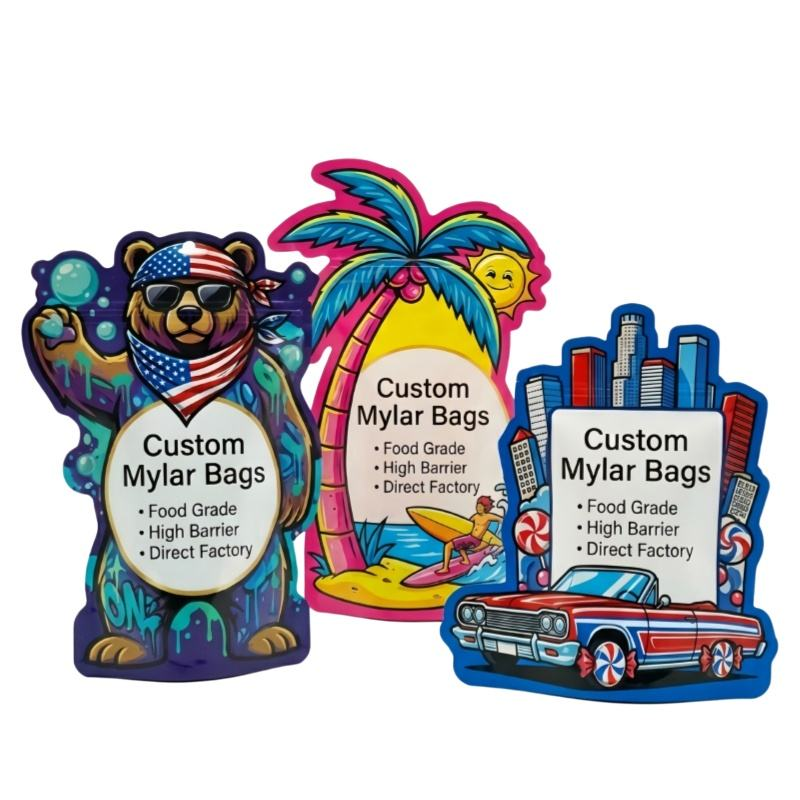
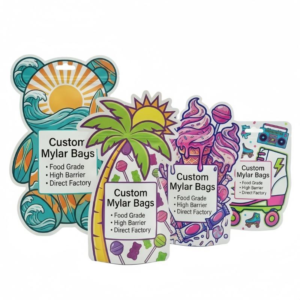
3.5g die-cut aluminum foil Mylar pouches are shaped flexible pouches specified for a nominal 3.5g fill program and a Cali-style cannabis packaging presentation. The die-cut format gives the pouch its defined silhouette, while the stated aluminum foil and Mylar construction can be evaluated for the barrier, stiffness, seal, and appearance requirements of a cannabis brand. They are relevant to cannabis brands, distributors, wholesalers, private-label buyers, OEM/ODM programs, and multi-SKU operators that need one pouch concept assessed across several strains or artwork versions.
Product Specifications
| Product type | Die-cut Cali Mylar pouch |
|---|---|
| Stated fill reference | 3.5g; actual fit depends on product density, pouch dimensions, and headspace |
| Stated material | Aluminum foil and Mylar construction; confirm the complete laminate structure |
| Shape | Die-cut or shaped pouch; confirm the die line, usable area, and seal geometry |
| Intended B2B use | Cannabis packaging programs, including flower applications subject to final product testing and market requirements |
| Closure | Not stated; confirm zipper, heat-seal-only, tear notch, or other opening configuration |
| Printing and finish | Not stated; confirm artwork process, print coverage, color targets, and surface finish |
| Commercial details | MOQ, pricing, lead time, samples, inventory, and delivery terms require supplier confirmation |
How the Die-Cut Format Affects Filling and Fit
A 3.5g reference does not define one universal pouch size. Cannabis flower varies in density, nug size, moisture condition, and handling requirements, so the same nominal weight can occupy different volumes. Before approving a production die, measure the actual contents and assess the desired headspace. Excessive headspace can allow movement and reduce presentation quality; too little headspace can compress flower, stress the seals, or make the pouch difficult to close.
The die-cut outline also affects the usable panel area. Curves, shoulders, corners, and the opening position may reduce the space available for mandatory information, strain identity, brand graphics, and variable data. Request a dimensioned dieline showing the finished pouch, seal boundaries, opening location, and safe artwork area. A physical fill trial is useful when the product has large pieces, a high density, or a fragile presentation.
Aluminum Foil, Mylar, and Barrier Decisions
The aluminum foil layer and Mylar layer should be reviewed as part of the complete laminate rather than treated as separate marketing features. Depending on the selected structure, an aluminum foil barrier can help limit light exposure, while the full laminate and properly sealed seams influence aroma containment, moisture transfer, oxygen exposure, puncture resistance, stiffness, and heat-seal behavior. The product name alone does not establish OTR, MVTR, odor-leakage, or seal-strength data.
For flower, buyers commonly compare aroma containment, protection from handling, and the ability to maintain a consistent presentation across SKUs. A pouch may be described as smell resistant or as helping contain aroma when the selected structure and sealing process support that use, but performance should be confirmed with supplier documentation or testing. Ask which layers contact the contents, which layer seals, and whether the structure is suitable for the destination market and intended product.
Aluminum foil can support light protection but may limit visual inspection of the contents. That trade-off is often useful for light-sensitive products and a solid-color brand presentation, while a transparent window would improve visibility but change the light-barrier design. Do not assume that a metallic appearance, matte surface, holographic effect, or Mylar reference proves a particular barrier level.
Closure, Opening, and Seal Configuration
The input does not specify a closure, so the zipper and seal design must be confirmed before quotation. An ordinary resealable zipper can support repeated opening and closing, but it is not the same as a tested child-resistant closure. If the destination market requires child-resistant packaging, identify the required test standard and approval pathway before artwork or tooling is finalized. A tear notch can improve opening convenience, while a heat seal can provide a tamper-evident sealed presentation when the correct seal width, temperature, pressure, and dwell time are established.
Ask whether the proposed pouch is supplied open for filling, whether the top seal is left for the packer, and how the die-cut profile affects the sealing jaws. The closure choice influences filling speed, headspace control, resealability, opening position, and the amount of space available for warnings or variable information.
Custom Printing and Cali-Style Brand Programs
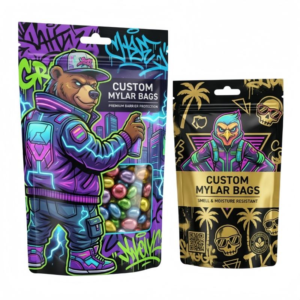
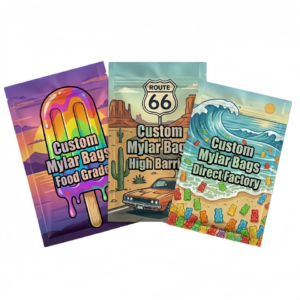
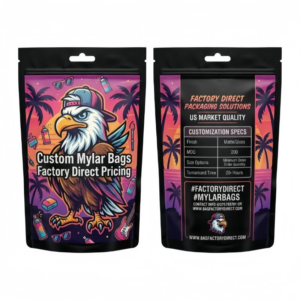
Custom printing can be considered for brand identity, strain names, potency panels, batch fields, and coordinated Cali bag artwork, subject to the selected substrate, print process, and final dieline. Confirm whether printing is inside or outside the laminate, which areas are printable, and whether the foil layer changes color reproduction or opacity. Request a color target and digital proof before production, particularly when several strains must share one visual system.
For custom printed 3.5g weed pouches, provide the supplier with the editable artwork, required copy, barcode or variable-data needs, finish preference, and version count. Keep critical text away from curves, corner transitions, tear notches, zipper tracks, and heat-seal zones. A matte or other surface treatment may change scuff visibility, tactile feel, and ink appearance; it should be approved on a representative sample rather than assumed from a screen proof.
Multi-SKU and Private-Label Procurement Checks
Private-label and OEM/ODM buyers should decide whether every SKU uses the same pouch dimensions and material structure or whether different strains require separate sizing. Consistent dimensions can simplify filling equipment, carton planning, and line changeovers, but a single format may not present every flower density equally well. A shared base design with controlled artwork changes can support multi-SKU consistency, provided the supplier confirms version management, variable data handling, and the approval process.
For wholesale aluminum foil pouch manufacturer comparisons, evaluate more than the quoted unit price. Compare the complete laminate, die-cut tolerances, seal geometry, print coverage, closure specification, sample approval process, packaging method, and documentation available for the destination market. Confirm whether tooling, cylinders, plates, sampling, and artwork revisions are separate quotation items. MOQ, production timing, and supply availability remain buyer-specific commercial questions.
Destination-Market and Compliance Review
Packaging requirements vary by destination market and product category. Before release, the buyer should confirm required warnings, cannabinoid or potency information, batch or lot fields, net contents, barcode placement, language, recycling statements, food-contact considerations where relevant, and any child-resistant requirement. This pouch description does not establish certification, approval, or compliance status. The final packaging should be reviewed against the applicable rules for the product, jurisdiction, and intended use.
Frequently Asked Questions
Are these pouches sized for exactly 3.5g of cannabis flower?
The product is identified with a 3.5g fill reference, but exact fit depends on flower density, nug size, headspace, pouch dimensions, and filling method. Confirm the dimensions with a physical fill trial before approving production.
Does the aluminum foil and Mylar construction guarantee odor-proof performance?
No. The complete laminate, seal system, closure, and filling process affect aroma containment. The pouch may help contain aroma when properly sealed, but any smell-resistant claim should be supported by the selected structure and relevant testing or supplier documentation.
Do these die-cut Cali Mylar bags include a zipper or child-resistant closure?
No closure is stated in the product input. Confirm whether the quotation includes a zipper, heat seal, tear notch, or tested child-resistant configuration. An ordinary zipper should not be represented as child resistant.
Can a cannabis brand order custom printed versions for multiple strains?
Custom printing and multi-SKU artwork can be discussed subject to the substrate, printable area, die line, print process, and supplier approval. Provide the number of artwork versions and required variable information for an accurate RFQ.
What should a buyer confirm before requesting a quotation?
Provide the contents, actual fill weight, product dimensions or density information, desired pouch dimensions, quantity, artwork versions, laminate or barrier requirements, closure, finish, filling method, destination market, and compliance needs. Also request confirmation of MOQ, samples, tooling, pricing, and production timing.
Request a Product-Specific RFQ
To evaluate these 3.5g aluminum foil cannabis pouches for your program, send the contents, target fill weight, actual product dimensions or density, desired pouch dimensions, quantity, artwork version count, material or barrier preference, closure, finish, filling method, destination market, and compliance requirements. Ask for the proposed dieline, laminate details, seal configuration, sample options, and commercial terms so your team can approve fit, appearance, and production specifications before placing a wholesale or private-label order.
Reviews
There are no reviews yet.