
Custom 3.5g Cali Mylar bags for cannabis flower
Custom 3.5g Cali Mylar bags are cannabis pouches identified for a 3.5-gram fill format, Cali-style branding, and a smell-proof Ziplock closure. They are intended for cannabis brands, distributors, wholesalers, private-label buyers, and multi-SKU programs that need a branded flexible package for cannabis flower. The stated 3.5g format is a target fill reference, not a universal pouch dimension: flower density, bud size, headspace, and the required seal area must be confirmed before production.
The Ziplock supports resealing after opening and may help contain aroma when the bag is properly closed. Actual odor, moisture, oxygen, puncture, and light-barrier behavior depends on the complete Mylar laminate, seal geometry, closure fit, and production specification. Buyers should approve a physical sample or final technical specification before committing to a large multi-SKU order.
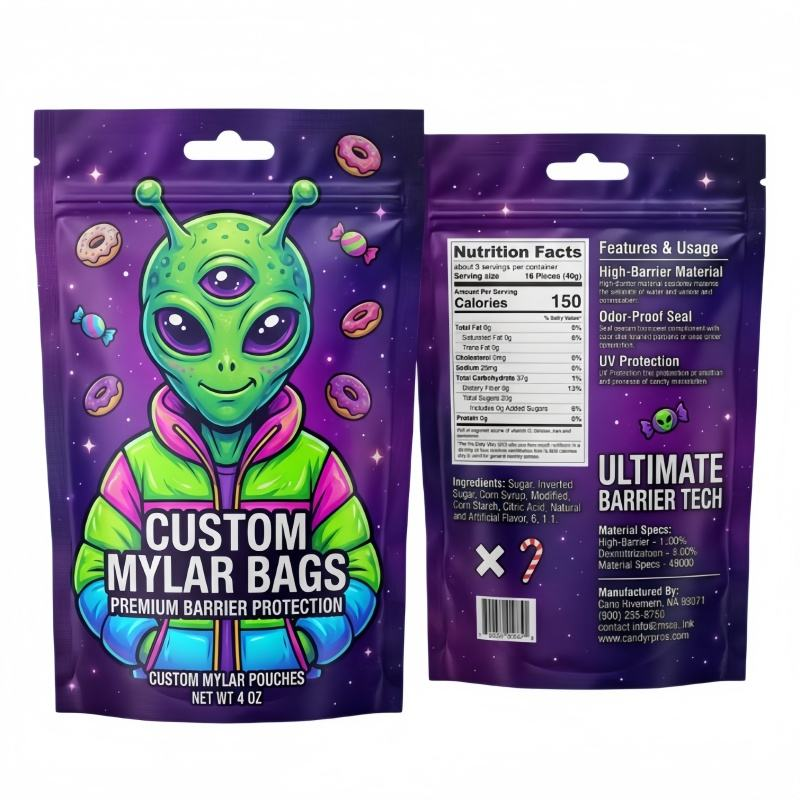
Product Specifications
| Product type | Custom cannabis Mylar bag |
|---|---|
| Stated fill format | 3.5g; final usable volume depends on flower density and headspace |
| Product naming | Cali bags |
| Closure | Ziplock resealable closure; child-resistant status is not stated and must be confirmed separately |
| Material | Mylar packaging; complete laminate structure requires confirmation |
| Primary use | Branded cannabis packaging, subject to product and destination-market requirements |
| Customization | Custom artwork and specifications can be discussed; printing method, finish, dimensions, and artwork limits require confirmation |
Fit the 3.5g format to the actual flower
A nominal 3.5g fill does not determine one correct bag size. Dense, compact flower may occupy less space than large, airy buds, while oversized pieces require additional usable volume and headspace. Too little headspace can make filling difficult, compress the contents, or interfere with the Ziplock track. Too much headspace can increase movement inside the pouch and make the package appear underfilled.
For an accurate quotation, provide the actual flower dimensions or a representative sample, the desired fill weight, and whether the product will be filled by hand or automated equipment. The supplier can then evaluate pouch width, height, opening position, seal area, and practical filling clearance. Confirm whether the 3.5g reference applies to net contents only or also affects the internal presentation expected for each SKU.
Mylar structure and aroma containment
Mylar is commonly used as flexible packaging terminology, but the appearance or name alone does not establish the full barrier structure. The complete laminate may be configured for different balances of aroma containment, moisture resistance, oxygen protection, light protection, stiffness, puncture resistance, and heat-seal behavior. Those properties depend on the selected layers, thicknesses, sealing process, and finished pouch geometry.
For cannabis flower, aroma containment is a central buying consideration. The smell-proof Ziplock may help reduce aroma release when properly aligned and fully closed, while a heat seal can add a separate tamper-evident or additional containment step if selected and technically suitable. Do not treat an ordinary resealable Ziplock as a tested child-resistant closure. If the destination market requires child-resistant packaging, request the relevant closure specification, testing documentation, and compliance review rather than assuming the standard zipper meets that requirement.
Custom printing for Cali and strain programs
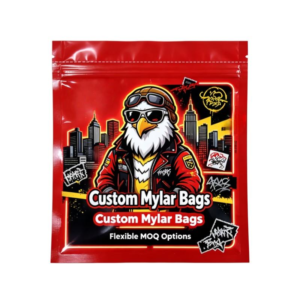
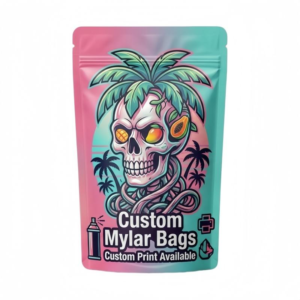
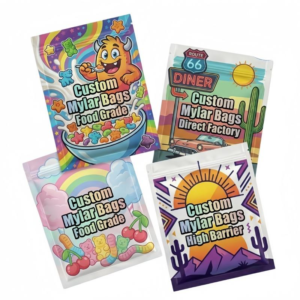
These custom printed marijuana pouches can support a Cali-inspired visual system, strain names, variant information, and brand recognition across a product line. Before artwork is prepared, confirm the dieline, printable area, zipper position, seal boundaries, opening direction, and any required warning or regulatory space. Artwork should keep important text away from the top seal, zipper track, tear area, and curved or folded edges where legibility can be affected.
Finish and appearance should be specified separately from barrier performance. Matte, glossy, metallic, holographic, kraft-look, or window effects may be available depending on the selected substrate and printing process, but a visual effect does not prove a particular oxygen, moisture, aroma, or light barrier. A clear window can improve product visibility while reducing light protection in that area. Ask for a printed proof or production sample to review color, small type, barcode readability, registration, and the final placement of required information.
Multi-SKU and private-label procurement
Private-label cannabis bags are useful when one program needs consistent packaging across multiple strains, flavors, territories, or brand tiers. Request a controlled artwork workflow so every version uses the same pouch dimensions, zipper location, seal geometry, and information hierarchy unless a deliberate SKU difference is required. A shared base structure can simplify filling and storage, while variable artwork or labels distinguish individual products.
Consistency still requires checking actual samples. Differences in fill density, bud size, artwork coverage, and closure handling can change the perceived capacity and filling behavior from one SKU to another. For wholesale and distributor programs, define how many artwork versions are included in the RFQ, whether each version has a separate packing configuration, and how approved files will be identified. Quantity should be stated by total bags and, where relevant, by artwork version.
Destination-market and quality checks
Cannabis packaging requirements vary by destination market and product category. Confirm whether the finished bag needs child-resistant packaging, tamper evidence, warning panels, lot or batch information, net-weight presentation, regulatory symbols, barcode space, or specific food-contact and cannabis-contact documentation. This product description does not establish certification, approval, or compliance for any jurisdiction.
Before approval, inspect the zipper alignment, opening force, seal width, tear-notch position if included, print registration, odor containment expectations, and resistance to handling during filling and distribution. If heat sealing is requested, confirm the compatible sealing temperature, dwell time, pressure, and acceptable seal appearance with the packaging supplier and filling team. A stronger barrier or thicker structure may improve protection but can increase stiffness, affect folding, change sealing conditions, or alter cost and lead-time discussions. That performance-versus-process trade-off should be resolved with samples rather than assumed from the product name.
What to include in a wholesale RFQ
For a precise quote on this cannabis packaging manufacturer wholesale product, send the intended contents, target fill weight, actual product dimensions or representative sample, desired finished pouch dimensions, quantity, number of artwork versions, artwork status, preferred material or barrier requirement, Ziplock and heat-seal requirements, finish, filling method, destination market, and known compliance needs. Also state whether the bag must be compatible with manual packing, a specific filling line, secondary packaging, or a defined storage and distribution process.
Frequently asked questions
Are these 3.5g cannabis Mylar bags sized for every type of flower?
No. The 3.5g designation identifies the intended fill reference, but flower density, bud size, headspace, and filling method determine the practical pouch dimensions. Confirm the fit with actual product details or a representative sample.
Does the Ziplock make the bag child-resistant?
Not necessarily. A standard resealable Ziplock should be treated separately from a tested child-resistant closure. If child-resistant packaging is required, request the applicable closure specification and testing documentation.
Does “smell-proof” guarantee zero odor release?
No. The Ziplock may help contain aroma when properly closed, but performance depends on the complete laminate, closure fit, seal geometry, and handling. Confirm the required odor-containment specification with the supplier.
Can the Cali bags use different strain designs?
Custom artwork can be discussed for strain and brand variations. Confirm the printable area, dieline, finish, artwork limits, required regulatory space, and the number of versions needed for the program.
Can these bags be made for an automated filling line?
Potentially, subject to the final pouch dimensions, opening design, seal geometry, material structure, and filling equipment. Provide the machine or manual filling requirements during the RFQ so compatibility can be evaluated.
Request a B2B RFQ for custom 3.5g Cali Mylar bags by sharing your contents, fill weight or actual product dimensions, desired pouch dimensions, quantity, artwork versions, material or barrier preference, closure and finish requirements, filling method, destination market, and compliance needs. A documented specification and representative sample can help confirm fit, sealing, artwork placement, and aroma-containment expectations before approval.
Reviews
There are no reviews yet.