
3.5g Food-Grade Cali Mylar Bags for Cannabis Flower
3.5g food-grade Cali Mylar bags are flexible cannabis pouches intended for packaging approximately 3.5 g of flower, with a tear notch for opening and a resealable zipper for repeated access. They are a practical specification to evaluate when a cannabis brand, distributor, wholesaler, private-label buyer, or multi-SKU operator needs a recognizable Cali bag format with food-contact positioning. The stated 3.5 g fill weight does not establish one universal pouch dimension because flower density, nug size, trim, headspace, and filling method affect the required usable volume.

Product Specifications
| Product type | Flexible Cali-style Mylar bag or pouch |
|---|---|
| Nominal fill reference | 3.5 g of cannabis flower; confirm actual product volume and dimensions |
| Food-contact positioning | Food-grade specification stated; confirm documentation and destination-market requirements before production |
| Opening features | Tear notch and resealable zipper |
| Material structure | Mylar packaging format; confirm the complete laminate, thickness, and barrier layers |
| Printing and finish | Confirm available artwork process, print coverage, color requirements, and finish |
| Child resistance | Not established by the stated zipper and tear notch; confirm whether a tested child-resistant closure is required |
| Dimensions and order terms | Confirm pouch size, usable fill area, quantity, MOQ, samples, and production schedule by RFQ |
How the Bag Fits 3.5g Flower
A 3.5 g label describes the target fill reference, not the internal geometry of the package. Dense, compact flower may occupy less volume than large, airy buds, while oversized pieces require more headspace and a wider opening. Ask for the actual flower dimensions or a representative sample before approving the pouch size. A useful fit check should consider the product’s density, nug profile, desired presentation, and whether the filling line loads by hand, scoop, or another method.
Too little headspace can compress flower against the zipper or top seal and make filling inconsistent. Excessive headspace can increase product movement and reduce shelf presentation. The tear notch should be positioned so the opening is easy to start without cutting into the zipper track or the final heat-seal area. Confirm the opening position, seal width, and usable fill zone on the production drawing or physical sample.
Material, Aroma, and Barrier Decisions
Mylar terminology identifies the bag format used in the product request, but it does not by itself define the complete laminate or its barrier performance. The selected structure, layer combination, thickness, and seal system influence resistance to moisture transfer, oxygen exposure, light, puncture, and aroma migration. A suitable structure may help contain aroma and protect flower quality when properly sealed, but the result must be evaluated against the intended storage period and destination-market requirements.
Ask the supplier to identify the full packaging structure rather than relying only on the appearance of the pouch. A metallic or opaque appearance may support light protection, while a clear window can improve product visibility but may allow more light exposure. A thicker structure may improve stiffness and handling, yet it can affect folding, seal settings, cost, and filling-line behavior. If smell-resistant performance is important, request the applicable material information or test evidence instead of treating “smell proof” as an absolute guarantee.
Closure and Opening Function
The tear notch and zipper serve different purposes. The tear notch provides an initial opening point, while the zipper supports resealing after the first opening. A zipper can help reduce repeated exposure to air and aroma loss when it is correctly closed, but it is not automatically a hermetic seal or a child-resistant closure. Product teams should confirm the zipper profile, closure engagement, top-seal design, and whether a heat seal is applied above the zipper for tamper evidence or added protection.
An ordinary resealable zipper should be kept distinct from a tested child-resistant system. If the destination market or product category requires child-resistant packaging, confirm the required test method, closure construction, documentation, and final pack configuration. Do not assume that a tear notch and standard zipper satisfy those requirements.
Printing and Private-Label Planning
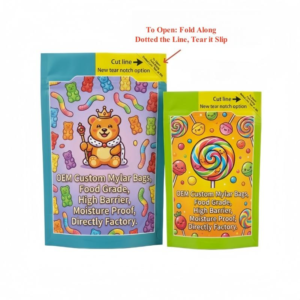
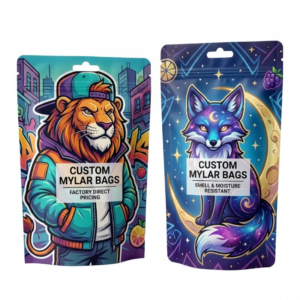
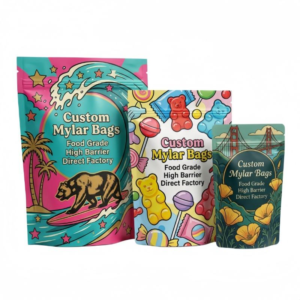
For brands using custom printed Cali bag packaging, the artwork plan should be confirmed before quotation. Relevant inputs include the number of artwork versions, front and back coverage, print colors, barcode placement, regulatory text, warning space, lot or date coding, and the intended matte, gloss, or other finish. A finish or visual effect does not establish the barrier structure, and the print process may impose limits on fine text, registration, color matching, or printable areas.
Private-label programs should keep the physical package consistent across strains or product variants while allowing controlled artwork changes. Ask whether the same dimensions, laminate specification, zipper position, tear-notch location, and seal geometry can be maintained across the SKU group. Multi-SKU consistency can simplify filling, storage, and quality checks, but a single size may not present every flower strain equally. Validate the largest and smallest expected fill profiles before standardizing the range.
Destination-Market and Quality Checks
Food-grade positioning should be treated as a specification to document, not as a substitute for market-specific compliance review. Confirm the intended contents, applicable food-contact or cannabis-packaging rules, labeling space, child-resistance expectations, recycling or disposal requirements, and any importer documentation needed for the destination market. The package itself does not determine whether the finished cannabis product is compliant.
Before approving production, request a sample or drawing showing the external dimensions, internal usable area, zipper and tear-notch positions, seal geometry, artwork boundaries, and material structure. Check the filled pouch for zipper engagement, opening behavior, seal quality, flower compression, product movement, and visual alignment. If the packaging will be heat sealed, confirm the recommended sealing window with the chosen film and filling process.
RFQ Information for Wholesale Supply
For a useful quotation on Cali Mylar bag manufacturer wholesale supply, provide the intended contents, nominal 3.5 g fill weight, actual flower dimensions or a representative sample, desired pouch dimensions, estimated quantity, number of artwork versions, material or barrier preference, zipper and heat-seal requirements, finish, filling method, destination market, and compliance documentation needs. Also ask the supplier to confirm MOQ, sampling options, production timing, packing configuration, and any available test or material documents rather than assuming these terms.
Frequently Asked Questions
Are these bags sized for every 3.5 g flower product?
No. The 3.5 g reference does not establish one universal pouch size. Flower density, nug size, headspace, and filling method should be checked against the proposed internal dimensions before approval.
Do the tear notch and zipper make the bag child-resistant?
Not necessarily. A tear notch and ordinary resealable zipper do not by themselves establish a tested child-resistant closure. Confirm the required closure system and documentation for the destination market.
Can the bags help contain cannabis aroma?
They may help contain aroma when the complete laminate and sealing system are suitable and the bag is properly sealed. Aroma performance should be confirmed from the selected structure or relevant supplier evidence rather than treated as an absolute guarantee.
Can these Cali bags be custom printed for multiple strains?
Custom printing and multi-SKU artwork can be discussed as part of the specification. Confirm print coverage, artwork versions, finish, substrate limits, dimensions, and consistency requirements before requesting a final quotation.
What should a buyer provide for an RFQ?
Provide the contents, 3.5 g fill reference, actual product dimensions or sample, desired pouch size, quantity, artwork versions, material or barrier preference, closure and heat-seal needs, finish, filling method, destination market, and compliance requirements.
Request a Product-Specific RFQ
Contact the packaging team with your flower profile, 3.5 g fill reference, actual product dimensions or sample, desired pouch dimensions, quantity, artwork versions, material or barrier requirements, zipper and heat-seal preferences, finish, filling method, destination market, and compliance needs. These details allow the supplier to confirm fit, structure, customization scope, and commercial terms for your cannabis packaging program.
Reviews
There are no reviews yet.