
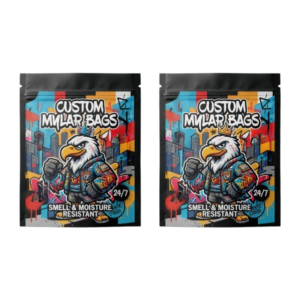
Custom Printed Child-Resistant Mylar Bags for Cannabis Products
Custom printed child-resistant Mylar bags are flexible cannabis packaging bags made for brands, distributors, wholesalers, and private-label buyers that need branded packaging with a child-resistant opening system. They can be specified for flower, edibles, pre-rolls, or other cannabis products, but the correct bag size, internal structure, closure configuration, and regulatory details depend on the actual product and destination market.
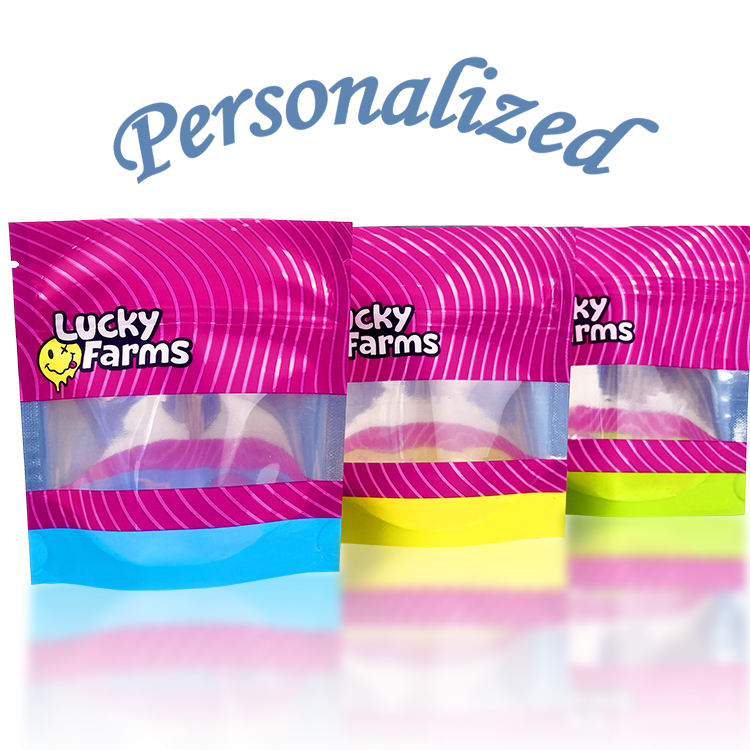
Product Specifications
| Product type | Custom printed child-resistant Mylar bags |
|---|---|
| Intended use | Cannabis product packaging; confirm whether the contents are flower, edibles, pre-rolls, or another product |
| Material | Mylar-based flexible packaging; confirm the complete laminate structure and barrier requirements |
| Closure | Child-resistant opening system; confirm the mechanism, testing documentation, and sealing arrangement required for the destination market |
| Printing | Custom printing; confirm artwork, print colors, coverage, registration, and printable area |
| Size and capacity | To be specified from product dimensions, fill weight, density, headspace, and filling method |
| Finish and format | Confirm matte, gloss, metallic, holographic, clear-window, flat, stand-up, or other requested configuration |
Choose the Structure Around the Contents
The packaging decision should begin with the product rather than the artwork. Flower density varies by strain and preparation, so a stated fill weight does not identify one universal bag size. The buyer should provide the product’s approximate dimensions, fill weight, bulk density if known, desired headspace, and whether the package must stand during filling or display.
For flower, the laminate and sealing system influence aroma retention, moisture management, oxygen exposure, light protection, puncture resistance, stiffness, and heat sealability. A suitable barrier laminate may help contain aroma and protect product quality when the bag is properly sealed, but performance depends on the complete material structure, seal geometry, closure, and filling process. A metallic or opaque appearance does not by itself prove a specific barrier level, and a clear window can improve product visibility while allowing more light exposure than an opaque construction.
For edibles, confirm whether the product is oily, greasy, sticky, or moisture-sensitive. The bag may need an appropriate internal sealant, resealable access, adequate warning and labeling space, and a structure suitable for the product-contact application. Food-contact requirements and destination-market documentation must be reviewed before production; they should not be assumed from the word Mylar or from the printed appearance.
For pre-rolls, specify the number of units, individual length and diameter, orientation, and the amount of internal movement that is acceptable. A bag that is suitable for loose flower may not protect pre-rolls from shifting or crush risk. The filling team should also confirm whether the package is filled manually, with a semi-automatic system, or through another process.
Child-Resistant Access Versus Ordinary Resealability
A child-resistant bag should not be treated as the same product as an ordinary resealable zipper pouch. The selected child-resistant mechanism, opening sequence, seal layout, and supporting documentation must be confirmed for the target market. A zipper can provide resealability, while child resistance depends on the specified closure design and its applicable testing or regulatory requirements.
Ask whether the intended construction combines a child-resistant opening with a heat seal for initial tamper evidence or freshness control. Heat sealing can create a more controlled first opening, but it also affects filling-line setup, seal width, opening position, and the user’s access to the zipper. The final choice should balance child-resistant access, convenience, package integrity, and the way the product is filled.
Bag Style, Headspace, and Filling Behavior
Stand-up formats can provide a stable base and may simplify shelf presentation, while flat formats can support efficient case packing and a different artwork footprint. Gussets change the usable volume and can affect how the bag opens during filling. Confirm the bottom and side gusset arrangement, top seal area, opening location, and whether the bag must remain stable while being filled or displayed.
Headspace should be selected deliberately. Too little headspace can make filling, sealing, and closure operation difficult; too much can increase movement and reduce presentation quality. The correct usable volume depends on the contents’ density and shape, not only on the nominal outside dimensions. A packaging supplier should review the filled sample or accurate product measurements before finalizing the die line and size.
Custom Printing and Artwork Control
Custom printing turns the bag into a SKU-specific brand asset, but artwork requirements must be reviewed against the selected substrate and format. Confirm the printable panels, seal exclusions, zipper or child-resistant closure location, tear-notch position, gusset visibility, barcode area, warning-panel space, and any clear window. A design that looks correct on a flat proof may shift visually when applied across a gusset or shaped profile.
Provide the number of artwork versions, color expectations, logo files, required text, finish preference, and whether each strain, flavor, potency, or product size needs a separate SKU. Matte, gloss, metallic, holographic, and kraft-style effects may be available depending on the selected construction, but appearance options can affect color reproduction, opacity, scuff visibility, and the readability of small regulatory text.
Multi-SKU and Private-Label Procurement
For multi-SKU programs, consistency matters as much as individual bag appearance. Confirm which specifications remain common across the range, such as bag dimensions, laminate, closure, seal area, and finish, and which elements change, such as artwork, strain name, flavor, or regulatory copy. Shared dimensions may simplify purchasing and filling, while different product densities may still require separate volume checks.
Private-label, OEM, and wholesale buyers should establish an approval sequence before the production specification is released. The sequence can include artwork review, structural confirmation, child-resistant closure review, filled-bag evaluation, color approval, and destination-market label review. This process reduces the risk of approving attractive artwork before confirming that the bag works with the product and filling method.
Destination-Market Review Before an RFQ
Requirements for cannabis packaging can differ by jurisdiction and product category. Before requesting a quotation, identify the destination market, product type, required warnings, labeling format, child-resistant expectations, tamper-evidence needs, and any product-contact or documentation requirements. Do not assume that a printed warning, a zipper, or a child-resistant description alone establishes compliance.
Frequently Asked Questions
Are these bags suitable for flower, edibles, and pre-rolls?
They can be considered for those cannabis product categories, but the correct size, barrier structure, headspace, and closure arrangement must be confirmed for the actual contents. Flower density, edible moisture or grease, and pre-roll dimensions create different packaging requirements.
Is a child-resistant bag the same as a resealable zipper bag?
No. A standard zipper supports resealability, while child resistance depends on the specified opening mechanism and the testing or documentation required for the destination market. Confirm the exact closure configuration before approval.
Can the bags be printed for multiple strains or SKUs?
Yes, custom printing can be planned for multiple artwork versions. Provide the number of SKUs, shared specifications, variable product information, color requirements, and the artwork for each version so the printable area and production approach can be reviewed.
Does a Mylar bag automatically provide a specific odor or moisture barrier?
No. Barrier performance depends on the complete laminate, sealant, closure, and sealing process. The selected structure may help contain aroma or manage moisture when properly sealed, but the required performance must be confirmed against the product and application.
What should be included in a quotation request?
Provide the contents, fill weight or actual product dimensions, desired bag dimensions, quantity, artwork versions, material or barrier preference, closure, finish, pouch style, filling method, destination market, and compliance or documentation needs.
Request a Product-Specific B2B Quotation
For an accurate RFQ, send the product type, fill weight or physical dimensions, desired pouch size, estimated quantity, number of artwork versions, preferred material or barrier, child-resistant closure requirements, finish, pouch style, filling method, destination market, and applicable compliance or documentation needs. If available, include a filled sample specification or product images so the usable volume, headspace, seal area, and artwork layout can be reviewed before final approval.
Reviews
There are no reviews yet.