
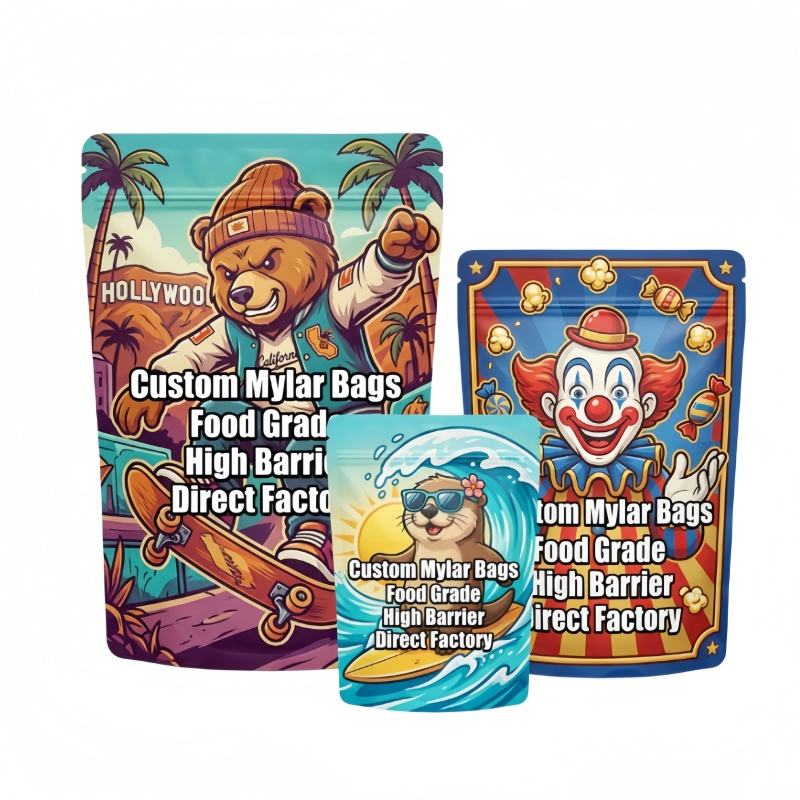
Custom Printed 3.5g Child-Resistant Cali Mylar Bags
These custom printed 3.5g child-resistant Cali Mylar bags are flexible cannabis packaging intended for brands, wholesalers, distributors, private-label programs, and multi-SKU buyers packaging approximately 3.5g of cannabis flower. The defining specification is the combination of custom printing, a child-resistant closure or opening system, a Mylar bag format, and a smell-proof product designation. Because a 3.5g fill weight does not determine one universal pouch size, buyers should confirm the actual flower density, desired headspace, dimensions, barrier structure, and closure details before requesting a production quotation.
Product Specifications
| Product type | Custom printed Cali-style Mylar cannabis bag |
|---|---|
| Intended contents | Cannabis flower, with final product compatibility to be confirmed by the buyer |
| Nominal fill reference | 3.5g; actual usable volume depends on flower density, grind, headspace, and pouch dimensions |
| Child resistance | Child-resistant feature stated in the product specification; closure design, testing, and destination-market requirements must be confirmed |
| Odor control | Smell-proof product designation; actual aroma containment depends on the complete laminate, seals, and closure when properly sealed |
| Material | Mylar bag; exact film and laminate structure must be specified for the intended barrier and sealing requirements |
| Printing | Custom printed; artwork process, print colors, printable area, and substrate limitations require confirmation |
| Dimensions and style | Not supplied; confirm width, height, gusset if applicable, opening position, seal area, and usable fill area |
Fit for 3.5g Cannabis Flower
A stated 3.5g fill weight is a purchasing reference, not a guaranteed bag capacity. Dense flower may occupy less volume than loose, airy flower, while larger buds may require additional headspace and a wider opening. Ask the supplier to evaluate the actual product dimensions or provide a physical sample assessment before approving the pouch size. Excessive headspace can increase movement during handling and make the pack look underfilled; insufficient headspace can compress flower, interfere with the closure, and make heat sealing inconsistent.
For a cannabis flower program, confirm whether the bag must accommodate whole buds, smaller pieces, or a blend of product sizes. The desired fill method also matters. Manual filling, semi-automatic filling, and automated equipment can impose different requirements for opening width, pouch stiffness, seal clearance, and repeatable positioning. If the final package will receive a separate heat seal, reserve a clean seal zone above the product and keep artwork, zippers, and tear features outside that area.
Mylar Structure and Aroma Barrier Decisions
Mylar is commonly used as a commercial term for a polyester-film-based flexible bag, but the name alone does not identify the complete laminate. Barrier performance depends on the full film structure, sealant layer, thickness, seams, zipper or closure, and sealing process. For this reason, smell-resistant marijuana packaging bags should be specified around the intended aroma, moisture, oxygen, light, puncture, stiffness, and heat-seal requirements rather than judged by appearance alone.
A suitable barrier structure can help contain cannabis aroma and protect flower from environmental exposure when the package is properly sealed. However, a zipper is not automatically an airtight or child-resistant system, and a printed metallic or opaque appearance does not by itself prove a particular oxygen or moisture transmission rate. Ask for the proposed laminate, sealant, closure construction, and any available technical documentation relevant to the destination market. If aroma containment is a priority, evaluate the finished bag rather than the film name in isolation.
Child-Resistant Closure and Seal Configuration
The input identifies this product as child-resistant, but the exact mechanism should be documented during specification. A child-resistant feature may involve a specialized zipper, press-to-close interaction, slider, or another opening configuration. It should not be treated as equivalent to an ordinary resealable zipper. Confirm whether the supplied closure is the tested configuration required for the intended market and whether any local packaging, labeling, or testing obligations apply.
Also clarify the relationship between the child-resistant opening and a secondary heat seal. A heat seal can provide tamper evidence or additional aroma containment, but it may change how the end user accesses the product and how the child-resistant feature is used. Confirm tear-notch placement, opening direction, seal width, reclose behavior, and whether the filling line can consistently close the bag without contaminating the seal area.
Custom Printing for Cali and Multi-SKU Programs
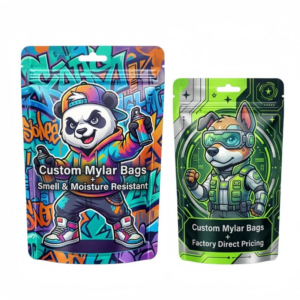
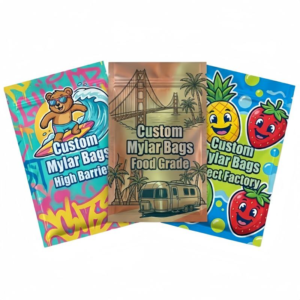
Custom printing allows a cannabis brand to separate strains, product variants, or private-label lines through coordinated artwork. For private-label Cali bags for multi-SKU cannabis programs, establish a master dieline and a controlled artwork system before production. Confirm the printable area, safe margins, zipper and seal exclusions, barcode placement, warning or regulatory panels, color references, and whether the selected substrate affects color reproduction.
Multi-SKU consistency should be discussed at the quotation stage. Buyers may need matching dimensions, laminate, closure behavior, finish, and print registration across several strain designs. At the same time, artwork changes can create separate proofing and production requirements, so provide the number of versions, languages, variable data, and whether each SKU needs a distinct front, back, or side panel. A matte, glossy, metallic, holographic, or other visual effect should be treated as a finish request requiring confirmation; visual appearance does not establish the underlying barrier structure.
Market and Procurement Checks
Cannabis packaging requirements vary by destination market and by product category. Before approving these 3.5g child-resistant cannabis Mylar bags, confirm the required warning content, child-resistant packaging rules, labeling area, traceability information, tamper-evidence expectations, and any food-contact or cannabis-packaging documentation relevant to the product. The term “Cali” may be a style or product naming element; it should not be interpreted as proof of California approval, origin, or compliance.
For a wholesale cannabis bag manufacturer comparison, request the same technical information from each candidate: finished dimensions, bag style, film and laminate structure, closure specification, seal method, print process, finish, sample process, artwork requirements, quantity breaks, and destination-market documentation. Do not compare suppliers only by the word “Mylar” or by an attractive printed sample. The finished package must fit the flower, run through the intended filling process, and satisfy the buyer’s legal and technical review.
Common Trade-Off: Capacity Versus Compact Presentation
A more compact pouch can create a neat retail presentation and reduce unused headspace, but it may be less tolerant of large buds, variable density, or fast filling. A larger pouch offers more filling tolerance and may protect against compression, yet too much empty space can increase product movement and reduce visual consistency. The right balance depends on actual flower dimensions, target fill presentation, closure clearance, and whether the pouch will be heat sealed. Approve the size from a filled sample rather than from the 3.5g label alone.
Buyer FAQ
Are these bags suitable for exactly 3.5g of every cannabis flower type?
No universal size can be confirmed from the 3.5g reference alone. Flower density, bud size, headspace, filling method, and desired presentation affect the required usable volume. Confirm the actual product dimensions and approve a filled sample before finalizing the pouch.
Does the child-resistant feature mean the bag has a tested child-resistant closure?
The product specification identifies the bag as child-resistant, but the exact closure construction, test basis, and destination-market requirements must be confirmed. An ordinary resealable zipper should not be assumed to provide child resistance.
Are these bags completely odor-proof?
“Smell-proof” describes the product search and positioning, but absolute or permanent odor elimination should not be assumed. Aroma containment depends on the complete laminate, closure, seals, and handling when the bag is properly sealed. Request the applicable technical details or evaluate a finished sample.
Can one bag design support several strain or private-label SKUs?
Yes, the custom printed format can be planned for multiple artwork versions, subject to the supplier’s print process, substrate, registration, and production requirements. Confirm the number of SKUs, artwork variations, variable information, and shared dieline before quotation.
What should be included in an RFQ for these cannabis bags?
Provide the contents, 3.5g fill target, actual flower dimensions or density information, desired pouch dimensions, quantity, artwork versions, material or barrier preference, closure, finish, filling method, destination market, and compliance or documentation needs. Ask the supplier to identify all assumptions in the quotation.
Request a B2B Specification Review
For an accurate RFQ, send the intended contents, fill weight, actual product dimensions, desired pouch dimensions, order quantity, number of artwork versions, preferred material or barrier, child-resistant closure requirements, finish, filling method, destination market, and compliance documentation needs. A supplier can then confirm the proposed structure, usable volume, seal geometry, print area, and sample requirements for your custom printed 3.5g child-resistant Cali Mylar bags.

Reviews
There are no reviews yet.