
Custom Printed 3.5g Child-Resistant Cannabis Bags for B2B Packaging
Custom printed 3.5g child-resistant cannabis bags are flexible Mylar bags specified for cannabis packaging programs that need a stated 3.5g fill target, custom branding, odor resistance, and a child-resistant opening feature. They can be evaluated by cannabis brands, distributors, wholesalers, private-label buyers, OEM/ODM teams, and multi-SKU operators. The stated 3.5g reference does not establish one universal pouch size because flower density, product format, headspace, closure design, and filling method all affect the usable volume required.
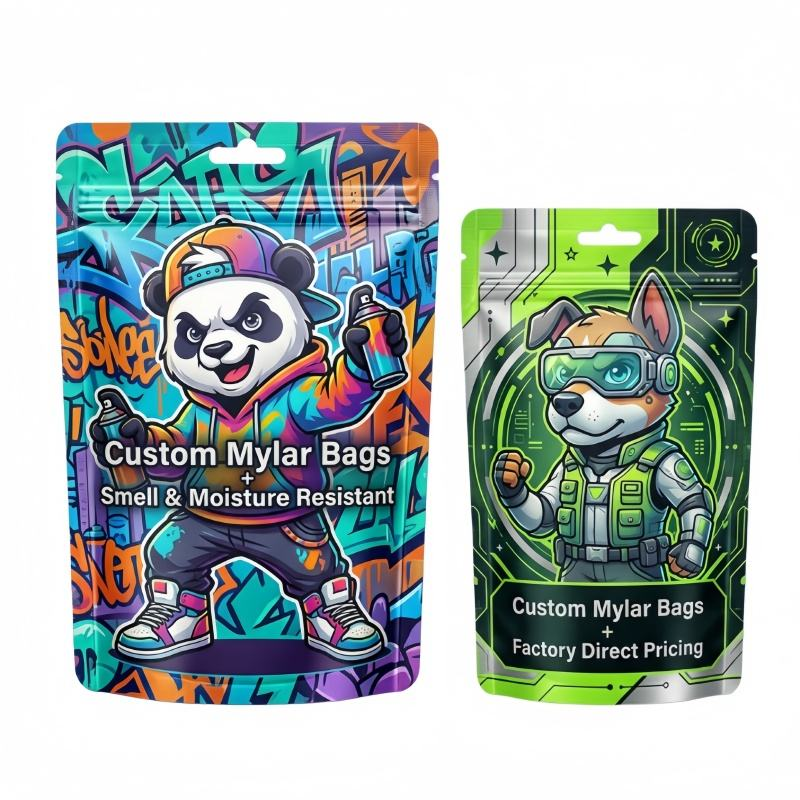
This product should be finalized from the actual contents and destination-market requirements rather than selected by fill weight alone. The supplied product image shows the product category and appearance; the final specification should confirm dimensions, laminate, closure construction, artwork limits, and any required testing or documentation before production.
Product Specifications
| Product type | Custom printed flexible cannabis bag |
|---|---|
| Reference fill | 3.5g; confirm the actual contents, density, and required headspace |
| Named material | Mylar bag; confirm the complete laminate structure and barrier layers |
| Child-resistant feature | Child-resistant design stated; confirm the specific closure construction and applicable testing requirements |
| Odor function | Smell-resistant or odor-containment intent; performance depends on the complete structure and properly sealed openings |
| Printing | Custom printing; confirm artwork versions, print method, colors, and printable area |
| Dimensions | Not stated; determine from product dimensions, density, gusset, seal geometry, and headspace |
| Finish and format | Confirm matte, gloss, metallic, holographic, window, flat, or stand-up configuration if required |
Barrier Structure and Odor Control
Mylar is commonly used as a shorthand for a durable flexible film, but the appearance or material name alone does not define the finished barrier. Ask for the complete laminate structure, including the layers selected for aroma containment, moisture resistance, oxygen control, light protection, puncture resistance, stiffness, and heat sealability. Barrier behavior depends on the combined films, inks, adhesive system, seals, zipper area, and final handling.
For cannabis flower or other aromatic contents, a suitable structure can help contain aroma when the bag is properly closed and sealed. It should not be treated as an absolute or permanent smell-proof guarantee without product-specific test data. A stronger barrier may improve protection from light, moisture, and oxygen, but it can also affect stiffness, appearance, seal conditions, and cost. If the product is oily, sharp-edged, moisture-sensitive, or susceptible to crushing, confirm puncture and seal requirements with the packaging supplier.
3.5g Fill Weight, Volume, and Headspace
A 3.5g label describes the target fill weight, not the required external dimensions. Cannabis flower can vary substantially in density, particle size, trim, and compression. The same weight may need different internal volume depending on whether the product is loose flower, compact flower, or another cannabis format. Excessive headspace can make the pack look underfilled and permit movement, while insufficient headspace can stress the zipper, top seal, or gusset.
For a reliable RFQ, provide the actual product dimensions or a representative sample, target fill weight, approximate density, preferred presentation, and filling method. Confirm whether the bag will be filled manually, with a semi-automatic system, or on an automated line. These details influence pouch width, height, opening size, gusset behavior, sealing allowance, and production tolerances.
Closure and Child-Resistant Specification
The product is described as child-resistant, but an ordinary resealable zipper should not automatically be treated as a tested child-resistant closure. Confirm how the child-resistant function operates, whether it is integrated into the zipper or another opening mechanism, and which destination-market testing or documentation is required. Also confirm whether the package must be heat sealed after filling, opened and reclosed by the consumer, or supplied with both features.
A heat seal can provide a tamper-evident or production seal when correctly specified, but it changes the opening workflow and requires suitable equipment, temperature, dwell time, pressure, and seal width. A tear notch may improve access after the initial seal, while an incorrectly positioned notch can affect opening control. Ask for closure samples and sealing guidance before approving a large multi-SKU run.
Custom Printing, Artwork, and SKU Control
Custom printing allows a cannabis brand to coordinate strain, flavor, potency, cultivar, or private-label artwork across a product family. Confirm the printable panel, safe area, bleed, die line, zipper and seal exclusions, color references, barcode placement, variable-data capability, and proofing process. Matte, gloss, metallic, holographic, kraft-style, and clear-window effects should be treated as appearance choices that may depend on the substrate and ink system; they do not by themselves prove a particular barrier level.
For multi-SKU programs, establish one approved structural specification and a controlled artwork schedule. This can reduce variation between strain or product versions, but the buyer should still verify each SKU proof for legal text, warnings, net contents, batch fields, barcode readability, and correct product identity. If a clear window is requested, weigh product visibility against light protection and the available printable area.
Format and Filling Considerations
Confirm whether the required bag is flat, stand-up, or gusseted. A stand-up pouch can support shelf presentation and may provide useful bottom volume, while a flat bag may suit compact packing and shipping. Gusset depth affects filling behavior, stability, internal volume, and the position of the product after filling. The top seal and zipper also require enough clear area for reliable production sealing.
For flower, evaluate movement, compression, aroma, and headspace. For pre-rolls, confirm length, diameter, internal movement, and crush risk rather than relying on the 3.5g reference. For edibles or other formats, confirm moisture, grease, resealability, serving information, and any food-contact requirements. The selected structure and closure should follow the actual contents and destination market.
Destination-Market and Procurement Review
Packaging requirements vary by destination, cannabis product category, and sales channel. Before artwork approval, identify the market, package type, required warnings, child-resistance expectations, tamper-evidence needs, labeling fields, recycling or material rules, and any requested declarations or test reports. Do not assume that a child-resistant description, Mylar construction, or custom print alone establishes compliance.
Procurement teams should also confirm sample approval, dimensional tolerances, color consistency, seal integrity expectations, carton packing, and quality-control checkpoints. Pricing, MOQ, lead time, inventory, and delivery terms are not stated for this product and should be requested directly for the required configuration.
Frequently Asked Questions
Are these bags suitable for a 3.5g cannabis flower fill?
They are specified with a 3.5g reference fill, but suitability depends on flower density, product dimensions, desired headspace, and filling method. Confirm the required pouch dimensions with a sample or representative product before approval.
Does the Mylar material make the bag completely smell-proof?
No absolute performance claim should be made from the material name alone. The complete laminate, closure, heat seal, and handling determine odor containment. The bag can be evaluated for smell resistance when properly sealed, subject to the final structure and any available test data.
Is the zipper automatically a tested child-resistant closure?
No. A standard resealable zipper and a tested child-resistant closure are different specifications. Confirm the closure construction, applicable destination-market requirements, and supporting documentation before production.
Can each strain or product SKU have different artwork?
Custom printing can support multiple artwork versions, subject to the selected print process, substrate, printable area, quantity, and approval workflow. Confirm version control, variable information, barcode placement, and legal copy for every SKU.
What should be included in a quotation request?
Provide the contents, fill weight, actual product dimensions, desired pouch dimensions, quantity, artwork versions, material or barrier preference, closure, finish, filling method, destination market, and compliance or testing needs.
Request a Product-Specific RFQ
To receive a meaningful quotation for these custom printed 3.5g child-resistant cannabis bags, send the contents, target fill weight, actual product dimensions or sample, desired pouch dimensions, estimated quantity, number of artwork versions, preferred material or barrier, closure requirement, finish, filling method, destination market, and compliance documentation needs. The supplier can then confirm the structure, usable volume, artwork feasibility, closure specification, sampling requirements, MOQ, pricing, and production terms for your program.


Reviews
There are no reviews yet.