
Custom Printed 3.5g Holographic Stand-Up Mylar Pouches for Cannabis Brands
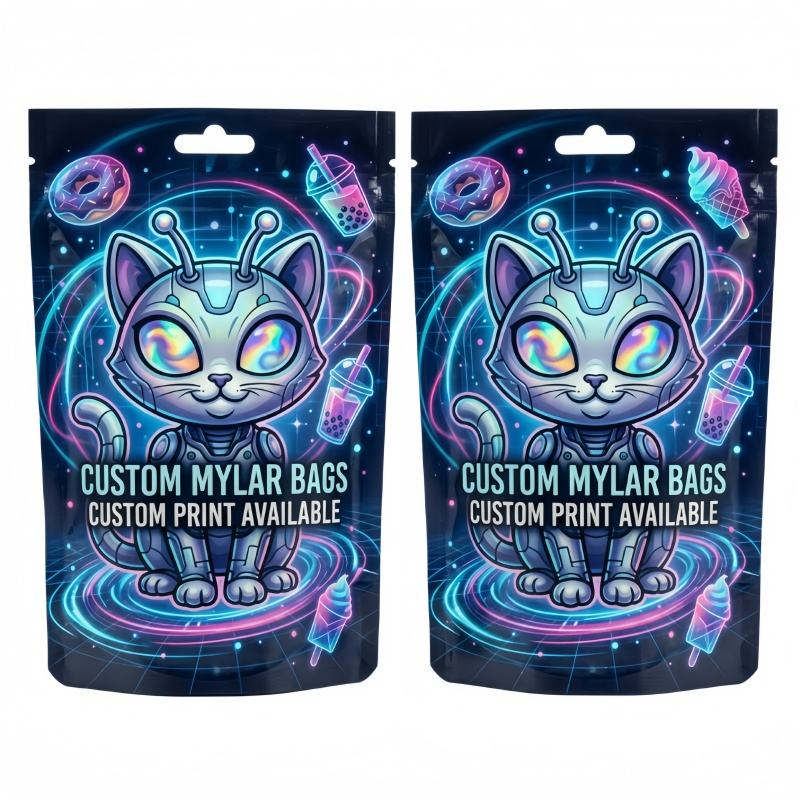
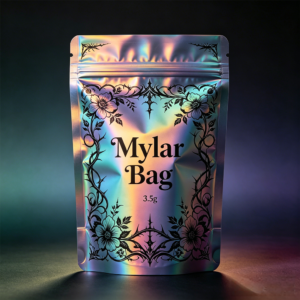
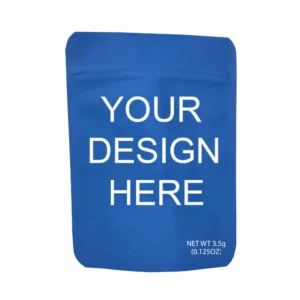
Custom printed 3.5g holographic stand-up Mylar pouches are cannabis packaging bags specified for presenting and protecting a nominal 3.5g product format, commonly cannabis flower, with a stand-up pouch profile and holographic appearance. They are intended for cannabis brands, distributors, wholesalers, private-label and OEM buyers, and multi-SKU teams that need coordinated packaging with product-specific artwork. The stated 3.5g fill reference does not establish one universal pouch dimension because flower density, trim, headspace, closure design, and filling equipment affect the required usable volume.
Product Specifications
| Product type | Stand-up cannabis pouch |
|---|---|
| Nominal fill reference | 3.5g; confirm actual product volume and density before sizing |
| Appearance | Holographic finish or holographic visual effect as specified for the finished pouch |
| Printing | Custom printed; artwork, print coverage, and color requirements require confirmation |
| Material | Mylar pouch; the complete laminate structure and barrier layers require confirmation |
| Format | Stand-up construction with a bottom gusset |
| Closure | Closure type is not stated; confirm zipper, heat-seal, tear-notch, or other requirements |
| Compliance and testing | Destination-market requirements, documentation, and any testing must be confirmed for the final specification |
How the 3.5g Format Affects Pouch Sizing
A 3.5g label describes mass, not the pouch’s internal dimensions. Dense flower and loose flower can occupy different volumes, while large buds may need additional headspace to reduce compression during filling and handling. Ask for the actual product dimensions, density range, target headspace, and whether the pouch will be filled manually or on equipment. A sample fill is the most useful way to check standing stability, usable volume, opening access, and whether the zipper or top seal lands in the intended position.
The stand-up format uses a bottom gusset to help the filled bag remain upright for display and case packing. Gusset width, side-seal geometry, opening position, and seal area influence how easily operators can open, fill, evacuate excess air if required, and close the pouch. A pouch that looks suitable by flat dimensions can still provide insufficient usable volume after the gusset and seals are taken into account.
Material, Barrier, and Aroma Considerations
Mylar is commonly used as a trade term for flexible polyester-based packaging, but the appearance and product name alone do not identify the full laminate. Barrier behavior depends on the complete film structure, sealant layer, thickness, print construction, and sealing conditions. For cannabis flower, the procurement brief should identify whether the priority is light protection, moisture control, aroma containment, puncture resistance, stiffness, or a balance of these properties.
A suitable barrier structure can help limit exposure to light, moisture, oxygen, and external odors, while a properly formed heat seal helps contain the packed product. Depending on the laminate structure and seal quality, the pouch may provide smell-resistant performance; this should not be treated as a permanent or absolute odor-proof guarantee without relevant test data. Ask for the proposed laminate, sealant, barrier targets, and available test documentation rather than selecting a structure from the holographic effect alone.
Holographic presentation can increase shelf impact, but it may affect how fine artwork, regulatory text, barcodes, and variable information appear. Confirm whether the holographic effect is part of the film, an applied finish, or a defined printed effect. The final construction should also be reviewed for scuff visibility, print contrast, and readability of small mandatory information.
Closure and Seal Decisions
An ordinary resealable zipper can support repeated opening and closing, but it is not automatically a tested child-resistant closure. If the destination market requires child-resistant packaging, identify the required standard, test method, documentation, and complete packaging configuration before approving artwork or production. A heat seal can provide a tamper-evident opening feature when the final design and process support it, while a tear notch can make the top seal easier to open. These elements may be combined or omitted depending on the product and market brief.
For flower, discuss whether the pouch will be zipper-resealed after the initial opening, heat-sealed for distribution, or supplied with both features. The sealing temperature, dwell time, pressure, and material compatibility should be validated with the filling process. Poorly matched settings can affect seal integrity even when the film specification is appropriate.
Custom Printing and Multi-SKU Control
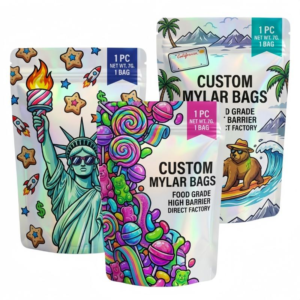
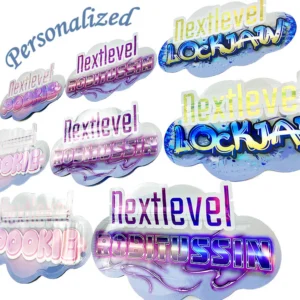
Custom printed cannabis pouches allow a brand to coordinate strain names, varieties, potency panels, warning areas, flavor or cultivar descriptors, and other SKU-specific information. Before quotation, provide the expected artwork versions, color references, barcode requirements, variable-data needs, and the location of any clear or reserved areas. The printable area is limited by the pouch edges, gusset, seals, zipper, tear notch, and any holographic substrate behavior.
For private-label, OEM, and multi-SKU programs, establish one approved dieline and a controlled artwork workflow. Confirm which dimensions, laminate, finish, closure, and seal geometry remain constant across SKUs and which elements change. This reduces the risk of inconsistent brand presentation or text being positioned too close to a fold or seal. If different strains use different fill densities, validate each representative SKU rather than assuming that one 3.5g sample fits all products identically.
Destination-Market and Procurement Review
Packaging requirements vary by destination market and product category. Confirm applicable rules for cannabis labeling, warnings, child resistance, tamper evidence, recyclability statements, contact-material requirements, barcode placement, and language. No compliance status, certification, or approval should be assumed from the pouch format or holographic finish. Request the documentation needed for the specific market and intended contents, then have the responsible compliance team review the final printed version.
For an RFQ, include the intended contents, fill weight, actual product dimensions or density range, desired pouch dimensions, estimated quantity, number of artwork versions, proposed material or barrier preference, closure requirements, finish expectations, filling method, destination market, and compliance documentation needs. If the pouch must fit a carton, display tray, or automated line, provide those interface dimensions as well.
Frequently Asked Questions
Are these pouches sized for every 3.5g cannabis flower product?
No single pouch size fits every 3.5g flower product. Density, bud size, trim, headspace, gusset, and closure placement affect the required internal volume. Confirm the actual fill dimensions and validate with a sample.
Does the holographic finish define the pouch’s barrier performance?
No. Holographic appearance does not by itself identify the laminate or barrier level. Confirm the complete structure and any available moisture, oxygen, light, aroma, or seal data for the selected construction.
Can the pouch be used with a zipper and a heat seal?
That configuration may be possible, but the closure design is not specified here. Confirm the required zipper, heat seal, tear notch, opening position, and sealing process before finalizing the specification.
Are these ordinary resealable pouches child-resistant?
Child resistance cannot be assumed from a zipper or stand-up format. If required in the destination market, specify the applicable tested closure and request the relevant documentation for the complete packaging system.
Can one design be adapted for multiple cannabis strains?
Yes, custom printing can be planned for multiple artwork versions, subject to the approved print process, substrate, and artwork area. Confirm which structural features stay consistent and validate fill fit for each materially different product.
Request a Product-Specific RFQ
Send the contents, fill weight, actual product dimensions or density, desired pouch dimensions, quantity, artwork-version count, material or barrier preference, closure and finish requirements, filling method, destination market, and compliance needs. These details allow the proposed custom printed 3.5g holographic stand-up Mylar pouch specification to be reviewed for fit, printability, sealing, and procurement requirements before quotation.
Reviews
There are no reviews yet.