
Custom Printed 3.5g Mylar Bags for Cannabis Packaging
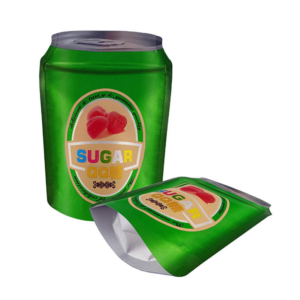
These custom printed 3.5g Mylar bags are food-grade holographic bags specified for cannabis brands, private-label programs, distributors, wholesalers, and multi-SKU packaging projects. The 3.5g designation identifies the target fill weight, not one universal pouch dimension: flower density, grind, headspace, closure area, and the desired presentation all affect the final bag specification.
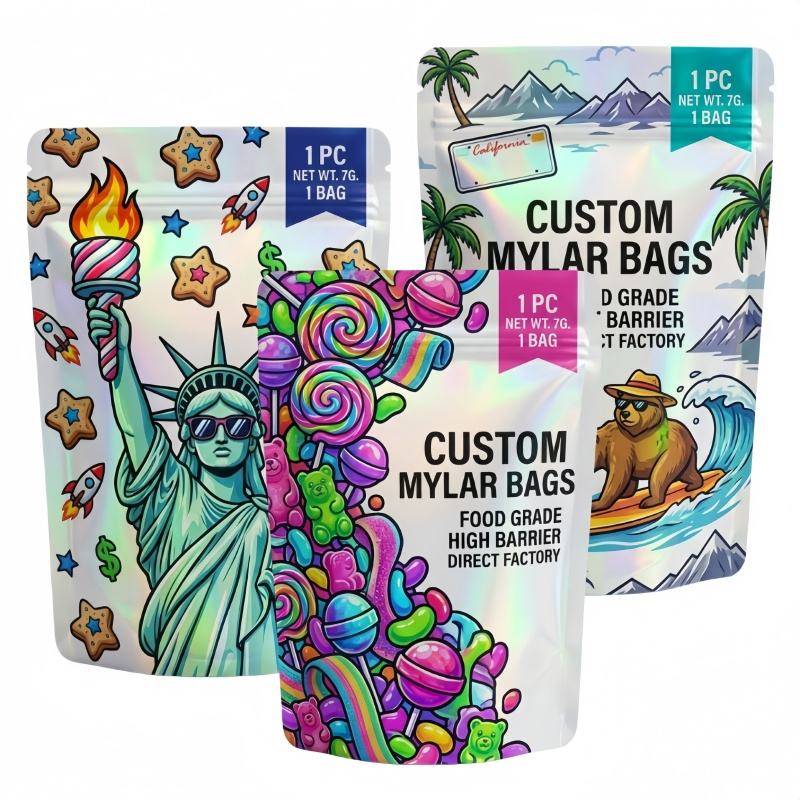
Product Specifications
| Product type | Custom printed Mylar bag |
|---|---|
| Target fill reference | 3.5g; actual usable volume depends on the packed product |
| Material designation | Mylar; complete laminate structure to be confirmed |
| Food-contact designation | Food-grade as specified in the product name; supporting documentation and destination requirements to be confirmed |
| Appearance | Holographic finish |
| Printing | Custom printing; artwork, print method, and printable area to be confirmed |
| Closure | To be confirmed, including zipper, heat seal, tear notch, or other selected configuration |
| Intended B2B use | Packaging for cannabis-related products, subject to the buyer’s product and market requirements |
How the 3.5g Reference Affects Bag Selection
A 3.5g cannabis flower fill can occupy different volumes depending on cultivar structure, moisture condition, trim, density, and whether the flower is loose or compacted. A bag that is too small can compress the product, interfere with sealing, or leave insufficient space for the closure. A bag that is too large may create excess headspace, allow more product movement, and change the visual presentation.
For an RFQ, provide the actual packed-product dimensions or a representative sample in addition to the target weight. The supplier should confirm the internal usable area, seal margins, opening position, and any gusset or shaped profile. These details matter more than the nominal 3.5g label alone when selecting 3.5g holographic cannabis bags.
Mylar Structure, Aroma, and Barrier Questions
Mylar identifies the stated packaging material, but the appearance of a holographic bag does not by itself define the complete laminate or barrier performance. The final structure may be configured according to the required balance of aroma containment, moisture control, oxygen exposure, light protection, puncture resistance, stiffness, and heat sealability. These characteristics depend on the complete film combination, thickness, seal design, and production settings.
For cannabis flower, a suitable structure can help contain aroma and protect the packed product when the bag is properly sealed. Buyers seeking smell-resistant or odor-control packaging should request the proposed laminate, seal construction, and any available technical documentation rather than treating “smell proof” as a permanent or absolute guarantee. A holographic exterior can support shelf impact and light-reduction goals, but it should not be used as proof of a specific oxygen transmission rate, moisture vapor transmission rate, or test result.
Food-grade positioning is relevant when the packaging may contact a consumable product. Confirm the applicable food-contact documentation, ink and adhesive suitability, migration requirements, and destination-market rules before approving production. The necessary documentation can vary by product category and selling jurisdiction.
Closure and Filling Configuration
The closure should be selected around the filling process and the desired consumer opening experience. An ordinary resealable zipper can support repeated access, while a heat seal can provide a separate tamper-evident or initial-seal function when specified and properly applied. A tear notch can make opening easier, but it does not automatically make the package child-resistant.
Do not treat a standard zipper as a tested child-resistant closure. If the destination market requires child-resistant packaging, identify that requirement at the quotation stage and request the appropriate closure design, testing documentation, and package-level compliance evidence. If the bags will be filled by hand, semi-automatic equipment, or an automated line, disclose the filling method so the opening width, stiffness, seal area, and handling behavior can be reviewed.
Holographic Custom Printing for Multi-SKU Programs
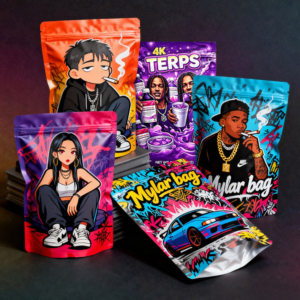
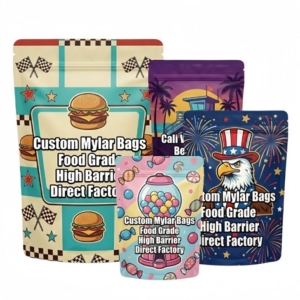
The holographic finish gives the package a distinctive visual effect for strain, flavor, cultivar, or brand-family differentiation. Custom artwork can be developed for a single SKU or a coordinated multi-SKU range. Before artwork approval, confirm the dieline, printable area, safe margins, seal exclusion zones, zipper position, tear-notch location, barcode placement, and any required warning or regulatory panel.
Holographic substrates can influence color appearance, contrast, metallic effects, and fine-detail reproduction. Ask for the recommended color treatment or proofing method if the artwork contains small text, light colors, photographic elements, or consistent brand colors across several SKUs. For private-label cannabis packaging bags, a master artwork system with controlled variable fields can help keep strain names, weights, batch areas, and market-specific information consistent without confusing one SKU with another.
Size, Headspace, and Product Protection Trade-Off
The main trade-off is presentation space versus product control. Additional headspace may make filling easier and reduce compression, but it can increase movement inside the bag and affect the perceived fullness. A tighter fit can create a compact presentation, yet insufficient space may stress the seals or compress delicate flower. The correct decision depends on the product’s physical behavior, target dimensions, closure format, and filling method.
For a flat bag, review the usable panel area and seal geometry. For a stand-up format, review the bottom gusset, filling stability, and how the pouch sits after filling. Neither a flat profile nor a stand-up profile should be assumed from the product name alone. Confirm the finished dimensions, structure, and closure before finalizing the artwork or tooling.
Buyer Confirmation Checklist
- Target contents and whether the package is for loose cannabis flower or another product form.
- Actual fill weight, product dimensions, density, and preferred headspace.
- Required finished bag dimensions, pouch style, gusset, opening, and seal area.
- Requested laminate or barrier objectives for aroma, moisture, oxygen, light, and puncture resistance.
- Closure requirements, including zipper, heat seal, tear notch, or child-resistant configuration.
- Number of artwork versions, variable information, finish preferences, and barcode or warning-panel needs.
- Filling method, destination market, food-contact documentation, and other compliance requirements.
Frequently Asked Questions
Are these bags sized for exactly 3.5g of cannabis flower?
The product is referenced for a 3.5g fill, but the weight does not establish one universal bag size. Flower density, product dimensions, headspace, and closure requirements must be reviewed to confirm the usable volume and finished dimensions.
Does the holographic finish prove that the bag has a specific barrier rating?
No. Holographic appearance describes the visual finish, not the complete laminate or a guaranteed barrier value. Confirm the proposed structure and request relevant technical documentation for aroma, moisture, oxygen, and light-protection objectives.
Can these bags be used for private-label cannabis SKUs?
They can be considered for private-label and multi-SKU programs because the product is custom printed. Confirm artwork versions, variable information, printable area, seal exclusions, and market-specific labeling requirements before production.
Do the bags include a child-resistant zipper?
A child-resistant closure should not be assumed. The zipper, heat seal, tear notch, or other closure must be specified, and any child-resistant requirement should be supported by the appropriate package-level testing and documentation.
What should a buyer provide for an accurate quotation?
Provide the contents, fill weight, actual product dimensions, desired bag dimensions, quantity, artwork versions, laminate or barrier objectives, closure, finish, filling method, destination market, and compliance or documentation needs.
Request a Product-Specific B2B Quote
To evaluate these custom printed 3.5g Mylar bags for your program, send the product details and packaging brief rather than relying on fill weight alone. Include the intended contents, actual fill weight and dimensions, desired pouch dimensions, quantity, artwork versions, material or barrier requirements, closure, holographic finish expectations, filling method, destination market, and required compliance documentation. Those inputs allow the proposed structure, usable volume, seal layout, and artwork scope to be reviewed before an RFQ is finalized.
Reviews
There are no reviews yet.