
Custom Printed 1–10kg Flat-Bottom Bags for Bulk Packaging
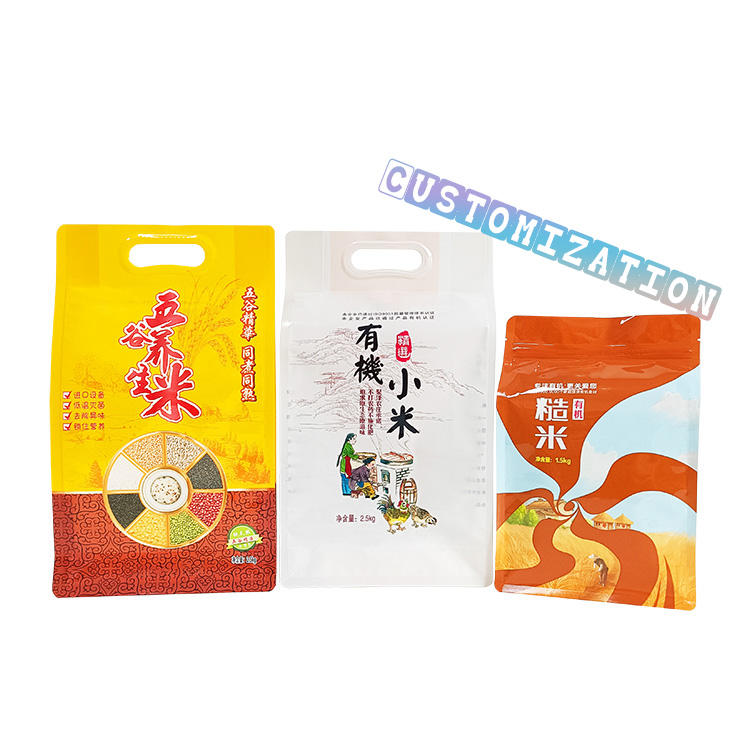
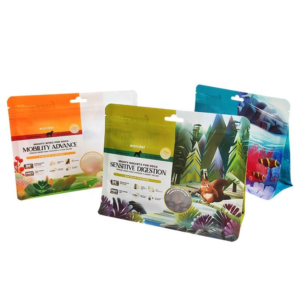
Custom printed 1–10kg flat-bottom bags are large-capacity flexible packages with a stable bottom format and brand-specific graphics. They can be specified for bulk cannabis flower, trim, biomass, edibles, ingredients, or other dry products, subject to the selected laminate and destination-market requirements. The format is relevant to cannabis brands, processors, distributors, wholesalers, private-label buyers, importers, and multi-SKU purchasers that need efficient storage, handling, presentation, and identification across larger fill weights.
Product Specifications
| Specification | Product detail |
|---|---|
| Packaging type | Flexible flat-bottom bag |
| Nominal fill-weight range | 1–10kg; the correct bag dimensions must be confirmed against product density and required headspace |
| Printing | Custom printed; printing process, color count, coverage, and artwork limits require confirmation |
| Material | Flexible laminate selected to the required barrier, stiffness, sealing, and handling specification |
| Closure | Buyer to confirm zipper, heat-seal-only, or another compatible closure configuration |
| Finish | Buyer to confirm; available appearance depends on the selected film and printing specification |
| Intended contents | To be confirmed, including product type, density, oil or grease exposure, and sensitivity to moisture, oxygen, aroma loss, and light |
| Customization | Bag dimensions, laminate, graphics, closure, finish, and SKU versions can be defined during quotation |
Match Capacity to Product Density and Headspace
The stated 1–10kg range does not establish one universal set of pouch dimensions. One kilogram of dense material occupies far less space than one kilogram of loose cannabis flower or low-density biomass. Buyers should therefore provide both target fill weight and either bulk density, a filled-product sample, or the actual volume the contents occupy.
Headspace also affects packing and sealing. Insufficient headspace can place flower or other material inside the seal area, creating contamination, wrinkles, or an incomplete seal. Excessive headspace increases package size and may allow more internal movement. For cannabis flower, unnecessary compression can affect visual quality, while a bag that is too loose can be inefficient for cartons, pallets, and storage.
Laminate Selection and Barrier Performance
These custom laminated flat-bottom bags can be configured with multilayer flexible structures, but the correct construction depends on the contents and distribution conditions. Barrier performance comes from the complete laminate and sealing system—not from a matte, metallic, holographic, or kraft-style appearance alone.
- Aroma and odor: A suitable barrier laminate and sound seals help contain aroma when properly closed. “Smell resistant” should be treated as a specification requiring material and seal evaluation, not as a permanent odor-proof guarantee.
- Moisture and oxygen: Selected barrier layers can reduce moisture-vapor and oxygen transfer. Actual performance depends on the final structure, package size, seals, closure, and storage conditions.
- Light: Opaque or metallized structures may improve light protection. A clear window provides product visibility but reduces protection in the window area.
- Puncture and handling: Heavier fills place more stress on the film, gussets, corners, and seals. The laminate should be selected for the product texture, total weight, handling method, and shipping environment.
- Heat sealability: The inner sealant layer must be compatible with the contents and the buyer’s filling equipment or sealing process.
Flat-Bottom Format, Filling, and Sealing
Large-capacity cannabis flat-bottom pouches use a bottom structure intended to form a stable base after filling. Their panels can provide broad space for product identification and graphics, while the gusseted format accommodates more volume than a simple two-side-seal flat pouch. Stability still depends on the bag dimensions, fill distribution, product density, and bottom construction.
Manual filling, semi-automatic filling, and automated filling can impose different requirements for mouth opening, bag stiffness, zipper position, seal-area clearance, and dimensional tolerances. The buyer should confirm whether bags will be filled from the top, how air will be managed, and whether the final top seal will be made with an impulse, continuous-band, or other suitable heat sealer.
A real trade-off is stiffness versus handling flexibility. A stiffer laminate can improve shelf shape, print presentation, and filling control, but it may use more material and be less easy to fold around bulky contents. A more flexible structure can improve packing efficiency yet provide less shape retention when partially filled.
Zipper and Child-Resistant Requirements
A conventional press-to-close zipper may support repeated access, but it is not automatically child-resistant. If the finished package must meet a child-resistant standard in a destination market, buyers should request a purpose-designed closure and identify the applicable testing and documentation requirements before production. A zipper is also not a substitute for the final heat seal when tamper evidence or stronger containment is required.
For bulk processor-to-processor supply, a heat-seal-only configuration may be suitable when repeated access is unnecessary. For contents accessed over multiple sessions, a resealable closure may improve handling after the original top seal is removed. Closure choice should reflect package weight, opening frequency, contents, and regulatory use case.
Custom Printing and Multi-SKU Control
Custom printed bulk cannabis bags can carry logos, strain or product names, lot-identification areas, handling statements, warnings, net-quantity information, and other required copy. Exact printable area, color reproduction, fine-line limits, white-ink requirements, registration tolerances, and finish compatibility depend on the print process, substrate, bag dimensions, and approved die line.
For private-label multi-SKU cannabis packaging, consistency starts with a shared structural specification and controlled artwork templates. Buyers should identify the number of artwork versions, language variants, variable information areas, and whether each SKU uses the same bag size and laminate. Keeping structural elements consistent can simplify filling and packing, while color-coded artwork can help distinguish strains, grades, product types, or customer programs.
Compliance and RFQ Review
Packaging requirements vary by product type, sales channel, and destination market. Cannabis, marijuana, food, and consumer-product rules may address child resistance, tamper evidence, opacity, warning placement, labeling, food-contact suitability, and other package characteristics. The buyer remains responsible for identifying the rules that apply to the finished packaged product. Material declarations, testing needs, and required documentation should be agreed before the order is finalized rather than assumed from the bag’s appearance.
Frequently Asked Questions
Does one bag size fit every product from 1kg to 10kg?
No. Required dimensions depend on fill weight, bulk density, product shape, compression limits, and headspace. Provide a product sample, density information, or occupied volume when requesting a size recommendation.
Are these bags guaranteed to be smell proof?
No absolute odor-proof claim should be assumed. A suitable barrier laminate and properly formed seals can help contain cannabis aroma, but performance depends on the complete structure, closure, sealing process, handling, and storage conditions.
Can the bags include a resealable zipper?
A zipper may be specified if compatible with the bag size, fill weight, and intended use. Confirm opening frequency, final heat-seal needs, and whether an ordinary zipper or a tested child-resistant closure is required.
Can multiple strains or private-label designs use the same bag structure?
Yes, multiple artwork versions can be planned around a shared bag specification, subject to print-process and order requirements. Each SKU’s artwork, dimensions, laminate, and regulatory copy should be checked before production.
What information is needed to quote these flat-bottom bags?
Provide the contents, target fill weight, product density or occupied volume, desired bag dimensions, quantity, artwork versions, laminate or barrier needs, closure, finish, filling method, destination market, and applicable compliance requirements.
Request a Product-Specific B2B Quotation
To request pricing from a wholesale flat-bottom bag manufacturer, submit the contents, fill weight, product density or actual filled volume, preferred pouch dimensions, total quantity, number of artwork versions, required barrier properties, closure type, finish, filling and sealing method, destination market, and compliance needs. These inputs allow the bag structure, capacity, artwork layout, and sealing configuration to be reviewed for your bulk cannabis, private-label, OEM, ODM, or multi-SKU program.
Reviews
There are no reviews yet.