
Custom Digital Printed Food-Grade Flat-Bottom Bags
Custom digital printed food-grade flat-bottom bags are flexible pouches with a stable base, printable panels, and a structure intended for food packaging. They give cannabis edible, flower, dry-food, private-label, and multi-SKU buyers a customizable format for product protection, filling, shelf presentation, and branded information. Exact dimensions, laminate, barrier level, closure, finish, and destination-market requirements must be established before quotation.

Product Specifications
| Specification | Product Detail |
|---|---|
| Packaging type | Flexible flat-bottom bag |
| Printing | Custom digital printing |
| Food packaging attribute | Food-grade; applicable documentation and destination-market suitability require confirmation |
| Material structure | Flexible laminate structure to be selected and confirmed for the contents |
| Dimensions and capacity | Custom specification; confirm product dimensions, fill weight, density, headspace, and desired pouch dimensions |
| Closure | To be specified; zipper and final heat-seal requirements may be configured where suitable |
| Finish | To be selected subject to substrate, artwork, and production requirements |
| Intended buyers | Cannabis brands, edible producers, distributors, wholesalers, private-label buyers, importers, and multi-SKU purchasers |
| Quotation inputs | Contents, size, quantity, artwork versions, laminate, closure, finish, filling process, destination market, and compliance needs |
Flat-Bottom Format and Filling Behavior
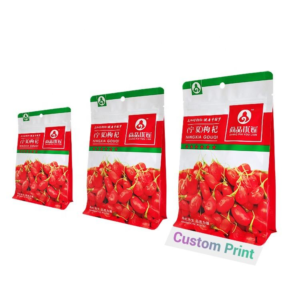
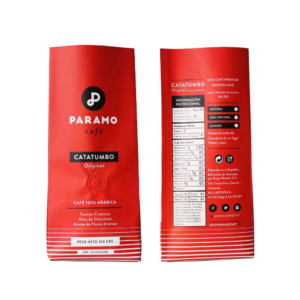
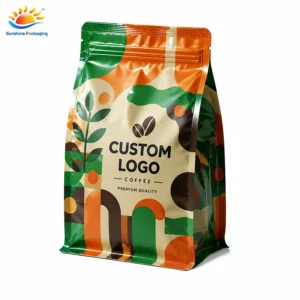
A flat-bottom bag uses a formed base rather than a simple flat two-side-seal profile. The base can support an upright retail presentation when pouch dimensions, material stiffness, fill distribution, and sealing are properly matched. Its front, back, side, and bottom panels also provide several areas for branding or required information, although the usable print area depends on the final die line and seal geometry.
The flat base does not establish one universal capacity. Cannabis flower density varies by cultivar, moisture condition, trim, and handling, while gummies, baked edibles, powders, and other dry goods occupy different volumes at the same weight. Buyers should evaluate actual product volume, not fill weight alone. Adequate headspace is also needed for filling, zipper use where selected, and the final top seal.
Laminate Selection and Product Protection
These flexible laminate flat-bottom pouches can be configured with material layers selected for stiffness, puncture resistance, print performance, heat sealability, and barrier function. The exact composition is not stated and must be confirmed during specification. Barrier performance comes from the complete laminate and sealing system rather than from the bag shape, printed appearance, or finish alone.
For cannabis flower or aroma-sensitive products, an appropriate barrier laminate can help contain aroma and reduce exposure to external moisture and oxygen when the pouch is properly sealed. For edibles, the structure may need to address moisture migration, grease, oxygen, or light according to the recipe and expected distribution conditions. Product testing should use the buyer’s actual contents because oils, flavor components, sharp product edges, and storage environments can affect package compatibility.
A higher-barrier structure may provide stronger protection but can increase material complexity and stiffness. A lower-barrier or thinner construction may be more flexible but may not provide the protection required for aroma-sensitive flower or moisture-sensitive edibles. A clear window offers product visibility, yet it reduces light shielding in the window area. These trade-offs should be resolved against shelf-life objectives, handling, presentation, and local packaging rules.
Closures, Heat Seals, and Child-Resistant Requirements
A resealable zipper may be specified for products used over multiple occasions. It supports repeated opening and closing, but it is not automatically child-resistant. If child-resistant packaging is required, the buyer must request a suitable child-resistant system and confirm the testing, documentation, use conditions, and destination-market acceptance that apply to the completed package.
A final heat seal above the zipper may provide tamper evidence and protect the package before first opening when the material and sealing process are correctly matched. Seal integrity depends on sealing temperature, pressure, dwell time, contamination in the seal area, and the selected inner sealant. Tear notches may also be considered, but their location must align with the zipper, top seal, opening experience, and available artwork area.
Digital Printing and Multi-SKU Artwork
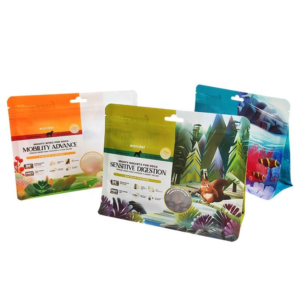
Custom digital printing supports branded graphics, strain names, flavor differentiation, dosage panels, product identifiers, and other SKU-specific information. Private-label multi-SKU cannabis pouches should use a controlled artwork system so logos, colors, warnings, typography, and variable product details remain consistent across versions.
The final die line determines printable zones, gusset transitions, seals, zipper clearance, and areas where small text or critical graphics should not be placed. Matte, gloss, metallic, holographic, or kraft-style appearances may be considered only if compatible with the chosen substrate and print process. An appearance does not establish the underlying barrier structure. Buyers should supply editable artwork and identify color expectations, version counts, and any required variable elements before proofing.
Food-Grade and Cannabis Market Considerations
The stated food-grade attribute makes this product relevant to food packaging applications, including potential cannabis edible packaging bags. However, the term alone does not establish certification, child resistance, or legal compliance in every market. Buyers should confirm applicable food-contact documentation, inks and adhesives, migration requirements, cannabis warnings, universal symbols, language rules, serving or dosage information, and other destination-specific obligations.
For flower, marijuana, or weed packaging, the specification should address aroma retention, light exposure, moisture conditions, opening frequency, and whether the product requires a resealable format. For edibles, buyers should also identify grease, sugar, acidity, flavor oils, and moisture sensitivity. Compliance review should evaluate the completed printed package rather than only the unprinted film.
Questions Buyers Frequently Ask
Can one bag size be used for every cannabis product with the same fill weight?
No. Products with the same weight can have different densities, shapes, and headspace requirements. Final sizing should be based on actual product volume, filling clearance, closure position, and desired presentation.
Are these flat-bottom bags automatically smell proof?
No absolute smell-proof performance should be assumed. A suitable barrier laminate and properly made seals can help contain aroma, but performance depends on the complete structure, closure, sealing process, contents, and storage conditions.
Does a resealable zipper make the pouch child-resistant?
No. An ordinary resealable zipper is not the same as a tested child-resistant closure. Buyers requiring child resistance must specify the appropriate system and confirm relevant testing and market requirements.
Can each strain or flavor have different digital artwork?
Digital printing can support multiple artwork versions, subject to the final production specification. The RFQ should list every SKU, required quantity, shared design elements, and version-specific text or graphics.
What should be confirmed for edible packaging?
Confirm the edible type, ingredients affecting the package, fill weight, actual volume, moisture or grease sensitivity, barrier needs, resealability, warning space, food-contact documentation, and destination-market rules.
Request a Product-Specific B2B Quotation
For an accurate RFQ, provide the intended contents, fill weight and actual product dimensions or volume, desired bag dimensions, total quantity, quantity per artwork version, laminate or barrier goals, zipper or other closure requirement, finish, filling method, sealing equipment, destination market, and applicable food or cannabis compliance needs. These details allow a wholesale flat-bottom bag supplier to assess structure, artwork layout, sealing compatibility, and multi-SKU requirements without relying on unsupported capacity assumptions.
Reviews
There are no reviews yet.