
Custom Printed Flat Bottom Coffee Bags with Eight-Side-Seal Construction
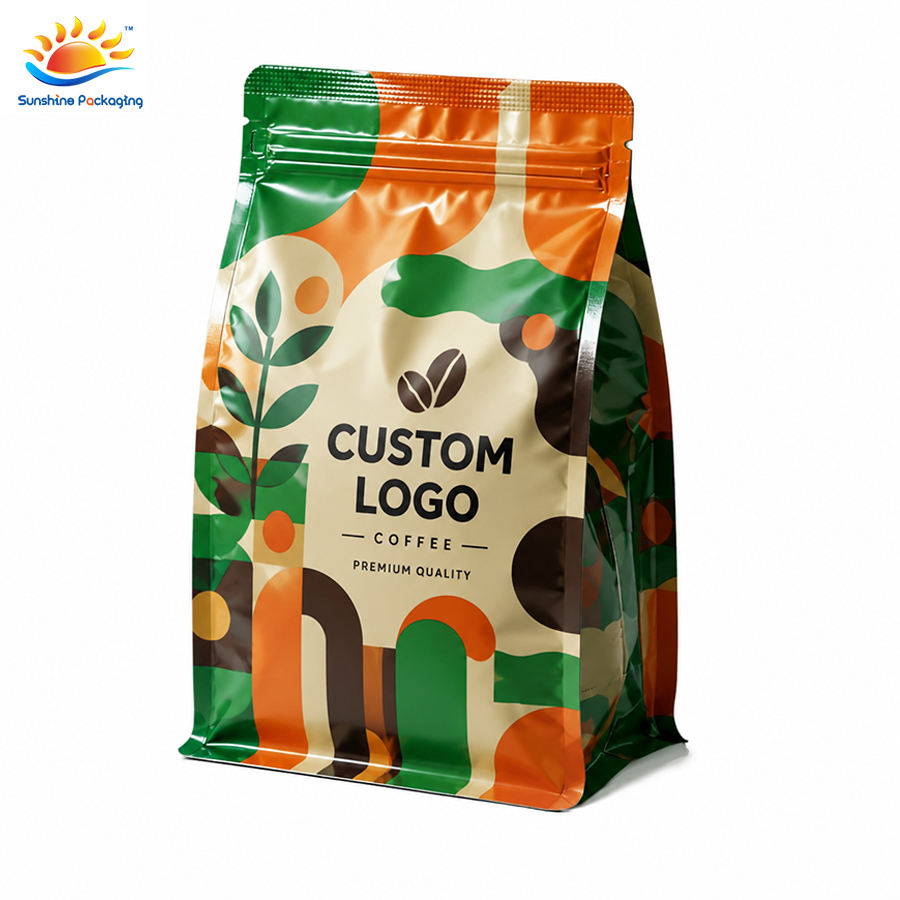
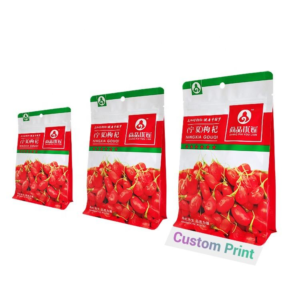
Custom printed flat bottom coffee bags are flexible coffee pouches made with an eight-side-seal format and a stable, presentation-focused base. They are intended for coffee packaging programs that need defined front, back, side and bottom panels for branding and product information. This format is relevant to coffee roasters, private-label brands, distributors, wholesalers, importers and multi-SKU buyers sourcing packaging for whole-bean or ground coffee. Final dimensions, laminate, barrier level, closure and valve requirements must be matched to the coffee, filling process and distribution conditions.
Product Specifications
| Specification | Product Information |
|---|---|
| Product type | Custom printed flexible coffee packaging bag |
| Pouch style | Eight-side-seal pouch with a flat bottom |
| Intended contents | Coffee; suitability for whole beans or ground coffee must be confirmed |
| Printing | Custom printed; artwork method, color requirements and print coverage are subject to specification |
| Material | Flexible laminate selected according to the required barrier, stiffness, sealing and finish |
| Dimensions and capacity | To be confirmed from fill weight, coffee density, headspace and filling requirements |
| Closure and valve | Zipper, top heat seal and degassing valve may be configured when specified |
| Finish | Surface appearance and finish require confirmation during artwork and material review |
Eight-Side-Seal Format and Filling Behavior
Eight-side-seal coffee pouches use a box-like format that creates separate display panels and a defined flat base. The base can improve shelf presentation when the selected dimensions and fill level allow the pouch to stand correctly. Side panels can carry origin details, brewing instructions, traceability information or secondary branding, while the front and back provide the largest communication areas.
The nominal fill weight does not establish one universal bag size. Whole beans, ground coffee and different roast profiles can have different bulk densities. Buyers should evaluate usable internal volume, required headspace, filling equipment clearances and the area occupied by seals, a zipper or a valve. A filled-product trial is preferable before approving production dimensions.
Laminate and Coffee Barrier Decisions
Coffee aroma protection packaging depends on the complete laminate and sealing system rather than the pouch shape alone. A laminate can be configured to help limit oxygen, moisture, aroma transfer and light exposure, but the required construction depends on the coffee, expected shelf-life conditions and distribution route. The substrate combination also affects puncture resistance, pouch stiffness, print appearance and heat-seal behavior.
Metallic or opaque layers may support stronger light protection, while a clear window improves product visibility but reduces light shielding in that area. Matte, gloss, metallic or kraft-style appearance does not by itself identify the barrier structure. Buyers should specify the desired visual effect separately from measurable barrier and sealing requirements. Any oxygen or moisture transmission targets should be confirmed through the selected material specification and relevant testing rather than assumed from appearance.
Zipper, Heat Seal and Degassing Valve Options
A resealable zipper may be added for consumer convenience after opening, depending on the pouch design. It does not replace the initial top heat seal used for tamper evidence and distribution security. Zipper position also changes the available headspace and may affect automated or manual filling access.
Freshly roasted coffee can release carbon dioxide, so a one-way degassing valve may be considered when appropriate for the roast, packing schedule and supply chain. Valve type and placement require confirmation because they affect artwork layout, sealing zones and packing performance. Neither a valve nor a zipper should be assumed unless it is included in the approved specification.
Custom Printing and Multi-SKU Artwork Control
Custom coffee pouch printing can allocate distinct areas for a logo, roast name, coffee origin, tasting notes, preparation guidance, barcode and destination-market information. Artwork must follow the approved die line, including seal margins, folds, panel transitions, valve clearance and zipper position. Important text should not cross a corner seal or other area where distortion can reduce readability.
Private label multi-SKU coffee bags benefit from a controlled master layout. Shared logo position, color standards and information hierarchy can create consistency across roast levels, origins and grind types, while SKU-specific colors or text support differentiation. The quotation request should identify the number of artwork versions because multiple designs can affect print planning and order configuration.
Flat-Bottom Pouch Trade-Offs
The flat-bottom format offers a box-like presentation and several organized print panels, but it has more formed areas and seal geometry than a simple pillow bag. That complexity requires closer coordination among dimensions, laminate stiffness, print registration and filling conditions. Increasing stiffness may improve the pouch’s shape and shelf presence, while also changing handling, folding behavior and material use. A dimension used for another pouch style should not be transferred without checking usable volume and seal allowances.
Procurement and Destination-Market Review
Before production, buyers should confirm whether the selected material is suitable for the intended coffee contact application and destination market. Required declarations, labeling, recycling statements, inks, adhesives and migration documentation depend on the selected structure and applicable regulations. Artwork approval should include barcode readability, mandatory text, language versions and lot or date-coding space. Compliance should be assessed against the finished specification rather than inferred from a generic material name.
Frequently Asked Questions
Are these bags suitable for both whole-bean and ground coffee?
They can be configured for either format, but bag dimensions and barrier requirements should be confirmed using the actual coffee density, fill weight, headspace and packing process.
Does every eight-side-seal coffee bag include a zipper and valve?
No. A resealable zipper, top heat-seal arrangement and one-way degassing valve are specification options. Each must be requested and positioned for the intended filling and artwork layout.
Are these coffee bags automatically aroma proof?
No absolute aroma claim should be based on pouch style alone. Aroma retention depends on the complete laminate, valve, seal integrity, storage conditions and correct sealing of the finished package.
How should the correct flat-bottom bag size be selected?
Use the actual coffee, target fill weight, bulk density, required headspace and filling equipment constraints. A physical fill test can verify usable capacity and standing behavior before final approval.
Can several coffee varieties use the same pouch format?
Yes, a common die line may support multiple artwork versions when the contents and fill requirements are compatible. Each SKU should still be reviewed for copy, color, barcode and regulatory differences.
Request a Product-Specific B2B Quotation
For an accurate RFQ, provide the coffee type, target fill weight, desired pouch dimensions, estimated quantity, number of artwork versions, preferred barrier or laminate, zipper and valve requirements, finish, filling method, destination market and applicable documentation needs. Supplying an existing bag sample, die line or actual filled-product dimensions can help align the eight-side-seal format with the packing operation.
Reviews
There are no reviews yet.