
Brick-Shape Vacuum Packaging Bags for Rice
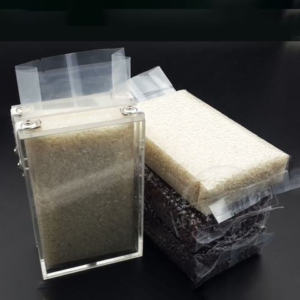
Brick-shape vacuum packaging bags are flexible bags intended to hold rice in a compact, rectangular pack after filling, air evacuation and sealing. They are relevant to rice processors, food brands, distributors, importers, wholesalers and private-label buyers seeking space-efficient packs with specifications tailored to their rice type, filling equipment and distribution conditions. The final brick profile depends on the bag dimensions, rice density, fill weight, residual air, seal placement and vacuum-packing process; the empty bag alone does not determine the finished shape.

Product Specifications
| Specification | Product Detail |
|---|---|
| Product type | Flexible vacuum packaging bag |
| Intended contents | Rice |
| Finished pack format | Brick shape after suitable filling, evacuation and sealing |
| Material structure | Flexible laminate to be selected and confirmed for the required barrier, sealing process and distribution conditions |
| Dimensions and fill weight | Buyer confirmation required; these depend on rice density, target portion and equipment |
| Closure | Vacuum-compatible heat-seal format; exact opening and seal geometry must be confirmed |
| Printing | Custom printing may be configured subject to material, artwork, color and production specifications |
| Finish | To be confirmed during specification review |
| Filling method | Must be matched to the buyer’s manual or automated vacuum-packing process |
| Commercial details | Quantity, sampling, production and delivery requirements must be confirmed by quotation |
How the Brick Format Is Created
These vacuum bags for rice packaging are designed around a filling and vacuum-sealing workflow. Rice is loaded into the bag, the contents are arranged within the available volume, air is extracted and the open end is heat sealed. The flexible pack then conforms around the grains to create the compact brick-like presentation.
Pack geometry should be evaluated with the actual rice. Long-grain, short-grain, parboiled and other rice products can settle differently because grain dimensions, surface characteristics and bulk density vary. A nominal fill weight therefore does not establish one universal bag size. Buyers should test usable volume, headspace and seal clearance before approving production dimensions.
The main trade-off is between a tight, highly compact pack and production tolerance. Reducing excess headspace can improve the defined brick appearance and carton utilization, but too little clearance can make filling harder, place loose grains in the seal area or restrict reliable air extraction. More headspace can simplify filling, yet may leave excess material or a less uniform finished shape.
Laminate, Barrier and Seal Performance
Laminated vacuum rice bags can be configured from multiple flexible packaging layers, but the exact structure must be selected rather than assumed. A laminate may combine an outer layer for print and handling, a barrier layer for moisture or oxygen management, and an inner sealant layer compatible with heat sealing. The appropriate combination depends on shelf-life objectives, transportation, storage climate, packing temperature and equipment.
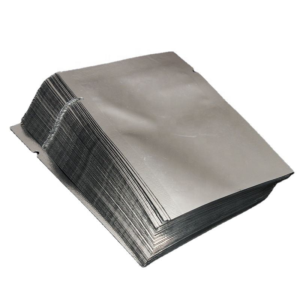
Moisture protection matters because environmental humidity can affect dry rice during storage. Oxygen and aroma management may also be considered where the product specification or distribution period requires them. Puncture resistance is influenced by the complete laminate, its thickness, grain contact points and handling conditions. No single visual finish establishes barrier performance: matte, glossy, metallic-looking or clear constructions can have different functional properties.
Vacuum performance depends on both the film structure and the finished seal. Sealant selection, sealing temperature, pressure, dwell time, contamination in the seal area and package handling all affect integrity. Barrier or shelf-life targets should be supported by testing on the final filled pack under the buyer’s actual process and distribution conditions.
Dimensions, Filling and Production Fit
Bag width, length, seal allowance and any required fold or gusset geometry should be developed from the target fill weight and measured bulk volume of the rice. The buyer should also identify the preferred finished brick dimensions when the package must fit a carton, retail shelf, pallet pattern or case-packing system.
Equipment compatibility is equally important. An RFQ should state whether bags will be filled manually or on automated equipment, how air will be removed, and what heat-sealing system is used. The supplier may need information about the seal-jaw width, operating temperature range, bag opening orientation and registration requirements. A production trial with actual rice is the most reliable way to assess filling speed, evacuation, wrinkles and finished seal quality.
Custom Printing and Multi-SKU Programs
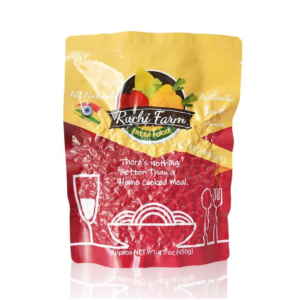
Custom printed brick rice bags may carry brand graphics, product variety, origin statements, preparation instructions, traceability fields and market-required information. Printable area depends on the final die line, seals, folds and any area distorted as the bag conforms to the rice. Artwork should not place small text or scannable codes across severe folds, seal zones or variable pack edges.
For OEM multi-SKU rice packaging bags, a controlled master layout can keep logos, regulatory panels and structural dimensions consistent while changing variety names, colors or language versions. Buyers should provide the number of artwork versions and forecast quantity per version. Print process, color references, surface finish, barcode verification requirements and proofing expectations must be agreed before production. Custom graphics do not by themselves confirm the laminate barrier or food-contact suitability.
Food-Packaging and Destination-Market Review
Rice packaging specifications should be reviewed for the destination market and intended supply chain. The buyer is responsible for identifying applicable food-contact, labeling, language, recycling-mark and traceability requirements. Supporting documentation, ink system, adhesive system and material declarations should be requested and evaluated against those requirements rather than presumed from the product name.
If the pack will be exported, specify expected temperature, humidity, transport duration, carton configuration and handling risks. A wholesale vacuum rice bag supplier needs these details to discuss an appropriate structure and test plan. Compliance status, test methods and acceptance criteria must be confirmed for the final construction and market.
Frequently Asked Questions
Does the empty bag already have a rigid brick shape?
No. It is a flexible bag intended to form a brick-like pack around the rice after suitable filling, air evacuation and heat sealing. Final geometry depends on the bag specification and packing process.
Can one bag size be used for every rice product of the same weight?
Not necessarily. Rice varieties can have different grain dimensions and bulk densities, so buyers should measure actual product volume and validate headspace, seal clearance and finished dimensions.
Are these bags supplied with a confirmed high-barrier laminate?
The exact laminate is not stated and must be confirmed. Barrier requirements should be translated into a suitable complete structure and validated with the final seal and filled-pack conditions.
Can the bags be custom printed for several rice varieties?
Custom printing and multiple artwork versions may be configured. The buyer should provide the die line requirements, artwork count, colors, finish, quantities per version and mandatory label content for review.
What should be tested before approving production?
Test the actual rice for filling behavior, usable volume, vacuum evacuation, brick formation, seal cleanliness, seal integrity, pack handling and fit within the intended carton or shelf space.
Request a Specification-Based B2B Quote
For an accurate RFQ, provide the rice type, target fill weight, measured product volume, desired bag or finished brick dimensions, total quantity, quantity per artwork version, required material or barrier objectives, finish, printing details, filling and vacuum method, sealing equipment, carton constraints, destination market and applicable food-packaging or labeling requirements. These inputs allow the bag structure, dimensions, seal format and artwork layout to be reviewed for your packing operation without relying on unsupported assumptions.
Reviews
There are no reviews yet.