
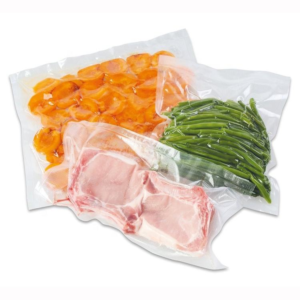
Shrink Vacuum Packaging Bags for Meat Packaging
Shrink vacuum packaging bags for meat packaging are flexible bags intended for businesses that need to evaluate vacuum removal and controlled film shrinkage for meat products. They may suit meat processors, food distributors, private-label suppliers, importers, wholesalers, and multi-SKU packaging programs that require a defined bag format rather than a generic film roll. The correct specification depends on the product dimensions, filling process, required barrier, sealing equipment, artwork, and destination-market requirements.
Product Specifications
| Product type | Shrink vacuum packaging bag for meat packaging |
|---|---|
| Intended contents | Meat products; exact product type, density, dimensions, and moisture level require buyer confirmation |
| Packaging format | Preformed bag; final opening, seal geometry, and bag dimensions require confirmation |
| Material structure | To be selected according to the required barrier, shrink behavior, puncture resistance, stiffness, and sealing process |
| Vacuum function | Designed for evaluation with a vacuum packaging process; equipment compatibility and vacuum level require confirmation |
| Shrink function | Film shrinkage is a defining product characteristic; the required shrink behavior depends on the selected structure and process conditions |
| Printing and finish | Custom printing and finish may be configured subject to substrate, artwork, ink, and production review |
| Order program | Suitable for B2B, private-label, OEM, ODM, wholesale, and multi-SKU inquiries subject to final quotation |
How the Bag Works in a Meat Packaging Process
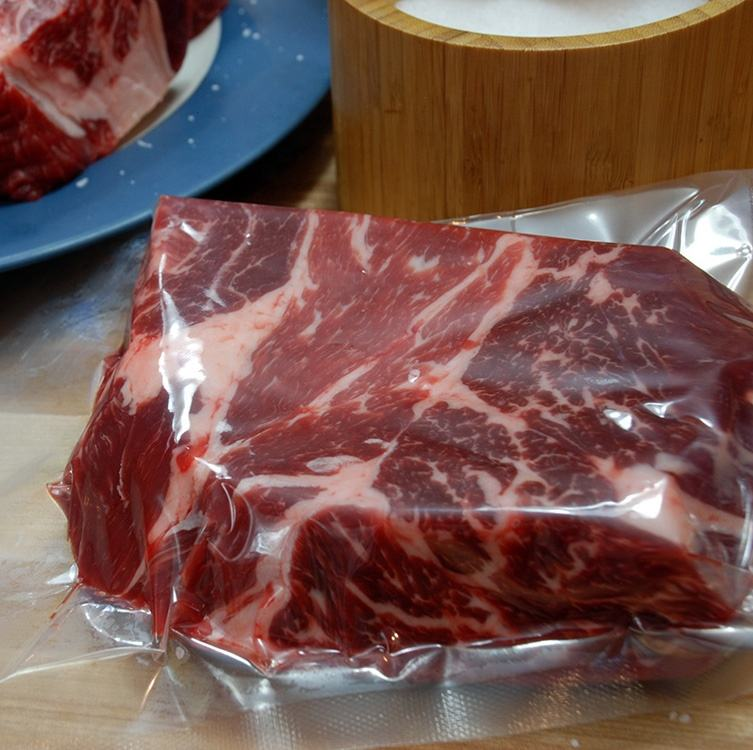
A typical workflow places the meat product inside the bag, removes air through a compatible vacuum process, seals the opening, and applies controlled heat so the film shrinks around the contents. This sequence can reduce excess space and help create a close-fitting pack, but the result depends on the bag structure, product shape, sealing conditions, vacuum equipment, and operator settings. A bag should therefore be tested with the actual meat product and production line before a larger order is approved.
Meat products can have irregular edges, bones, sharp corners, liquid, or surface moisture. These factors influence puncture risk, seal cleanliness, usable volume, and the consistency of the finished pack. When comparing meat packaging shrink vacuum bags, buyers should provide the actual product dimensions and identify whether the contents are boneless, bone-in, fresh, frozen, marinated, or otherwise processed. Those details are more useful for specification than a nominal weight alone.
Material Structure and Barrier Decisions
The product name confirms a shrink vacuum format, but it does not confirm a particular plastic, laminate, thickness, oxygen transmission rate, moisture transmission rate, or certification. A multilayer shrink vacuum bag structure may be considered when the application needs a balance of oxygen and moisture barrier, flexibility, toughness, shrink response, and heat-seal performance. The complete structure, not the appearance alone, determines the practical barrier behavior.
Barrier selection should follow the product and distribution conditions. Oxygen and moisture protection may matter for freshness objectives, while puncture resistance becomes more important when the contents include bone or rigid edges. A thicker or tougher structure may improve handling resistance but can change stiffness, shrink response, material cost, and sealing requirements. Conversely, a more flexible film may conform well but require closer review of puncture resistance and machine handling.
Claims such as odor-resistant or smell-resistant should be treated as performance targets to verify, not automatic guarantees. The selected structure may help contain aroma when properly formed and sealed, but leakage can result from pinholes, contaminated seal areas, weak seals, incorrect temperature, or rough handling. Ask for the proposed structure and relevant test information before using a barrier or containment claim in sales materials.
Dimensions, Product Fit, and Filling Behavior
Bag dimensions should be calculated from the actual product length, width, thickness, shape, and required headspace. A nominal meat fill weight does not establish one universal bag size because density and geometry vary substantially. The quotation should identify the flat bag width, length, opening position, seal allowance, and any dimensional tolerance that affects loading or presentation.
Filling behavior also depends on whether the operator loads the bag manually or uses an automated line. A bag that is too narrow can slow loading and stress the seal area; a bag that is unnecessarily large can leave excess film, require more vacuum time, or produce inconsistent shrink presentation. Send a physical sample, drawing, or accurate product measurements when possible. If the product has liquid or marinade, explain how it is filled and whether liquid migration toward the seal is expected.
Sealing, Equipment, and Process Compatibility
Confirm the intended vacuum machine, seal bar configuration, opening orientation, and shrink process before finalizing the bag. Vacuum equipment may differ in chamber size, nozzle arrangement, sealing temperature, dwell time, and throughput. Shrink equipment and water or heat exposure can also affect the finished appearance and dimensional result. Production trials should assess seal integrity, wrinkle formation, residual air, shrink uniformity, and handling after packing.
A heat seal is not the same as a zipper closure. For meat packaging, the opening and final seal should be specified according to the filling line and intended distribution process. If a resealable feature is requested, it must be separately reviewed because a conventional zipper can change the bag design and may not suit every vacuum-shrink workflow. Do not describe any closure as child-resistant unless a tested child-resistant system is specifically selected and substantiated.
Printing, Artwork, and Multi-SKU Programs
Custom printed shrink vacuum bags can support brand identification, product information, lot coding space, and different meat-product variants. Artwork must be checked against the bag opening, seal area, trim, shrink distortion, and any required clear or unprinted zones. The printable area and color result depend on the selected substrate and printing process. Metallic, matte, glossy, or transparent effects should be treated as finish options subject to technical review rather than assumed properties.
For private-label, OEM, ODM, and wholesale programs, define how many artwork versions are needed and whether all SKUs will use one common bag size. Standardizing dimensions can simplify purchasing and line changeovers, while SKU-specific sizing may improve product fit and reduce excess material. The trade-off is between operational consistency and presentation efficiency. Include the expected version count, variable information, barcode requirements, and approval process in the RFQ.
Destination-Market and Procurement Checks
Food-contact and labeling obligations differ by destination market and by the type of meat product. Before production, the buyer should identify the sales country or region, food-contact requirements, mandatory label information, recycling or disposal rules, and any documentation needed by the importer or customer. These bags should not be described as certified, approved, or compliant until the applicable structure and supporting documents have been reviewed for the specific market.
For a useful quotation, provide the product type, fresh or frozen status, fill weight, actual product dimensions, desired bag dimensions, quantity, artwork versions, material or barrier objective, shrink and vacuum equipment, opening and seal preferences, finish, filling method, destination market, and compliance documentation needs. A physical sample or line trial can resolve fit and process questions more reliably than a weight estimate alone.
Frequently Asked Questions
Are these bags intended for fresh or frozen meat?
The product is identified for meat packaging, but fresh or frozen use must be confirmed with the buyer’s product details, storage conditions, process, and destination-market requirements. The selected structure should be reviewed against the actual application.
Does the product name confirm the bag material or barrier?
No. The product name confirms a shrink vacuum bag format, but the material structure, thickness, oxygen barrier, moisture barrier, and puncture resistance require specification and confirmation for the intended meat product.
Can the bags be custom printed for private-label meat products?
Custom printing may be configured for private-label, OEM, ODM, wholesale, and multi-SKU programs, subject to artwork review, printable-area limits, substrate selection, finish, and production requirements.
How should I choose the correct bag size?
Base the size on the actual product length, width, thickness, shape, fill weight, loading method, seal allowance, and required headspace. One fill weight does not establish one universal bag size.
Can I use these bags on any vacuum or shrink machine?
Equipment compatibility must be confirmed. Provide the machine type, seal configuration, operating conditions, and shrink process so the proposed bag can be reviewed and trialed with the actual line.
What should be included in a B2B RFQ?
Include the contents, fill weight, actual product dimensions, desired bag dimensions, quantity, artwork versions, material or barrier target, closure and seal requirements, finish, filling method, equipment, destination market, and compliance needs.
Request a Product-Specific RFQ
Send the meat product details, fill weight, actual dimensions, desired bag size, order quantity, artwork versions, material or barrier objectives, closure and seal requirements, finish, filling method, vacuum and shrink equipment, destination market, and compliance needs. These inputs allow the proposed shrink vacuum packaging bags for meat packaging to be evaluated for fit, process compatibility, printing, and multi-SKU purchasing requirements.
Reviews
There are no reviews yet.