
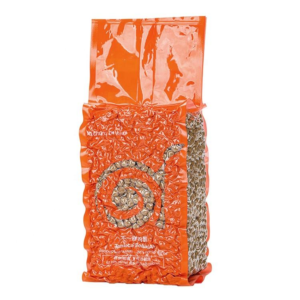
Nylon Vacuum Packaging Bags for Rice Packaging
Nylon vacuum packaging bags are flexible bags intended for rice packaging where the buyer wants to remove air before sealing. This product is relevant to rice brands, food distributors, wholesalers, private-label programs, and OEM buyers that need a defined bag format before requesting samples or a quotation. The stated product material is nylon, while the complete laminate, dimensions, sealing method, printing, and barrier specification must be confirmed for the selected application.
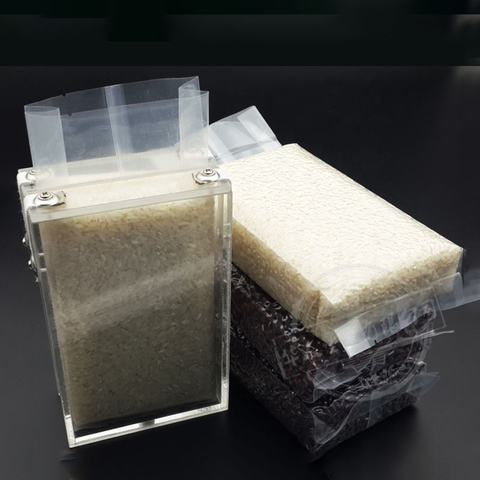
Product Specifications
| Product | Nylon vacuum packaging bags |
|---|---|
| Intended contents | Rice packaging |
| Material stated | Nylon |
| Bag function | Vacuum packaging; final vacuum performance depends on the complete bag structure, equipment, and seal |
| Dimensions and usable volume | To be confirmed from the rice fill weight, grain characteristics, desired headspace, and filling process |
| Laminate and barrier | To be confirmed; nylon alone does not define the complete oxygen, moisture, aroma, or light barrier |
| Printing and finish | To be confirmed according to artwork, print area, appearance, and selected substrate |
| Closure and seal | To be confirmed according to the vacuum machine, seal width, opening format, and production method |
How the Bag Structure Affects Rice Protection
Nylon can contribute toughness, puncture resistance, and flexibility, which are useful when filled bags are handled, stacked, or transported. However, nylon is only one part of a vacuum bag. The complete laminate and sealing system determine how the package performs against oxygen, moisture transfer, aroma migration, light exposure, and seal integrity. A buyer should therefore request the proposed structure rather than specifying “nylon” as the only material requirement.
Vacuum removal can reduce the air remaining around the rice, but the result depends on the rice condition, bag dimensions, vacuum level, machine settings, seal area, and whether the package is handled without damaging the film. A tighter vacuum may improve compactness while increasing stress on corners and seals. A more forgiving fill and seal specification may be preferable when the packing line handles high volumes or when the rice has irregular grain edges. Any smell-resistant or aroma-retention expectation should be evaluated against the complete laminate and seal quality, not treated as an absolute guarantee.
Size, Fill Density, and Headspace
There is no single universal bag size for rice. The correct format depends on the target fill weight, rice variety, grain length, bulk density, filling method, and required headspace. Rice that occupies a different volume at the same nominal weight can change the seal position and the amount of material needed around the product. The buyer should provide the actual filled-product dimensions or a representative sample, together with the desired net weight and acceptable headspace.
Headspace must be balanced carefully. Too much unused space can reduce pack compactness and create more residual air after evacuation. Too little space can make filling, vacuuming, and sealing inconsistent. For multi-SKU programs, confirm whether one bag size can serve several weights or whether each SKU requires a dedicated dimension. This decision affects artwork, storage, changeovers, and quotation accuracy.
Filling, Vacuuming, and Seal Considerations
These vacuum-sealed rice packaging bags should be matched to the buyer’s filling and vacuum equipment. Confirm the machine type, bag presentation, maximum product height, seal-bar configuration, seal width, and whether operators need a defined opening direction. A flat bag may simplify machine handling, but the final geometry and usable area still need to accommodate the rice fill and the sealing zone.
Rice dust or loose grains in the seal area can interfere with seal formation. The production specification should therefore address the clean seal zone, filling tolerance, and inspection method. A heat seal is not automatically established by the word “vacuum”; the sealing system and compatible film must be confirmed. If the buyer requires a zipper, tear notch, reclosable opening, or another convenience feature, each option should be evaluated against vacuum evacuation, seal placement, and the intended handling sequence.
Custom Printing and Private-Label Programs
Custom printed nylon vacuum bags can support branded rice packaging, distributor labels, and private-label/OEM programs, subject to the selected substrate, printing method, artwork, and production specification. Before artwork approval, confirm the printable area, seal exclusion zones, front and back orientation, barcode location, text legibility, and whether the design uses opaque, transparent, matte, or other visual treatments. Appearance does not by itself prove a particular barrier structure; for example, a clear area may improve product visibility while allowing more light exposure.
For a multi-SKU range, establish which elements remain consistent and which change by SKU. Brand colors, regulatory text, rice variety, net weight, origin statements, cooking information, and barcode data may require separate artwork versions. A shared bag structure can simplify procurement, but dedicated sizes or print layouts may improve shelf presentation and filling efficiency. The manufacturer should review the die line or print template before final approval.
What Cannabis and Other Specialty Buyers Should Confirm
Cannabis brands, distributors, and specialty-product buyers may search for nylon vacuum bag manufacturer wholesale options because they need flexible packaging with a specified material and evacuation process. This listed product is identified for rice packaging, so a cannabis application should not be assumed without a separate compatibility and market review. Confirm the actual contents, intended contact requirements, odor or aroma objectives, light sensitivity, moisture sensitivity, closure expectations, labeling area, and destination-market rules before adapting the format.
For any regulated product, packaging requirements can vary by destination and product category. The buyer should independently confirm applicable labeling, child-resistant, food-contact, recycling, testing, and documentation requirements. An ordinary zipper should not be represented as a tested child-resistant closure. Likewise, a requested barrier or smell-resistant function should be tied to the complete structure and any relevant test method agreed during specification.
Trade-Offs for Procurement
The main procurement trade-off is between flexibility, protection, machine performance, and cost control. A tougher or more complex laminate may improve resistance to puncture and support a demanding vacuum process, but it can affect stiffness, sealing behavior, print limits, and material selection. A highly visible package may help product presentation while providing less light protection than an opaque construction. Choosing a larger bag can make filling easier but may increase unused space and material consumption. These decisions should be made from actual line trials rather than from the word “nylon” alone.
Frequently Asked Questions
Are these nylon vacuum packaging bags suitable for any rice fill weight?
No universal fill weight is established by the product name. Confirm the rice variety, bulk density, target net weight, filled dimensions, headspace, and filling method so the bag size can be specified correctly.
Does nylon alone define the bag’s barrier performance?
No. Nylon is the stated material, but the complete laminate, thickness, seal system, and manufacturing process determine performance against oxygen, moisture, aroma, light, and handling stress. Request the final structure for review.
Can these bags be custom printed for a private-label rice brand?
Custom printing may be configured subject to the selected substrate, printing method, artwork, print area, seal exclusion zones, and required number of artwork versions. Confirm these points before approving production files.
Can one bag size serve several rice SKUs?
It may be possible, but it depends on the fill weights, rice density, usable volume, headspace, presentation, and filling equipment. A SKU review is needed before selecting a shared size.
What should a buyer send for an RFQ?
Send the rice type and fill weight, actual product dimensions if available, desired bag dimensions, estimated quantity, artwork versions, material or barrier target, closure and seal requirements, finish, filling and vacuum equipment, destination market, and documentation or compliance needs.
Request a Product-Specific RFQ
To evaluate these nylon vacuum bags accurately, provide the contents, fill weight, actual product dimensions, desired pouch dimensions, quantity, artwork versions, material or barrier requirements, closure and seal preference, finish, filling method, vacuum equipment, destination market, and applicable compliance or documentation needs. The resulting specification can then be reviewed for bag size, usable volume, headspace, print layout, and production suitability.
Reviews
There are no reviews yet.