
3.5g & 1lb Child-Resistant Matte Mylar Bags for Cannabis Packaging
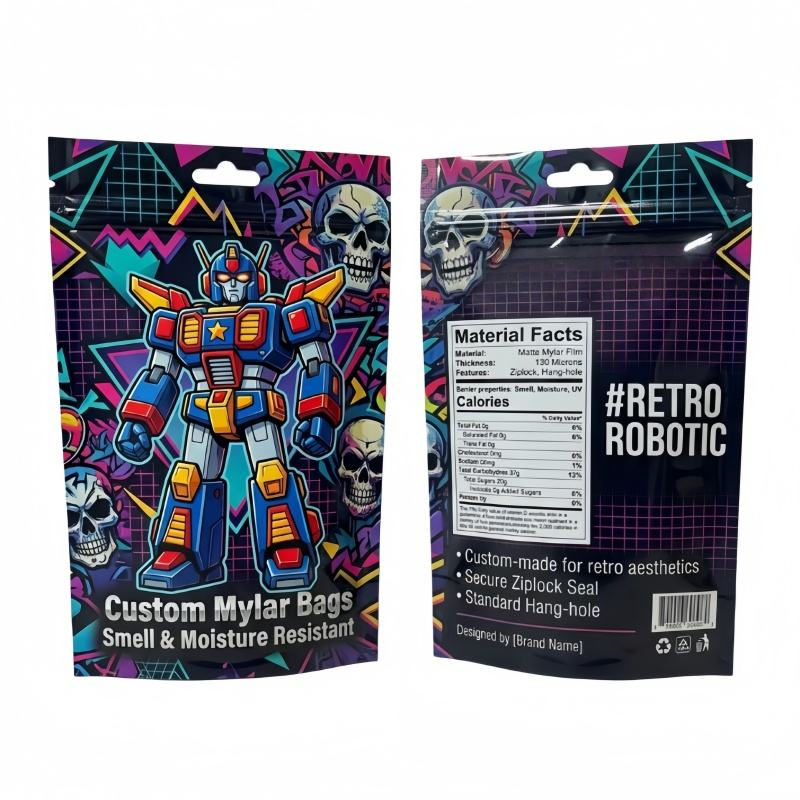
3.5g & 1lb child-resistant matte Mylar bags are flexible cannabis packaging options identified for approximately 3.5-gram and 1-pound fill programs. Their matte appearance supports a subdued retail presentation, while the stated child-resistant design addresses a key packaging requirement for regulated cannabis products. These bags are intended for cannabis brands, distributors, wholesalers, private-label and OEM buyers, and procurement teams managing multiple strains or SKUs. Final pouch dimensions, barrier structure, closure mechanism, testing documentation, and destination-market requirements should be confirmed before an RFQ or production decision.
Product Specifications
| Product type | Child-resistant matte Mylar bags |
|---|---|
| Referenced fill programs | Approximately 3.5g and 1lb; actual usable volume depends on the product density and bag dimensions |
| Intended packaging use | Cannabis flower and other compatible regulated products, subject to buyer and market requirements |
| Appearance | Matte exterior appearance |
| Material structure | Mylar designation is stated; complete laminate, barrier layers, gauge, and sealant layer require confirmation |
| Child-resistant function | Child-resistant bag design is stated; closure mechanism and test documentation require confirmation |
| Printing | Custom printing and artwork specifications require confirmation |
| Dimensions | Not stated; confirm width, height, gusset, seal area, and opening position |
Fill Weight Does Not Determine One Universal Bag Size
A 3.5g flower fill and a 1lb flower fill can require different usable volumes because cannabis flower varies in density, moisture condition, trim, nug size, and packing method. The stated weight should therefore be treated as a fill-program reference rather than a guaranteed pouch dimension. A buyer should provide the actual product dimensions or a representative sample, then confirm the desired finished bag width, height, gusset, seal area, and headspace.
Headspace affects filling speed, visual presentation, compression, and seal consistency. Too little space can make loading difficult and place flower close to the seal. Excessive space can increase movement inside the bag and create a less controlled presentation. For a 1lb program, the filling method and the shape of the flower are especially important when selecting a bag format. Ask for a dimensional review or sample-fit evaluation before approving a production specification.
Matte Mylar Appearance and Barrier Structure
The matte finish describes the exterior appearance; it does not, by itself, identify the complete barrier construction. Depending on the selected structure, a multilayer flexible film may be configured to help reduce exposure to moisture, oxygen, light, aroma transfer, and puncture stress. The actual result depends on the complete laminate, film gauge, sealant, artwork layers, storage conditions, and sealing process.
For cannabis flower, a suitable structure can help contain aroma when the bag is properly sealed and can help protect product quality during handling. However, “smell resistant” should not be treated as a permanent or absolute odor-proof guarantee without product-specific testing. Buyers should request the applicable material construction and any available oxygen transmission, moisture transmission, seal-strength, or odor-performance information if those properties are critical to the destination market or product specification.
Matte film can reduce glare and create a softer visual presentation, but it may require careful artwork planning. A dark or opaque structure may provide stronger light-management potential than a transparent window, while a clear window improves visibility at the cost of exposing contents to more light. That is a practical trade-off to resolve with the packaging supplier rather than assuming that the matte appearance determines barrier performance.
Child-Resistant Bag Details to Confirm
These are identified as child-resistant bags, but a standard resealable zipper should not automatically be treated as a tested child-resistant closure. Confirm how the child-resistant feature operates, whether the bag uses a press-and-seal, slider, secondary mechanism, or another construction, and which documentation applies to the exact finished configuration. The closure, film, seal geometry, opening method, and production version can all affect the relevant evaluation.
Also confirm whether the package is intended to be heat sealed after filling, resealed by the end user, or supplied with both functions. A heat seal can provide a separate tamper-evident or freshness-related step when properly specified, but it changes the opening workflow and may affect filling-line requirements. A tear notch can improve access after a heat seal, although its position and strength must be reviewed alongside the child-resistant design.
Filling, Sealing, and Pouch-Format Planning
Before selecting a final bag size, document whether the bag will be filled manually, with a semi-automatic system, or on an automated line. Confirm the acceptable fill opening, loading clearance, headspace, seal width, and finished dimensions. If the bag includes a gusset or stand-up geometry, the gusset can increase bottom stability and usable volume, but it also changes the seal layout and how the bag behaves during filling. If it is a flat bag, usable area and seal geometry should be reviewed around the opening and product profile.
For flower, ask whether the product is packaged as dense small pieces, larger buds, or a mixed lot. Larger or sharper pieces may create more puncture stress and may need a structure selected for the handling environment. The bag should be evaluated after filling, not only as an empty sample, because the contents influence shape, stress at corners, zipper engagement, and seal quality.
Custom Printing and Multi-SKU Consistency
Custom printing can support strain names, cultivar information, brand elements, regulatory panels, batch fields, and different artwork versions. Confirm the printable area, safe zones, seal exclusion zones, tear-notch location, zipper position, barcode placement, and the effect of the matte surface on color and fine detail. The final substrate and laminate can limit available finishes, ink appearance, and registration tolerances.
For private-label, OEM, and multi-SKU programs, define which elements remain consistent across every bag and which change by strain, potency, flavor, batch, or market. A shared die line and consistent seal geometry can simplify procurement, while SKU-specific artwork still requires a controlled proofing process. Ask the supplier to identify whether the 3.5g and 1lb versions use the same visual system or require separate artwork files and production specifications.
Destination-Market and RFQ Checks
Cannabis packaging requirements vary by destination market and may address child resistance, tamper evidence, opacity, labeling space, warnings, recyclability, food-contact suitability, or other packaging attributes. The stated child-resistant feature should not be presented as proof of compliance in every jurisdiction. The buyer remains responsible for identifying the applicable rules and should request documentation for the exact bag configuration being considered.
For a useful quotation, provide the contents, target fill weight, actual product dimensions, desired bag dimensions, estimated quantity, number of artwork versions, material or barrier preference, closure type, finish, filling method, destination market, and compliance documentation needs. If odor containment, moisture control, puncture resistance, or light protection is important, identify the required performance criteria instead of relying only on a general phrase such as “smell proof.”
Frequently Asked Questions
Are these bags available for both 3.5g and 1lb cannabis flower programs?
The product is identified for 3.5g and 1lb fill programs. Final bag dimensions and usable volume must be confirmed because flower density, product shape, filling method, and headspace affect fit.
Does the matte Mylar finish guarantee a specific barrier performance?
No. Matte describes the exterior appearance and does not establish the complete laminate or barrier rating. Confirm the film structure and any applicable moisture, oxygen, light, aroma, or seal-performance information for the selected configuration.
Is the closure a tested child-resistant system?
The bags are identified as child-resistant, but the exact closure mechanism and supporting test documentation should be confirmed for the finished bag version. A normal resealable zipper should not automatically be treated as child-resistant.
Can these cannabis bags be custom printed?
Custom printing can be discussed, but the printable area, artwork limits, finish, substrate, seal zones, tear-notch position, and number of artwork versions require confirmation before quoting.
What should a buyer submit for an RFQ?
Provide the contents, fill weight or actual product dimensions, desired pouch dimensions, quantity, artwork versions, material or barrier requirements, closure, finish, filling method, destination market, and compliance documentation needs.
Request a B2B Specification Review
To evaluate these 3.5g & 1lb child-resistant matte Mylar bags for a cannabis brand, wholesale program, private-label launch, or multi-SKU packaging system, send the product details and target specification before requesting a quote. Include the contents, fill weight or actual product dimensions, desired pouch dimensions, quantity, artwork versions, material or barrier preference, closure, finish, filling method, destination market, and compliance needs. The supplier can then confirm fit, structure, printing feasibility, and the documentation required for the selected configuration.

Reviews
There are no reviews yet.