
Custom Child-Resistant Mylar Bags for Cannabis and Food Products
Custom child-resistant mylar bags are flexible food-grade packaging bags specified for products that need a resealable or secured format, customizable branding, and help containing aroma when properly closed. They are relevant to cannabis brands, distributors, wholesalers, private-label buyers, importers, and multi-SKU purchasing teams that need one packaging program across multiple products. The exact laminate, closure construction, dimensions, and market requirements should be confirmed before an RFQ is finalized.
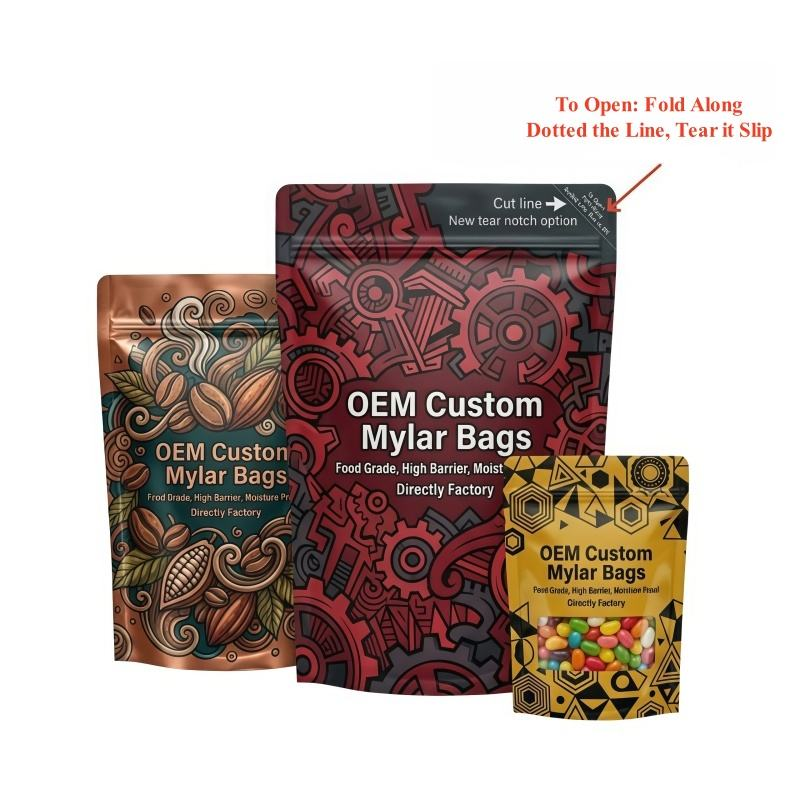
Product Specifications
| Product type | Custom flexible mylar bag |
|---|---|
| Stated attributes | Child-resistant, food-grade, smell-proof positioning, and customizable format |
| Typical intended use | Cannabis products and other suitable food products, subject to the final product and destination-market requirements |
| Material structure | Mylar-based structure; the complete laminate and barrier layers require confirmation |
| Closure | Child-resistant closure; exact mechanism, testing basis, and heat-seal configuration require confirmation |
| Size and fill capacity | Not specified; select dimensions based on product geometry, density, fill weight, and headspace |
| Printing and finish | Custom artwork and finish may be specified; available substrate, color, and finish limits require confirmation |
| Procurement status | Request quantity, artwork versions, specifications, and destination-market requirements for quotation |
How the Mylar Structure Affects Product Protection
“Mylar” identifies a polyester film commonly used in flexible packaging, but it does not by itself define the entire barrier system. Aroma containment, moisture resistance, oxygen protection, light protection, puncture resistance, stiffness, and heat-seal behavior depend on the complete laminate, seal design, and production specifications. For that reason, a buyer should request the proposed structure rather than relying on the appearance of the finished bag alone.
A suitable barrier structure can help contain cannabis aroma when the bag is correctly filled, sealed, and stored. The result should be described as smell-resistant or aroma-containing rather than as an absolute permanent smell-proof guarantee. If the product is sensitive to moisture, oxidation, or light, identify those risks during specification. A metallic or opaque appearance may support light protection depending on the structure, while a clear window can improve product visibility but may reduce light protection in that area. Matte, glossy, metallic, holographic, or kraft-style appearance does not independently prove a particular barrier level.
Closure, Child Resistance, and Sealing Decisions
The product is described as child-resistant, but the exact child-resistant design and testing basis still need to be documented for the intended destination market. Do not assume that an ordinary resealable zipper is equivalent to a tested child-resistant closure. Ask whether the selected format uses a specialized opening sequence, a locking feature, or another closure construction, and request the relevant technical documentation before making a market-specific claim.
Heat sealing remains important even when a bag includes a resealable feature. A properly formed seal can support aroma containment and package integrity, while excessive contamination in the seal area, unsuitable sealing temperature, or incorrect dwell time can weaken the result. Confirm the seal width, opening position, tear-notch location, closure operation, and whether the packaging line will apply a final heat seal after filling. The chosen tear notch should make opening practical without undermining the intended child-resistant function.
Size, Fill Weight, and Headspace Planning
There is no single bag size for a stated cannabis fill weight. Flower density, grind, moisture condition, product shape, and desired presentation can change the required usable volume. A bag that fits dense flower may be too small for a lighter, looser fill, while excessive headspace can increase movement and affect shelf presentation. Provide the actual product dimensions, target fill weight, bulk density if available, and the preferred headspace.
For stand-up or gusseted versions, the gusset affects filling behavior, base stability, usable volume, and the amount of material required around the seal. A flat format may use less material but provide less display volume. If the product will be filled by machine, confirm the filling method, equipment clearance, bag orientation, and tolerance around the top seal. These details are particularly important when one design will be used for several strains or SKUs.
Custom Printing and Multi-SKU Programs
Custom artwork can help distinguish strains, flavors, product strengths, or private-label lines, but artwork must be built around the actual dieline and seal area. Confirm the printable panel, safe zones, zipper and tear-notch position, gusset artwork, registration expectations, color process, and whether the selected substrate supports the desired finish. Printing method, ink system, and surface treatment should remain subject to the final material and production specification.
For a multi-SKU program, establish a master packaging architecture before creating individual artwork versions. Keep pouch dimensions, closure operation, seal geometry, and brand elements consistent where possible, while reserving controlled areas for strain names, product information, lot details, or other variable content. This can simplify line handling and purchasing, but it may limit how much information fits on smaller bags. Confirm whether each artwork version needs separate approval and how variable data will be supplied.
Food-Grade and Destination-Market Review
The product is described as food-grade, but the buyer should still request the documentation needed for the specific product, contact conditions, and destination market. Cannabis packaging requirements can differ by jurisdiction and may address child resistance, warning statements, opacity, labeling space, tamper evidence, recyclability, and restrictions on appeal to children. Food-contact expectations may also differ according to the product type, temperature, fat content, storage conditions, and applicable regulations.
Before approving artwork, have the importer, brand compliance team, or local regulatory adviser review the final bag, closure, labeling area, and intended use. Do not treat a supplier description as a substitute for market-specific approval, test evidence, or legal advice. If documentation is required, identify it in the RFQ so the proposed material and closure can be evaluated against the correct requirement.
Buyer Trade-Off: Protection Versus Product Visibility
A more opaque barrier presentation can support light protection and a discreet appearance, while a clear window can let buyers inspect the contents without opening the bag. These goals can conflict, especially for light-sensitive products. A buyer should decide whether visual inspection, premium appearance, aroma containment, or light protection has priority, then ask for a structure and artwork layout that supports that priority. The appearance of the bag alone cannot establish barrier performance.
Frequently Asked Questions
Are these bags suitable for cannabis flower?
They can be evaluated for cannabis flower, but the correct size depends on fill weight, flower density, product dimensions, headspace, closure, and filling method. Confirm those inputs before selecting a bag size.
Does child-resistant mean the bag has a regular zipper?
No. An ordinary resealable zipper should not be treated as equivalent to a tested child-resistant closure. Confirm the exact mechanism and the testing or documentation required for the destination market.
Are the bags completely smell-proof?
The product is positioned as smell-proof and smell-resistant, but aroma containment depends on the complete laminate, seal geometry, closure, filling condition, and storage. The final specification should use qualified performance language unless supporting evidence establishes a defined claim.
Can the bags be custom printed for several cannabis strains?
Custom artwork can be planned for multiple SKUs, subject to the selected substrate, printable area, dieline, finish, printing process, and artwork requirements. Provide the number of versions and variable content for review.
What should a buyer provide for a quotation?
Provide the contents, fill weight or actual product dimensions, desired pouch dimensions, quantity, artwork versions, material or barrier preference, closure, finish, filling method, destination market, and compliance documentation needs.
Request a B2B Specification Review
For an RFQ, send the product contents, target fill weight or actual product dimensions, desired bag dimensions, expected quantity, number of artwork versions, required material or barrier characteristics, child-resistant closure preference, finish, filling method, destination market, and compliance needs. This information allows the proposed custom child-resistant mylar bags to be reviewed for usable volume, sealing, artwork fit, aroma-containment objectives, and multi-SKU purchasing requirements before a final specification is prepared.


Reviews
There are no reviews yet.