
Silver Aluminum Foil Vacuum Food Storage Bags for B2B Packaging
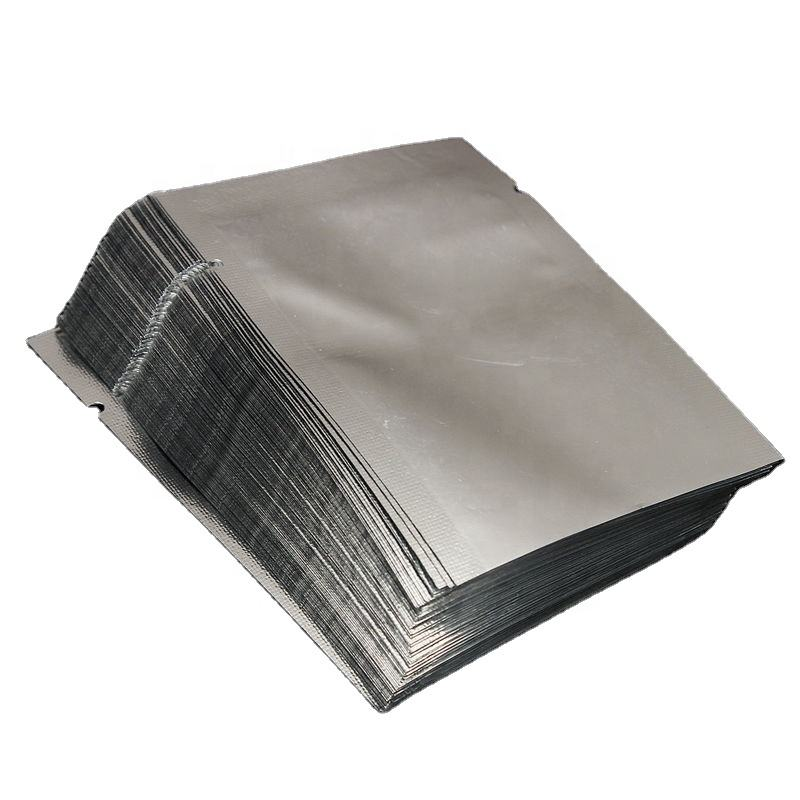
Silver aluminum foil vacuum food storage bags are flexible packaging bags intended for vacuum-packed food storage and related product-packaging applications that require a metallic foil appearance and a specified vacuum format. They may also be evaluated by cannabis brands, distributors, wholesalers, and private-label buyers for suitable dry goods, provided the final contents, barrier structure, sealing method, and destination-market requirements are confirmed before production.
The defining product attributes are the silver aluminum foil structure and vacuum-bag format. The product name does not by itself establish a particular bag size, laminate construction, oxygen transmission rate, moisture transmission rate, food-contact approval, child-resistant function, or cannabis compliance status. Those details should be documented in the final quotation and technical specification.
Product Specifications
| Product type | Silver aluminum foil vacuum food storage bags |
|---|---|
| Primary material stated | Aluminum foil; complete laminate and inner sealing layer require confirmation |
| Packaging format | Vacuum storage bag; flatness, gusset, opening position, and seal geometry require confirmation |
| Intended use stated | Food storage; suitability for cannabis, edibles, or other contents requires application review |
| Color or appearance | Silver metallic appearance |
| Size and capacity | Not specified; confirm external dimensions, usable volume, fill weight, and headspace |
| Closure | Vacuum-compatible sealing method requires confirmation; do not assume zipper or child resistance |
| Printing and finish | Custom printing and finish options may be available subject to structure, artwork, and specification review |
Material Structure and Barrier Decisions
Aluminum foil can contribute to protection from light, while the complete laminate and sealing system determine how the bag performs against oxygen, moisture, aroma, grease, and puncture. A silver appearance alone does not prove that a bag has a specific barrier value. Buyers should request the proposed layer structure and confirm whether the inner layer is suitable for the contents, the intended filling process, and the required heat-seal window.
For dry food, herbs, or cannabis-related products under evaluation, the relationship between the product and the packaging is important. A foil-based structure may help protect light-sensitive contents, and a properly sealed bag may help contain aroma. However, odor resistance, moisture protection, oxygen protection, and vacuum retention depend on the selected laminate, seal quality, product geometry, and handling conditions. The final specification should state which performance characteristics need to be tested rather than relying on the color or name of the bag.
Foil can also reduce visibility of the contents. That trade-off may be useful when light protection and a fully opaque metallic appearance matter, but it prevents customers and operators from visually checking the product through the package. If product visibility is required, a clear window would need separate evaluation and could reduce the light barrier in that area.
Vacuum Format, Filling, and Usable Volume
Vacuum packaging is not determined only by nominal outside dimensions. Buyers should provide the actual product dimensions, fill weight, product density, expected settling behavior, and required headspace. A dense food product, loose botanical material, and irregular pieces can occupy the same stated weight very differently. The usable volume, opening width, seal area, and final compressed shape should therefore be checked with samples or a production drawing before approving a large multi-SKU order.
Confirm whether the bag is intended to remain flat or whether a gusset is needed for additional volume and easier filling. A flat bag can be efficient for stacking and vacuuming, while a gusseted format may support bulkier contents but changes the seal geometry and storage footprint. Filling equipment, manual loading, vacuum-chamber dimensions, and the position of the product during sealing can all affect the practical format.
Closure and Seal Requirements
A vacuum bag normally depends on a reliable heat-sealed area after air removal, but the exact sealing process must be confirmed. Ask about the recommended seal temperature, dwell time, pressure, seal width, and compatibility with the intended machine. The seal must remain clear of product particles, oils, and folds to reduce the risk of an incomplete closure.
Do not treat an ordinary resealable zipper as equivalent to a tested child-resistant closure. If the contents or destination market require child-resistant packaging, that requirement must be specified separately and supported by the appropriate test documentation. Tear notches, easy-open features, zipper tracks, and reclose functions can affect vacuum performance and should not be assumed from the silver foil appearance.
Custom Printing and Private-Label Production
Custom printed foil vacuum bags can support brand identity, strain or flavor differentiation, product information, and distributor programs. The final print result depends on the printable layer, ink system, artwork dimensions, seal boundaries, metallic appearance, and selected finish. Metallic foil may affect color reproduction, while a matte or gloss treatment can change how the silver surface reflects light.
Before artwork approval, request a dieline showing the usable print area, opening direction, seal zones, registration limits, and any areas that must remain free of graphics. For cannabis or food-related packaging, reserve sufficient space for the information required by the destination market. The buyer should independently confirm labeling, warning, recycling, food-contact, and cannabis-packaging obligations with the relevant regulatory adviser or authority.
Multi-SKU and Wholesale Specification Control
For private-label, OEM, ODM, and wholesale programs, consistency across sizes and product variants is often more important than selecting one attractive sample. Establish a shared specification covering bag dimensions, foil structure, inner seal layer, closure, artwork version, finish, tolerances, and intended contents. Separate artwork for strains, flavors, grades, or pack weights should be assigned clear version control so that similar silver bags are not mixed during ordering or filling.
Ask the supplier how samples will be identified and which production details will be recorded for repeat orders. A multi-SKU program should also confirm whether all versions use the same pouch construction or whether each size requires a separate material and sealing review. This is especially relevant when one program includes both food products and cannabis-related products, because the contents and destination-market requirements may differ.
What to Confirm Before an RFQ
- State the contents, fill weight, product dimensions, density, moisture or oil characteristics, and whether vacuum packing is required.
- Request proposed bag dimensions, usable volume, headspace, flat or gusseted format, opening position, and seal geometry.
- Specify the required foil or laminate barrier targets, inner contact layer, seal method, and any needed testing.
- Identify closure needs, including heat seal, zipper, tear notch, reclose function, or separately validated child resistance.
- Provide quantity by SKU, artwork versions, print colors, finish, dieline needs, and destination market.
- List food-contact, cannabis, labeling, recycling, or other compliance documentation that must be reviewed.
Frequently Asked Questions
Are these bags suitable for cannabis packaging?
They may be evaluated for suitable cannabis-related contents, but suitability is not established by the product name alone. Confirm the contents, complete laminate, seal performance, labeling needs, and destination-market requirements before approval.
Does the silver foil guarantee odor or moisture protection?
No. The complete laminate, inner layer, seal quality, and handling conditions determine barrier performance. A properly sealed structure may help contain aroma and protect against light or moisture, but required performance should be specified and verified.
Can the bags be custom printed?
Custom printing may be available, subject to the printable structure, artwork area, metallic surface, finish, seal zones, and final production specification. Request a dieline before preparing final artwork.
Do these vacuum bags include a child-resistant closure?
Child resistance should not be assumed. An ordinary zipper or heat seal is not the same as a tested child-resistant closure. Specify this requirement separately if it applies to the product or destination market.
What information is needed for a quotation?
Provide the contents, fill weight or actual product dimensions, desired bag dimensions, quantity by SKU, artwork versions, material or barrier needs, closure, finish, filling method, destination market, and compliance documentation requirements.
Request a Product-Specific B2B RFQ
Request a quotation for these silver aluminum foil vacuum food storage bags by sending the contents, fill weight or actual product dimensions, desired pouch dimensions, quantity by SKU, artwork versions, material or barrier requirements, closure, finish, filling method, destination market, and compliance needs. This information allows the supplier to review the vacuum format, seal geometry, print area, and structure without assuming unconfirmed performance or regulatory status.
Reviews
There are no reviews yet.