
Custom Printed Refillable Spout Pouches for Beer and Drinks
These refillable spout pouches are custom-printed flexible packages offered in stated capacities from 50ml to 5L for beer and other drinks. The format is intended for beverage brands, cannabis beverage companies, distributors, private-label programs, importers and multi-SKU buyers that need a pourable pouch with branded graphics. Final laminate, dimensions, spout system and filling compatibility must be specified around the actual liquid and production process.
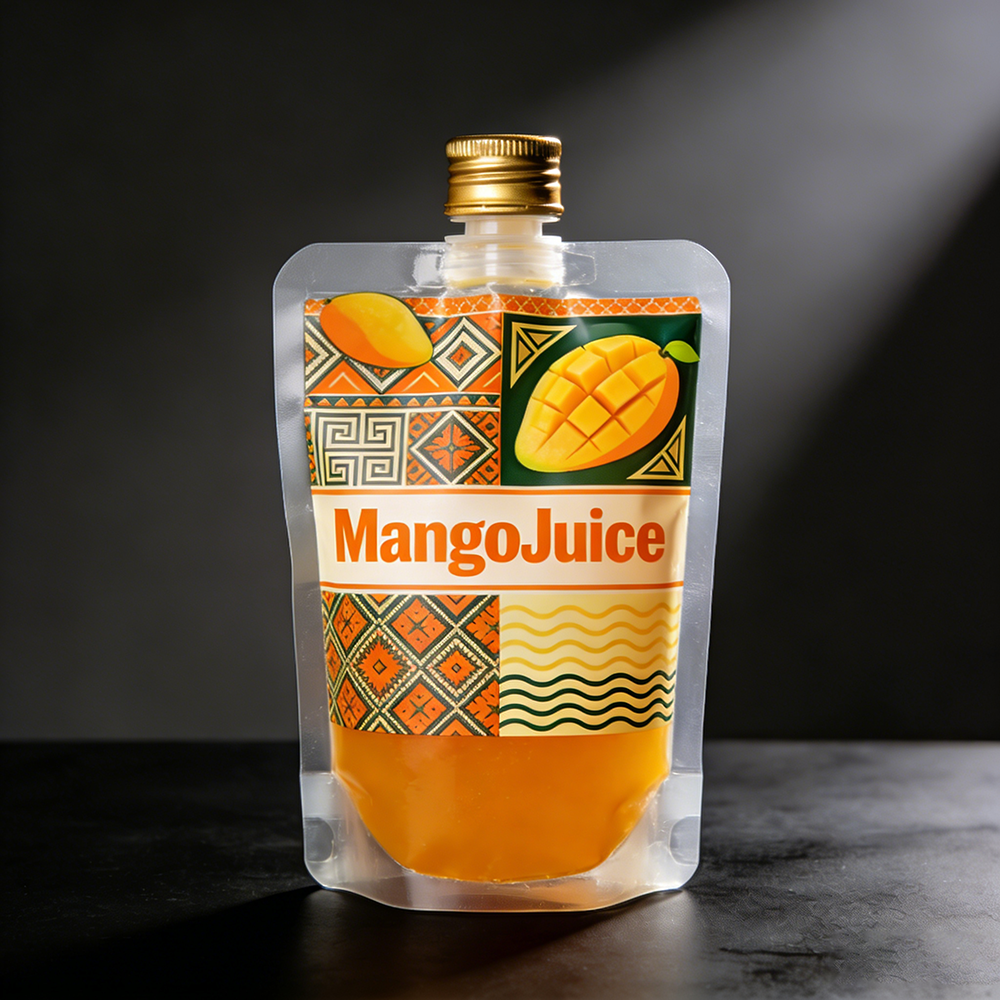
Product Specifications
| Specification | Product Information |
|---|---|
| Packaging type | Flexible pouch with a dispensing spout |
| Stated capacity range | 50ml–5L; required capacity and usable fill volume must be confirmed |
| Intended contents | Beer and drinks; compatibility depends on the beverage formulation |
| Customization | Custom printed |
| Refill function | Refillable format; the intended number of uses and cleaning protocol require buyer validation |
| Laminate structure | To be selected according to barrier, sealing, processing and distribution requirements |
| Spout and cap | Opening size, position, cap style and tamper feature require confirmation |
| Pouch dimensions | Not specified; determined after capacity, headspace, spout and filling requirements are reviewed |
| Printing and finish | Artwork versions, print method, color requirements and finish are subject to final specification |
| Filling method | Buyer confirmation required, including fill temperature and carbonation or pressure conditions |
What This Beverage Pouch Is Designed to Do
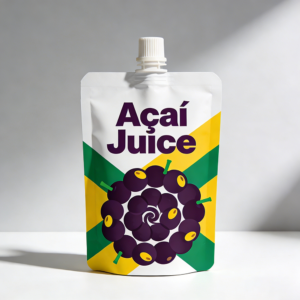
Spouted pouches for beer and beverages combine a flexible body with a controlled pouring opening. The spout can support dispensing and reclosing when paired with a suitable cap, while the printed pouch body provides space for branding, flavor identification, instructions and required beverage information. Small 50ml formats may suit samples or concentrated liquids, while larger capacities up to 5L may suit multi-serve applications. Those are format examples rather than fixed use claims.
Capacity alone does not establish the finished pouch dimensions. Beverage density, target net contents, required headspace, gusset geometry, spout displacement and filling tolerances all affect usable volume. Buyers should provide the actual liquid, desired fill quantity and preferred packed shape instead of selecting dimensions from capacity language alone.
Laminate, Barrier and Seal Decisions
Flexible laminate drink pouches can be configured with multiple layers, but the correct structure depends on the beverage. The complete laminate influences oxygen and moisture transmission, aroma retention, light exposure, puncture resistance, stiffness and heat sealability. Beer can be sensitive to oxygen and light, so the required protection should be defined using the product’s shelf-life objective, distribution environment and storage conditions. A metallic appearance or opaque print does not by itself establish barrier performance.
The sealant layer must be compatible with the liquid, the selected filling temperature and the pouch-making process. Spout welds and perimeter seals are critical interfaces because liquid leakage or oxygen ingress can occur at the fitment as well as through the pouch wall. Requested barrier targets, seal testing and product-contact requirements must therefore be agreed during technical review rather than inferred from appearance.
Carbonation, Filling and Spout Configuration
Carbonated beer creates different requirements from still drinks. Internal pressure can vary with carbonation level, temperature, agitation, headspace and distribution conditions. A standard flexible pouch should not be assumed to withstand carbonated filling without confirmation of the laminate, seal geometry, spout weld and pressure-validation method. Buyers should disclose carbonation level and processing conditions before requesting a production specification.
The spout opening affects filling speed, pour control and compatibility with particulates or higher-viscosity drinks. Its position also changes the die line, artwork safe area and packed handling. Cap style, tamper evidence and any child-resistant requirement are separate decisions. An ordinary screw cap or resealable spout is not automatically a tested child-resistant closure, which is particularly important for cannabis-infused beverages in regulated markets.
Custom Printing and Multi-SKU Control
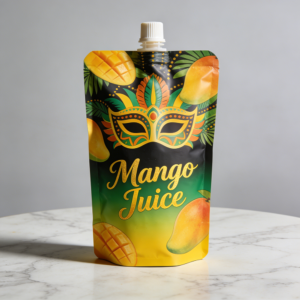
Custom printed spout bags can carry product identity, flavor or strain distinctions, preparation instructions, warnings, traceability areas and market-specific text. The final print method and finish should be selected after the order quantity, number of artwork versions, color expectations and laminate are known. Spout placement, seals and gussets reduce the usable artwork area, so artwork should be built on the approved production die line rather than a generic pouch outline.
For OEM multi-SKU beverage pouches, buyers should identify which graphics remain common and which change by flavor, potency, language, market or fill volume. A controlled naming and version system helps prevent artwork mismatches across several capacities. Metallic, matte, gloss or transparent effects may be configurable, but each can affect color appearance, barcode contrast, visibility and light protection.
Product-Specific Trade-Offs
A flexible spout pouch can use less storage space before filling than many rigid containers and can provide convenient dispensing. The trade-off is that its shape, drop behavior and pressure resistance depend heavily on the filled product and laminate construction. Larger pouches also place more load on the handle area, spout weld and seals, while smaller pouches provide less room for mandatory copy.
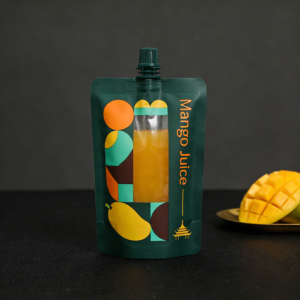
A transparent area may help buyers see the drink, but it reduces light protection in that section. A higher-barrier or stiffer structure may improve protection and handling, yet it can change flexibility, appearance, sealing behavior and material complexity. The best structure is therefore the one matched to the beverage, filling line, shelf-life target and destination market—not simply the thickest option.
Compliance and RFQ Review
Food-contact suitability, alcohol labeling, cannabis beverage warnings, child-resistant rules, tamper-evident features and recycling claims vary by material and destination. No compliance status should be assumed from the pouch description. The buyer should identify the sales market, beverage composition, alcohol or cannabinoid content, required warnings and applicable testing or documentation before approval.
Frequently Asked Questions
Can these pouches be used for carbonated beer?
Potential suitability must be confirmed from the carbonation level, fill temperature, headspace, laminate, seal design, spout weld and required pressure testing. The product name alone does not establish pressure performance.
Does the 50ml–5L range define the finished pouch dimensions?
No. Finished dimensions depend on the selected capacity, beverage density, fill level, headspace, gusset geometry, spout displacement and production tolerances.
Does refillable mean the pouch has been validated for repeated reuse?
No. Refillable describes the intended format, but the number of reuse cycles, cleaning method, hygiene controls and closure durability must be defined and validated for the intended application.
Is a standard spout cap child-resistant?
Not necessarily. A conventional resealable cap is different from a tested child-resistant closure. Regulated beverage buyers must specify the required closure standard and destination-market rules.
What information is needed to prepare custom artwork?
Provide the confirmed pouch size, approved die line, spout position, artwork versions, colors, finish, required label copy, barcode needs and destination-market requirements.
Request a Product-Specific B2B Quotation
To request pricing from a wholesale spout pouch supplier, provide the beverage type, carbonation or viscosity details, target fill volume, desired pouch dimensions, order quantity, number of artwork versions, preferred barrier and finish, spout and cap requirements, filling method, fill temperature, destination market and applicable compliance needs. Include any shelf-life, pressure, tamper-evidence, child-resistant or refill-validation requirements so the proposed structure can be reviewed against the actual application.
Reviews
There are no reviews yet.