
Custom Printed Spout Pouches in 50–500ml Capacities
Custom printed spout pouches are flexible packages for dispensing compatible liquid or semi-liquid products through an integrated spout. This 50–500ml range is intended for cannabis brands, private-label programs, distributors, wholesalers and multi-SKU buyers that need printed packaging matched to their formulation, filling process and destination market. Each project requires confirmation of the pouch dimensions, laminate, spout position, fitment, cap, seal design and usable fill volume.

Product Specifications
| Product type | Custom printed flexible spout pouch |
|---|---|
| Stated capacity range | 50–500ml |
| Intended contents | Compatible liquid or semi-liquid products; formulation suitability must be confirmed |
| Material | Flexible laminate structure selected according to contents, barrier requirements and filling conditions |
| Dispensing format | Integrated spout; fitment diameter, location and cap type require confirmation |
| Closure | Cap or other compatible spout closure may be configured; child-resistant performance is not established by an ordinary cap |
| Printing | Custom printing based on an approved dieline and artwork specification |
| Finish | To be selected and confirmed for the chosen print and laminate structure |
| Filling method | Must be matched to the buyer’s product, equipment, temperature and filling sequence |
| Commercial details | Quantity, MOQ, sampling, pricing and production schedule require quotation |
What Products Fit This Pouch Format?
Cannabis liquid spout pouches may be considered for legally permitted liquid, gel or pourable formulations when the product chemistry, viscosity, dose format and market rules support this packaging type. The same format can also serve other compatible non-cannabis liquids or semi-liquids. Suitability cannot be determined from capacity alone.
A buyer should provide the formulation category and relevant characteristics without disclosing unnecessary proprietary details. Oils, water-based liquids, acidic ingredients, alcohol-containing formulas, flavor compounds and concentrated extracts can interact differently with sealant layers, adhesives and fitment materials. Product-contact compatibility and migration requirements should therefore be reviewed for the actual contents and destination market.
Capacity, Headspace and Filling Behavior
The stated 50–500ml range describes available capacity intent, not universal external dimensions. Nominal capacity and practical fill volume are different decisions. Product density, viscosity, required headspace, pouch expansion, seal clearance and filling accuracy all affect the final pack size.
- Low-viscosity liquids: filling speed, splash control and seal-area cleanliness need attention.
- Thicker products: a larger fitment may improve flow but can require more panel and seal space.
- Hot or warm filling: the laminate, fitment and seals must be specified for the actual process temperature.
- Multi-dose use: cap handling, dispensing control and repeated opening should be considered during fitment selection.
Before approving dimensions, buyers should test the intended fill quantity in a representative pouch. Adequate headspace can support sealing and handling, while excessive headspace may create an underfilled appearance or increase movement during distribution.
Laminate and Barrier Decisions
Flexible laminate spout packaging can be configured with multiple functional layers, depending on the selected structure. The outer layer supports printing and handling, intermediate layers may contribute stiffness or barrier performance, and the inner sealant layer must contact the product and seal consistently around the pouch perimeter and fitment.
Odor, aroma, moisture, oxygen and light protection depend on the complete laminate and sealing system rather than the printed appearance. A metallic or opaque construction may improve light screening, while a transparent area provides product visibility but reduces light protection. Higher-barrier structures can also increase stiffness, cost and material complexity. The correct trade-off depends on product sensitivity, expected distribution conditions and shelf-life validation performed by the buyer.
For aroma-bearing cannabis formulations, an appropriate structure can help contain aroma when properly sealed, but “smell resistant” should not be interpreted as a permanent or absolute guarantee. Seal integrity, fitment compatibility, cap application and handling all affect package performance.
Spout, Cap and Seal Configuration
The spout is both a dispensing component and a critical part of the seal system. Its internal opening should suit product viscosity and desired flow. A wider opening can make thick contents easier to dispense, but it may use more pouch area, change filling behavior and reduce space available for artwork. A smaller opening can provide greater dispensing control but may be inconvenient for viscous formulations.
Fitment location may be centered or positioned elsewhere when technically feasible, subject to the pouch geometry and filling equipment. The buyer should confirm whether filling occurs through the spout or before final pouch sealing. Torque, tamper evidence and cap construction must also be specified rather than assumed.
An ordinary screw cap or resealable closure is not automatically child resistant. If regulated cannabis contents require child-resistant packaging, the buyer must identify the applicable test protocol and destination-market rules, then request a suitable tested system and supporting documentation for review.
Custom Printing and Multi-SKU Control
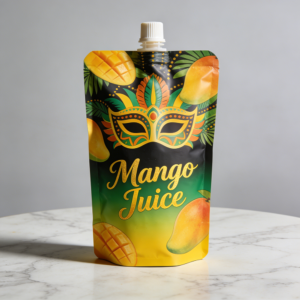
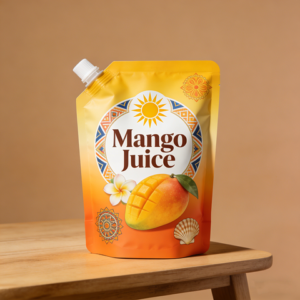
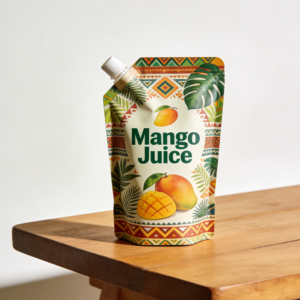
Custom logo spouted pouches can carry brand graphics, product identification, directions, warnings, ingredients, lot-coding areas and other required information, subject to the approved dieline and available print area. Artwork must account for seals, gusset folds, spout placement, distortion zones and registration tolerances.
Private label multi-SKU spout bags benefit from a controlled master layout. Fixed elements such as logos, warning areas and instructions can remain consistent while colors, product names, flavors, strains or potency information change by version. The RFQ should state the total quantity and the quantity for each artwork version because multiple designs can affect production planning and quotation.
Matte, gloss, metallic or transparent visual effects may be possible depending on the substrate and printing method, but appearance does not establish barrier performance. Final colors should be evaluated against the actual film because transparent, white and metallic backgrounds can produce different results.
Compliance and Preproduction Checks
- Confirm whether the formulation is legally suitable for a spout pouch in the destination market.
- Identify product-contact, labeling, warning, tamper-evidence and child-resistance requirements.
- Review the laminate and fitment for chemical and process compatibility.
- Approve the dieline, artwork versions, readable text and variable-code area.
- Validate filling, sealing, cap application, dispensing and distribution performance with representative samples.
A wholesale spout pouch supplier can manufacture to an agreed specification, but the brand or responsible market operator should confirm the finished package and label meet the rules that apply to the product and sales territory.
Frequently Asked Questions
Does 50–500ml define the exact pouch dimensions?
No. It states the capacity range, while exact dimensions depend on fill volume, product density, headspace, pouch geometry, fitment and sealing requirements.
Can these pouches be used for cannabis liquids?
They may be used for legally permitted compatible cannabis liquids or semi-liquids, subject to formulation testing, product-contact requirements and destination-market packaging rules.
Are the spout and cap child resistant?
Not automatically. A standard spout cap is different from a tested child-resistant closure, so the required protocol and supporting documentation must be specified before quotation.
What determines odor and oxygen protection?
Protection depends on the complete laminate, fitment, cap and seal integrity. Printed appearance alone does not establish odor, oxygen, moisture or light barrier performance.
What information is needed for a custom printing quote?
Provide the contents, fill volume, desired pouch dimensions, total quantity, quantity per artwork version, barrier needs, spout and cap requirements, finish, filling method, destination market and applicable compliance needs.
Request a Product-Specific B2B Quote
For an accurate RFQ, submit the product type, formulation category, intended fill volume, desired pouch dimensions, order quantity, artwork count, laminate or barrier requirements, spout position, fitment and cap preferences, finish, filling method, process temperature, destination market and any child-resistant, tamper-evident or labeling requirements. These inputs allow the 50–500ml pouch, print layout and dispensing system to be evaluated as one complete package.
Reviews
There are no reviews yet.