
Custom Printed Tobacco Pouches with Extended Flaps
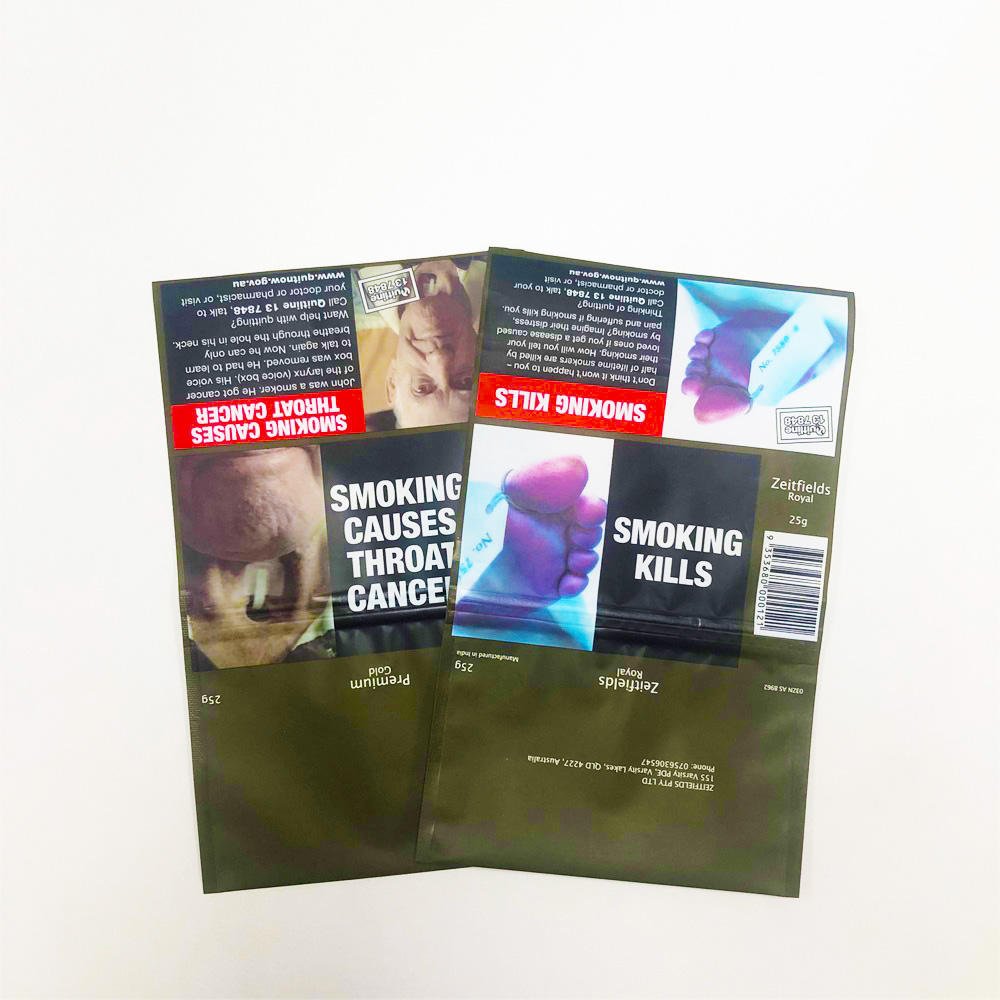
Custom printed tobacco pouches with extended flaps are flexible printed pouch packs designed for loose tobacco, herbal blends, hemp flower, cannabis flower where permitted, and other aroma-sensitive dry products. The defining feature is the longer front or back flap area, which gives brands more printable space for strain names, tobacco blend information, warnings, usage details, tax stamps, labels, or promotional artwork without changing the basic pouch footprint. This format is especially useful for B2B buyers managing private-label lines, multi-SKU flavor ranges, dispensary brands, distributors, and OEM/ODM packaging programs.
Product Specifications
| Item | Specification status |
|---|---|
| Product type | Custom printed flexible tobacco pouch with extended flap |
| Intended contents | Loose tobacco, herbal blends, hemp or cannabis flower where legally permitted; final use to be confirmed by buyer |
| Pouch format | Flat or gusseted pouch configuration can be specified depending on fill weight, product volume and packing method |
| Extended flap | Confirmed product attribute; flap length, fold position and printable area require die-line confirmation |
| Material structure | Flexible laminate can be configured; barrier layer, sealant layer and surface substrate depend on required aroma, moisture, oxygen and print performance |
| Closure | May include resealable zipper, heat seal, tear notch or other closure options subject to final specification |
| Printing | Custom printed graphics; artwork version count, color requirements, finish and barcode placement require confirmation |
| Compliance items | Warnings, symbols, child-resistant needs, tamper evidence and destination-market rules must be reviewed before production |
What the extended flap changes
An extended flap tobacco pouch is not just a standard bag with extra decoration. The flap changes the usable branding zone, the fold line, the opening experience and the way the pouch presents on a shelf or in a carton. For cannabis and herbal flower brands, this can help separate required warning text from strain artwork or flavor graphics. For tobacco wholesalers, it can support tax labels, batch coding, multilingual copy or retailer-specific branding without overcrowding the main panel.
The trade-off is that the flap must be engineered with the pouch seals, zipper position and filling method in mind. A longer flap can improve communication space, but it may also require a more precise die line and artwork layout so that folded graphics, barcodes and regulatory statements remain readable after sealing and packing.
Material and barrier decisions
Flexible laminate tobacco pouches can be built from selected film layers depending on the required stiffness, print appearance, heat-seal behavior and barrier level. PET, PE, PP, metallized film, aluminum foil or paper-based outer layers may be considered, but the final structure should be chosen according to the product, shelf-life target and filling conditions. Buyers comparing structures can review general packaging material comparison guidance before locking a specification.
For tobacco, hemp and flower packaging, barrier performance is caused by the full laminate and sealing system, not by one marketing word. A high-barrier structure may help contain aroma, slow moisture exchange and reduce oxygen exposure when properly sealed. A clear window can improve product visibility, but it usually reduces light protection compared with an opaque or metallized panel. Kraft-look or matte finishes affect appearance, but they do not automatically define aroma or moisture performance.
Closure, sealing and opening behavior
These pouches can be specified with a heat seal for distribution security and a tear notch for consumer opening. A resealable zipper may be added when the product is intended for multiple openings after purchase. A normal zipper should not be described as child-resistant unless a tested child-resistant closure system is selected and supported by the relevant documentation for the destination market. If resealability is part of the program, compare closure options with the site’s resealable packaging information and confirm the zipper location relative to the extended flap.
For aroma-sensitive contents, the pouch should be filled without trapping excess product in the seal area. Powder, fine tobacco cuts and broken flower particles can interfere with seal integrity. Buyers using hand filling, semi-automatic filling or automated packing should share the filling method because zipper height, seal width, flap fold and pouch stiffness can affect line speed and rejection rates.
Size, volume and headspace
A stated fill weight does not create one universal pouch size. Loose tobacco, shredded herbs and cannabis flower vary in density, moisture level, cut size and compression tolerance. The same nominal weight may need different pouch dimensions depending on whether the buyer wants a tight retail pack, a soft hand-feel pouch, or extra headspace to reduce crushing. For extended flap tobacco pouch packaging, the usable internal volume must be separated from the external print area because the flap adds visible surface without necessarily increasing product capacity.
Before an RFQ, buyers should provide the actual product dimensions or target fill weight, desired filled pouch thickness, display orientation, carton packing requirements and whether the contents can be lightly compressed. This prevents the common mistake of approving artwork before confirming whether the pouch fills, seals and stacks correctly.
Custom printing and multi-SKU control
Private label printed tobacco bags usually need consistent structure across many flavors, strains, regions or customer brands. Custom printing can include full-panel graphics, matte or gloss effects, metallic appearance, kraft-style design, variable strain panels, QR codes, warning boxes and barcode zones depending on the selected printing process and substrate. For broader artwork capability, buyers can reference custom printed packaging bags and then confirm what applies to this pouch style.
For multi-SKU procurement, keep the pouch size, material and closure consistent whenever possible. Changing only the artwork is usually simpler than changing the laminate, zipper, flap length and die line for every SKU. If each strain or blend needs different warning text, potency information or language panels, the artwork matrix should be prepared before final proof approval.
Compliance and market-fit checks
Destination-market rules can affect panel layout, warning hierarchy, cannabis symbols, tobacco statements, tamper-evident expectations, child-resistant requirements, nutrition or ingredient information, and allowed imagery. This product page does not claim a universal compliance status because requirements vary by country, state, province and product category. Buyers should identify whether the pouch is for tobacco, hemp, marijuana flower, CBD herb, non-cannabis botanicals or another regulated product so the artwork and structure can be reviewed against the correct rules.
Custom development process
- Requirements review: Share the product type, fill weight or actual content size, desired pouch style, extended flap purpose, closure preference, target market and artwork count.
- Specification confirmation: Confirm pouch dimensions, flap length, laminate structure, barrier expectations, zipper or heat-seal details, finish, printing method and compliance label space.
- Sample and artwork review: Review the die line, flap fold, opening position, print layout and sample pouch fit before bulk approval.
- Bulk-production approval: Approve final artwork, material specification and packing requirements before production proceeds.
FAQ
Are these pouches suitable for cannabis flower as well as tobacco?
They can be specified for tobacco, herbal blends, hemp or cannabis flower where permitted, but the final material, labeling and compliance requirements must match the actual product and destination market.
Does the extended flap increase pouch capacity?
Not necessarily. The extended flap mainly increases printable and fold-over area. Capacity depends on the internal pouch dimensions, gusset design, product density and usable headspace.
Can the pouch be made smell resistant?
It can be configured with barrier laminates and secure sealing that help contain aroma when properly sealed. Odor performance depends on the complete laminate, zipper, seal quality and handling conditions.
Is a resealable zipper the same as a child-resistant closure?
No. A standard resealable zipper supports repeated opening and closing, but it should not be treated as child-resistant unless a specific child-resistant closure system is selected and documented for the market.
What should be prepared before requesting a quotation?
Prepare the contents, target fill weight or product dimensions, desired pouch size, flap purpose, quantity, artwork versions, material or barrier goals, closure, finish, filling method, destination market and compliance needs.
RFQ inputs for custom printed tobacco pouches
To request a B2B quotation, send the product contents, target fill weight or actual product dimensions, preferred pouch dimensions, required quantity, number of artwork versions, material or barrier expectation, closure type, finish, filling method, destination market and any tobacco, hemp or cannabis compliance requirements. These details allow the extended flap, die line, laminate and print layout to be specified before pricing and production planning.
Reviews
There are no reviews yet.