
Custom Printed Smell-Proof Mylar Pouches for Cannabis Packaging
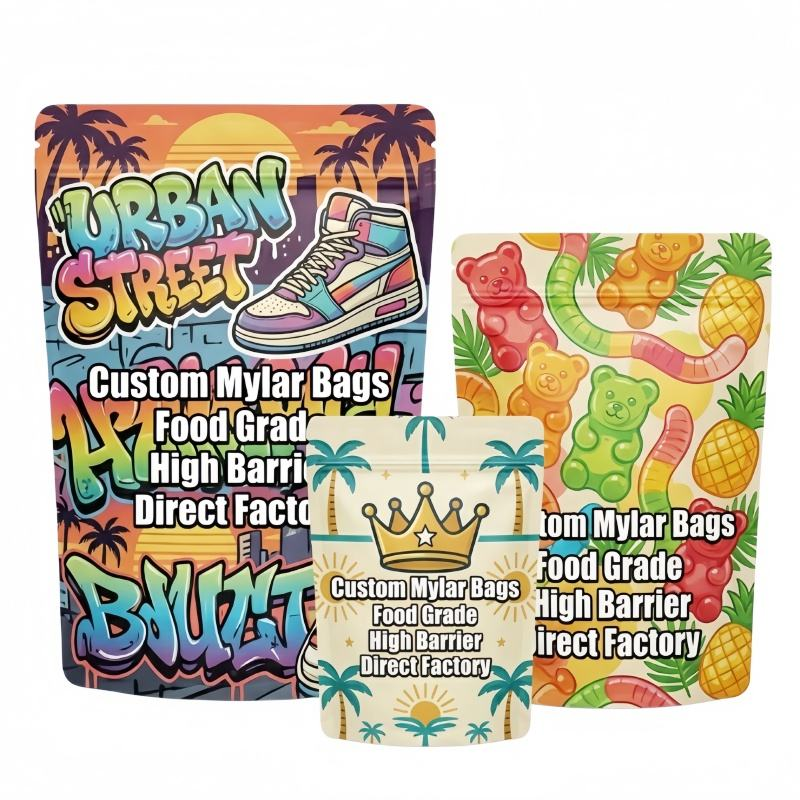
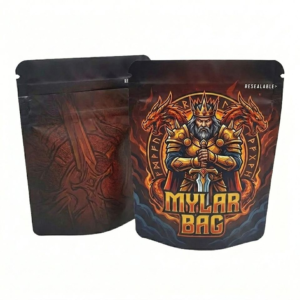
Custom printed smell-proof Mylar pouches are resealable flexible packages with a stand-up format, printable exterior and aroma-containment function. They are relevant to cannabis brands, distributors, wholesalers and private-label buyers packaging flower or other dry, aroma-sensitive products. Odor resistance depends on the complete laminate, zipper and perimeter seals, so the required barrier and sealing method must be confirmed before production.
Product Specifications
| Specification | Product detail |
|---|---|
| Packaging type | Custom printed flexible stand-up pouch |
| Confirmed format | Resealable, stand-up and described as smell-proof |
| Material description | Mylar pouch; exact film and laminate layers require buyer confirmation |
| Intended application | Cannabis flower or other dry, aroma-sensitive contents, subject to product compatibility |
| Closure | Resealable closure; zipper design and child-resistant status must be specified |
| Base | Stand-up gusset format; final gusset geometry depends on the approved dimensions |
| Printing | Custom printed; artwork versions, print process, color targets and coverage require confirmation |
| Dimensions and fill weight | Not specified; determine using the actual product volume, density and required headspace |
| Finish and optional features | To be selected and confirmed in the final specification |
| Compliance | Buyer must identify the destination market and applicable packaging, labeling and child-resistance requirements |
How the Pouch Helps Manage Aroma and Product Quality
The phrase “Mylar pouch” does not establish one universal film structure. Mylar is commonly associated with polyester film, but a commercial pouch may use a multilayer laminate selected for printability, stiffness, puncture resistance, heat sealability and barrier performance. The exact layer sequence, thickness and sealant layer should appear in the approved specification.
For barrier laminate weed bags, aroma containment is affected by more than the exterior film. Low-permeability layers can help limit the movement of odor, moisture and oxygen, while an opaque or metallized construction may provide greater light protection than a clear structure. Actual performance depends on the complete laminate, zipper profile, top seal and manufacturing quality. “Smell-proof” should therefore be treated as a performance requirement to define and validate, not as a permanent zero-odor guarantee.
A stronger or more opaque barrier can improve protection from light and external conditions, but it may reduce product visibility. Adding a clear window creates a merchandising benefit while introducing a section with different light and barrier properties. Buyers should decide whether viewing the flower is more important than maintaining a fully opaque package.
Stand-Up Gusset, Fill Volume and Headspace
These resealable stand-up cannabis pouches use an expandable bottom area so the filled package can form a base for shelf presentation. The pouch must still be matched to the filling operation: gusset depth affects how readily it opens, how the product settles and how stable the finished pack appears.
A flower weight alone cannot determine the correct dimensions. Cannabis cultivars vary in bud size, trim, density and compression sensitivity. The buyer should provide the actual product or reliable bulk-density information, then allow space for filling, zipper clearance and the final heat seal. Too little headspace can place flower in the zipper or seal area; excessive headspace can make the pack look underfilled and permit more internal movement.
Zipper, Heat Seal and Child-Resistant Requirements
The resealable zipper supports repeated opening and closing after first use. For distribution, the area above the zipper can be heat sealed to create an initial closed package, with a tear notch potentially configured to guide opening. Zipper profile, notch position, seal width and top clearance must be coordinated with the die line and filling equipment.
An ordinary press-to-close zipper is not automatically child-resistant. If the destination market requires child-resistant cannabis packaging, the buyer must request an appropriate closure system and identify the applicable testing or documentation requirements. A child-resistant mechanism can change opening instructions, available artwork space, filling clearance and the consumer experience.
Custom Printing and Multi-SKU Artwork Control
Custom branded marijuana packaging can carry the brand identity, strain name, product information, warnings, variable codes and other required label content. The feasible printing process, color reproduction, white ink strategy and surface finish depend on order specifications and the selected substrate. Metallic film, for example, can influence color appearance unless an opaque white layer is planned beneath selected graphics.
Buyers sourcing private-label multi-SKU Cali bags or professionally named strain pouches should establish one master die line and a controlled artwork system. Consistent logo placement, warning areas, color references, zipper clearance and seal margins make related SKUs easier to review. The RFQ should state the number of artwork versions and quantity per version rather than combining all units into one undifferentiated total.
Artwork should remain outside functional seal areas unless the printer confirms otherwise. Fine text, barcodes and regulatory panels require sufficient contrast and usable space. Matte, gloss, metallic, holographic or kraft-style appearance may be considered conditionally, but the chosen appearance does not by itself prove the underlying barrier structure.
What Buyers Should Confirm Before Quotation
- Contents: flower, another dry cannabis product or a different aroma-sensitive item.
- Fill basis: target weight plus actual product dimensions, density or a representative sample.
- Pouch dimensions: width, height, gusset and required zipper or seal clearances.
- Barrier objective: priorities for aroma, moisture, oxygen and light protection.
- Closure: standard resealable zipper or a specified child-resistant system.
- Artwork: number of SKUs, quantity per design, colors, finish and variable information.
- Operations: manual or automated filling and intended heat-sealing method.
- Market: destination jurisdiction, labeling rules and documentation requirements.
A buyer comparing a wholesale Mylar pouch manufacturer or supplier should request a written specification rather than compare appearance alone. Samples should be evaluated with the actual contents and intended filling and sealing process before the final construction is approved.
Frequently Asked Questions
Are these pouches guaranteed to block every cannabis odor?
No. They are intended to help contain aroma when properly filled and sealed, but odor resistance depends on the selected laminate, zipper, heat seal, handling and storage conditions.
Does the stated Mylar material define the complete laminate?
No. “Mylar” is a common commercial description, not a complete layer specification. Buyers should confirm the film layers, thickness, sealant and required barrier properties.
Can one pouch size be used for every flower fill weight?
Not reliably. Flower density, bud dimensions, headspace and acceptable compression vary, so the pouch should be sized using the actual product and filling method.
Is the resealable zipper automatically child-resistant?
No. A standard resealable zipper and a child-resistant closure are different specifications. Required child-resistance features and supporting documentation must be identified for the destination market.
What information is needed for multi-strain custom printing?
Provide the master die line requirements, artwork count, quantity per version, color targets, finish, shared design elements and all SKU-specific text or graphics.
Request a Product-Specific B2B Quotation
For an accurate RFQ, provide the packaged contents, target fill weight, actual product density or dimensions, desired pouch size, total quantity, quantity per artwork version, laminate or barrier priorities, closure type, finish, filling method, destination market and applicable compliance needs. These inputs allow the pouch structure, gusset, print plan and sealing details to be reviewed as one complete packaging system.
Reviews
There are no reviews yet.