
Custom Printed Smell-Proof Mylar Bags for Cannabis Products
Custom printed smell-proof Mylar bags are flexible stand-up pouches with a heat-sealable opening, printable exterior, and odor-containment function. They are commonly configured for dried cannabis flower and other dry, aroma-sensitive cannabis products. This format is relevant to cannabis brands, distributors, wholesalers, private-label programs, and multi-SKU buyers that need branded packaging with a stable retail display base.
The term “smell-proof” identifies the intended packaging function rather than an absolute performance guarantee. Aroma containment depends on the complete laminate, seal integrity, closure selection, product condition, and handling. Final dimensions, layer structure, barrier requirements, and destination-market rules should therefore be confirmed before production.
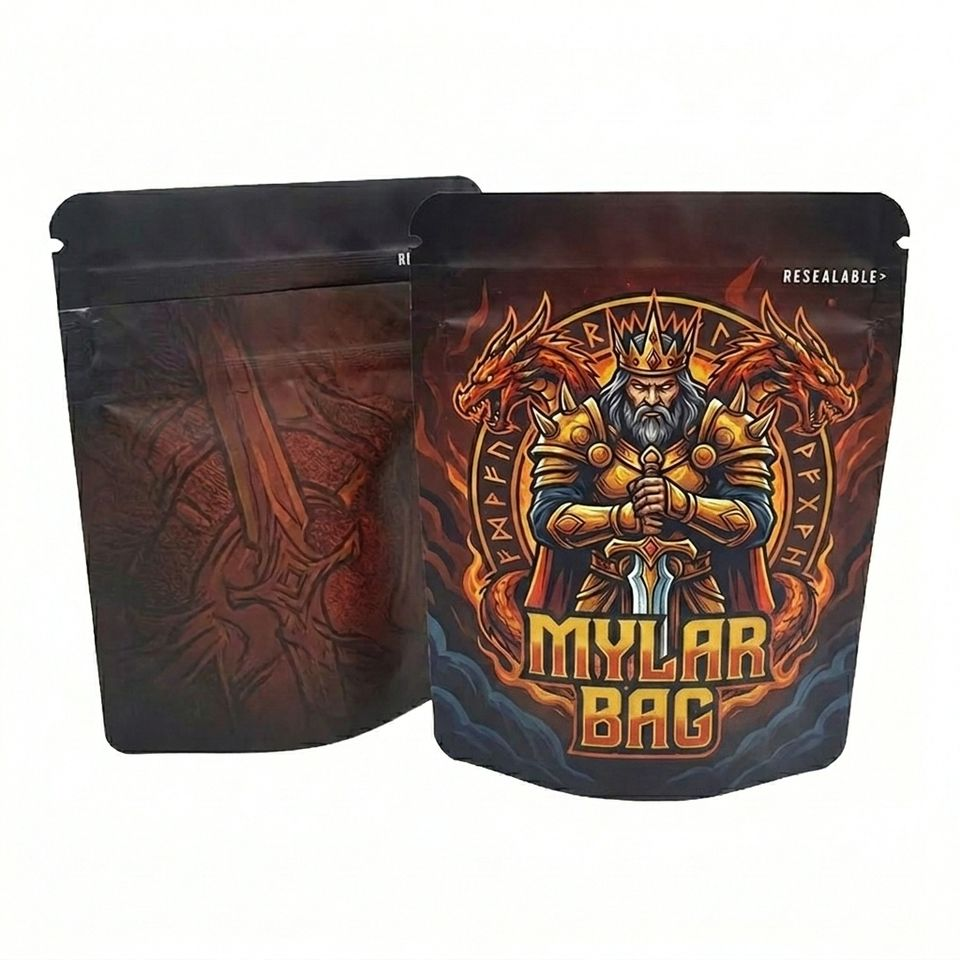
Product Specifications
| Specification | Product detail |
|---|---|
| Packaging type | Custom printed flexible stand-up pouch |
| Material | Mylar-based flexible film or laminate; exact layer structure requires confirmation |
| Primary closure | Heat-sealable opening |
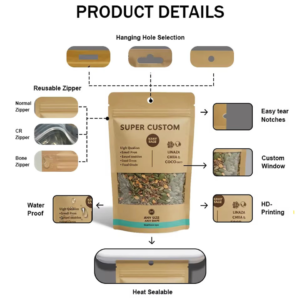
| Resealable closure | A zipper may be configured if required; zipper type must be specified |
| Barrier function | Designed to help contain aroma when properly filled and sealed; performance depends on the selected laminate and sealing system |
| Base | Stand-up gusset |
| Printing | Custom printed; artwork count, process, colors, finish, and printable area require confirmation |
| Size and capacity | Produced to the buyer’s confirmed pouch dimensions and product-volume requirements |
| Intended use | Cannabis flower or other compatible dry, aroma-sensitive contents, subject to material-suitability review |
How the Laminate Affects Aroma and Product Protection
Heat-seal stand-up Mylar pouches are normally made from multiple flexible layers selected to perform different tasks. Depending on the specification, an outer layer can support printing and stiffness, an internal barrier layer can reduce the transfer of odor, moisture, oxygen, or light, and an inner sealant layer can create the heat seal. The exact layer materials and thicknesses cannot be assumed from the word “Mylar” or from the pouch appearance.
A higher-barrier construction may help preserve aroma and limit environmental exposure, but it can also increase stiffness, material use, and cost. Puncture resistance matters when stems or dense contents press against the pouch. Sealant compatibility matters because contamination, wrinkles, incorrect temperature, or inadequate dwell time can weaken the final seal. Buyers should define the required function instead of selecting a laminate solely by appearance.
Size, Gusset, Fill Density, and Headspace
One stated cannabis fill weight does not establish one universal bag size. Flower density, bud structure, moisture condition, desired presentation, and acceptable compression all affect usable volume. A pouch for dense flower may require less internal space than one holding lighter, less compact material at the same nominal weight.
The bottom gusset expands during filling and allows the pouch to stand when its proportions and fill distribution are suitable. Buyers should evaluate pouch width, height, gusset depth, seal zones, zipper position if applicable, and required headspace. Excessive headspace can make the package look underfilled, while insufficient headspace can interfere with zipper use or heat sealing.
Heat Seal, Zipper, and Child-Resistant Requirements
The confirmed closure is a heat-sealable opening. A properly specified and produced heat seal provides tamper evidence and helps contain aroma before opening. A resealable zipper can be added conditionally for repeated consumer access, but an ordinary press-to-close zipper is not automatically child-resistant.
If the destination market requires child-resistant cannabis packaging, the buyer must request an appropriate closure system and confirm the applicable testing, documentation, labeling, and use conditions. Tear notches may also be configured, but their position must work with the top seal, zipper, opening direction, and required package security. Manual, semi-automatic, and automated filling methods can require different seal-area and pouch-tolerance decisions.
Custom Printing and Multi-SKU Artwork Control
Custom cannabis pouch printing can carry strain names, brand graphics, product identifiers, warnings, variable information areas, and other required copy. Printing process, color targets, surface finish, ink system, white layers, and artwork coverage depend on the selected substrate and production specification. Matte, gloss, metallic, or holographic effects may be available depending on the construction, but appearance alone does not prove barrier performance.
Private-label multi-SKU weed bags require disciplined artwork control. Buyers should provide one approved die line, identify common and variable design elements, assign a unique version name to every strain or SKU, and confirm barcode and regulatory-copy placement. Color expectations should be defined with references because screens, proofs, and printed flexible film can reproduce colors differently.
Product-Specific Trade-Offs to Review
- Barrier versus visibility: An opaque or metallized structure may improve light protection, while a clear window provides product visibility but reduces that protection in the window area.
- Stiffness versus handling: A stiffer laminate can improve shelf presentation, but it may feel less flexible and require different sealing settings.
- Compact size versus fillability: A close-fitting pouch reduces excess material, but insufficient headspace can make loading and sealing difficult.
- Resealability versus closure complexity: A zipper improves repeated access, while child-resistant functionality requires a separately specified system rather than a standard zipper assumption.
Compliance and Procurement Review
Packaging rules differ by destination market and product category. Before ordering odor-resistant cannabis flower bags, the buyer should determine requirements for child resistance, tamper evidence, opacity, warning panels, symbols, language, serving or net-content statements, and traceability information. Material suitability for the actual contents should also be reviewed. No certification, approval, or jurisdictional compliance should be inferred without supporting documents for the final specification.
Comparison between a wholesale cannabis packaging supplier and alternative sources should use the same controlled specification: dimensions, tolerances, laminate, total thickness, barrier target, closure, seal requirements, print process, finish, artwork versions, packing method, and inspection criteria. Comparing unaligned descriptions can hide meaningful differences in function and cost.
Frequently Asked Questions
Does “smell-proof” mean no odor can ever escape?
No. It describes the intended odor-containment function. Actual performance depends on the complete laminate, closure, heat-seal quality, product condition, storage, and handling.
What size pouch is needed for a specific flower weight?
Fill weight alone is not enough to select dimensions. Provide the flower’s approximate density or a physical fill sample, target weight, desired headspace, and preferred presentation for a better size assessment.
Is a standard zipper child-resistant?
No. An ordinary resealable zipper should not be treated as a tested child-resistant closure. Request a suitable child-resistant system when required and verify the applicable documentation for the destination market.
Can the pouch include a window or special finish?
A window, matte surface, metallic effect, holographic appearance, or other finish may be configurable depending on the laminate and printing method. A window creates a trade-off between product visibility and light protection.
What information is needed to quote multiple strain designs?
Provide the total quantity, quantity per artwork version, pouch dimensions, number of SKUs, print-ready files or design status, color and finish requirements, laminate needs, closure type, and destination market.
Request a Product-Specific B2B Quotation
For an RFQ, provide the intended contents, fill weight or actual product dimensions, desired pouch width, height and gusset, order quantity, quantity per artwork version, material or barrier requirements, heat-seal and zipper needs, finish, filling method, destination market, and applicable compliance requirements. These inputs allow custom printed smell-proof Mylar bags to be evaluated against the actual product and packing process rather than an assumed generic specification.
Reviews
There are no reviews yet.