
Custom Printed Matte Cali Stand-Up Mylar Bags for Cannabis Brands
Custom printed matte Cali stand-up Mylar bags are branded flexible pouches for cannabis businesses that need a distinctive Cali-style presentation in a practical stand-up format. The pouch can be evaluated for flower, pre-rolls, or other suitable cannabis products, subject to the required dimensions, barrier structure, closure, and destination-market specifications. This format is relevant to cannabis brands, private-label and OEM buyers, distributors, wholesalers, importers, and purchasing teams managing several strains or SKUs.
The matte exterior gives the package a low-gloss visual appearance, while the stand-up construction supports shelf presentation and upright filling. “Mylar” identifies the stated packaging material, but the visible matte finish does not by itself confirm the complete laminate or its barrier performance. Final odor, aroma, moisture, oxygen, light, puncture, stiffness, and seal performance depend on the selected structure, seal design, filling process, and storage conditions.
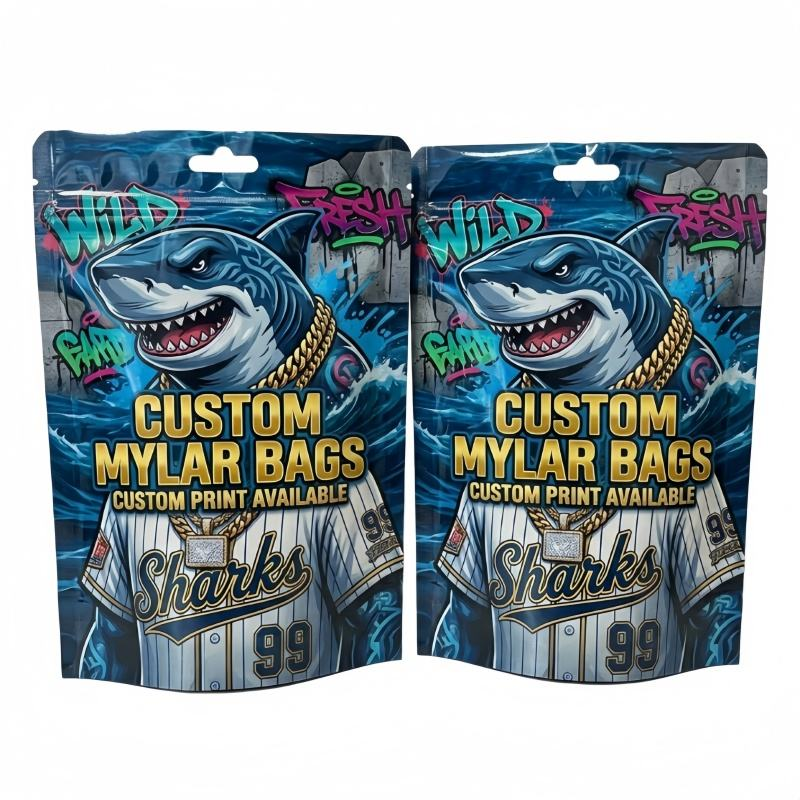
Product Specifications
| Product type | Custom printed matte Cali stand-up Mylar bag |
|---|---|
| Packaging format | Stand-up pouch with a bottom gusset; final gusset and seal geometry require confirmation |
| Material | Mylar material as stated; complete laminate or barrier structure is subject to final specification |
| Finish | Matte exterior appearance |
| Printing | Custom printing; artwork coverage, colors, registration, and printable area require confirmation |
| Closure | Closure type is not specified and should be selected for the product and market requirement |
| Intended use | Cannabis packaging, with contents and suitability to be confirmed before production |
| Dimensions and capacity | Not specified; determine from product dimensions, density, target fill, and required headspace |
How the Stand-Up Format Supports Filling and Display
A bottom gusset allows the pouch to stand when filled, which can improve carton, shelf, and sample presentation compared with a flat bag. The gusset also affects usable volume, filling behavior, and the amount of headspace available above the product. A stated fill weight cannot be used to select one universal pouch size because cannabis flower density, shape, trim, moisture condition, and desired presentation vary. For pre-rolls, length, diameter, internal movement, and crush risk are more important than weight alone.
Before approving a size, provide the actual packed product dimensions, target fill weight or count, filling method, and whether the pouch must remain upright after filling. A sample fit check can help verify that the opening accepts the filling equipment, the product does not obstruct the zipper or heat-seal area, and the finished pouch has enough headspace without looking unnecessarily full or slack.
Material, Barrier, and Sealing Decisions
The matte appearance is an aesthetic attribute, not proof of a particular barrier layer. The complete Mylar laminate and seal system should be reviewed against the intended contents. A suitable structure may help contain aroma and protect the product from moisture, oxygen, light, or handling damage, depending on its construction and the quality of the finished seals. Puncture resistance and stiffness also depend on the selected layers, thickness, gusset geometry, and distribution requirements.
For aromatic cannabis flower, buyers often need to evaluate aroma containment when the bag is properly sealed. A zipper can support repeated opening and closing, but it should not be treated as an absolute odor barrier or as a replacement for a primary heat seal where the market or product specification requires one. Confirm whether the package needs a heat-seal area, a tear notch, a resealable zipper, or another opening arrangement. An ordinary zipper is distinct from a tested child-resistant closure; the correct choice depends on the destination market and applicable requirements.
Custom Printing and Matte Cali Presentation
Custom printing lets a brand distinguish strains, product lines, and private-label programs on one pouch format. The artwork review should establish the printable panel, safe areas, gusset coverage, seal exclusions, opening position, barcode placement, required warnings, and the visual treatment of the matte surface. Artwork that crosses a gusset or seal can require tighter registration and may not reproduce in the same way as artwork on a flat front panel.
Ask for the approved dieline before finalizing graphics. Confirm whether the requested appearance is produced through the chosen printed substrate or laminate, because a matte finish alone does not define the underlying barrier structure. Color expectations, fine text, metallic effects, spot finishes, and other visual treatments should be reviewed against the selected substrate and printing process rather than assumed from a screen proof.
Managing Multiple Strains and Private-Label SKUs
For multi-SKU purchasing, a consistent pouch size and shared structural specification can simplify filling and inventory planning, while separate artwork versions can identify strains, potencies, flavors, or product variants. Consistency still requires approval of each version’s text, barcode, regulatory panel, color treatment, and artwork position. If different products have different densities or dimensions, one common bag may not provide the same fill appearance or headspace across every SKU.
Private-label, OEM, and wholesale buyers should define which elements remain constant and which change by SKU. Useful controls include a master packaging specification, approved artwork files, version naming, color references, closure selection, and a sample approval process. These details help prevent a visually consistent program from creating unsuitable fit or incorrect market information.
Destination-Market and Product Review
Packaging requirements can vary by destination, product category, contents, warning language, labeling layout, child-resistance expectations, recycling instructions, and food-contact considerations where relevant. The pouch should not be described as certified, approved, or compliant unless the applicable documentation has been reviewed for the exact structure and market. The buyer should confirm whether the final package needs a child-resistant system, tamper evidence, a heat seal, specific warning space, or testing documentation.
For flower, review aroma containment, light exposure, headspace, density, and seal integrity. For pre-rolls, review internal movement, length, diameter, and crush protection. For edibles or products with oil or moisture, review grease resistance, moisture control, resealability, serving information, and any applicable food-contact requirements. These checks connect the printed presentation to the actual product rather than treating every cannabis SKU as interchangeable.
What to Include in an RFQ
To receive a useful quotation for custom printed matte Cali Mylar bags, provide the contents, target fill weight or count, actual product dimensions, desired pouch dimensions, estimated quantity, number of artwork versions, material or barrier preference, closure type, finish, filling method, and destination market. Include whether you need a zipper, heat-seal area, tear notch, child-resistant feature, or a specific opening location. If available, share the intended dieline, artwork format, barcode requirements, warning copy, and sample approval expectations.
For a new package, request confirmation of the proposed laminate, dimensions, gusset, seal geometry, printing limits, closure construction, and any available technical documentation. A physical fit and seal review is especially useful when the package will hold dense flower, long pre-rolls, oily edibles, or several products under one multi-SKU program.
Frequently Asked Questions
What products can these custom printed matte Cali stand-up Mylar bags package?
They can be evaluated for cannabis flower, pre-rolls, or other suitable cannabis products. Final suitability depends on the product dimensions, density, moisture or oil characteristics, required barrier, closure, seal, and destination-market requirements.
Does the matte finish prove that the bag is smell proof?
No. The matte finish describes the exterior appearance and does not establish the complete barrier structure. The selected laminate and properly formed seals may help contain aroma, but odor performance must be reviewed against the final specification rather than assumed from the finish.
Can I use an ordinary zipper for a child-resistant cannabis package?
An ordinary resealable zipper is not the same as a tested child-resistant closure. Confirm the required closure and any applicable testing or documentation for the destination market before approving the package.
How should I choose a pouch size for cannabis flower?
Use the actual target fill weight together with flower density, product dimensions, desired headspace, opening size, gusset, and presentation requirements. Fill weight alone does not establish one universal pouch size.
Can one pouch format support several private-label SKUs?
Possibly, if the products have compatible dimensions, density, barrier needs, and filling requirements. Each artwork version should still be checked for warnings, barcodes, variable information, color, and correct strain or product identification.
Request a B2B Specification Review
Send the contents, fill weight or actual product dimensions, desired pouch dimensions, quantity, artwork versions, preferred material or barrier, closure, matte finish requirements, filling method, destination market, and compliance needs for review. These details allow the proposed custom printed matte Cali stand-up Mylar bags to be assessed for fit, presentation, sealing, artwork, and multi-SKU procurement requirements.
Reviews
There are no reviews yet.