
Custom Printed Flat Pouches for Tobacco and Cigars
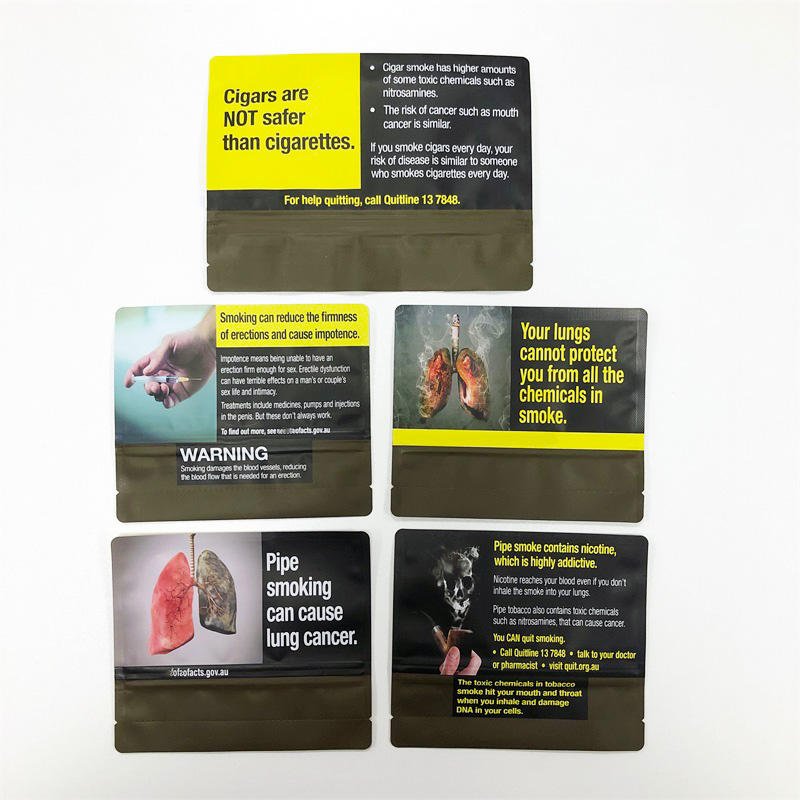
Custom printed flat pouches are flexible, non-gusseted packaging bags designed for tobacco, cigar products, cigar accessories, sample packs, promotional tobacco blends, and related adult-use dry goods where a slim profile and branded print area are important. This product is suited to B2B buyers, private-label programs, distributors, importers, wholesalers, and multi-SKU brands that need printed cigar pouches or flat tobacco pouch packaging specified before an RFQ.
Product Specifications
| Product type | Custom printed flat pouch for tobacco and cigar packaging |
|---|---|
| Pouch style | Flat pouch; no bottom gusset unless a different structure is requested |
| Intended contents | Tobacco, cigars, cigar-related items, dry herbal products, samples, or promotional packs subject to buyer specification |
| Material structure | Can be configured with PET, PE, PP, metallized film, foil, paper-based layers, or other laminates depending on barrier, appearance, and sealing requirements |
| Closure | May use heat seal only, tear notch, resealable zipper, or other closure options; child-resistant closure must be specified separately if required |
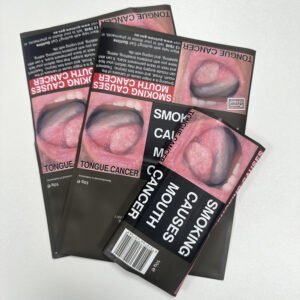
| Printing | Custom printed artwork, logo, flavor or SKU information, warnings, and compliance panels subject to final dieline and print method |
| Finish options | Matte, gloss, soft-touch, metallic, kraft-style, window, or specialty finish may be possible depending on material selection |
| Dimensions and capacity | To be confirmed by buyer based on cigar length, tobacco fill weight, product thickness, headspace, and filling method |
What This Flat Pouch Is Best For
A flat pouch is selected when the pack should remain thin, mailer-friendly, or shelf-card-like rather than standing upright. For tobacco cuts, cigarillos, small cigars, cigar wraps, filters, tips, or sampler portions, the flat format gives a broad front and back artwork panel while limiting excess film. Compared with stand-up pouches, flat pouches usually offer less internal volume and less base stability, but they can be more efficient for compact products and multi-flavor lines.
Buyers should not choose the pouch size from fill weight alone. Tobacco density, cigar diameter, cigar length, internal movement, desired headspace, and whether the product is inserted by hand or machine all affect the usable pouch size. A long cigar may require more length even if its weight is low, while loose tobacco may need width and seal clearance to avoid product trapped in the seal area.
Material and Barrier Decisions
The barrier performance of custom mylar flat bags depends on the complete laminate, sealing layer, closure, and production specification. Metallized or foil-based structures can be considered when aroma retention, moisture control, oxygen reduction, and light protection are priorities. Clear or windowed structures may improve product visibility but normally trade away some light protection. Paper-based or kraft-style exteriors can support a natural look, but the visible surface does not by itself define the barrier layer inside.
For tobacco and cigars, the pouch must help manage aroma, moisture exchange, and product handling. A high-barrier laminate may help contain aroma when properly sealed, while the sealant layer supports heat sealability and pouch integrity. If the pack will be used for scented products, infused tobacco, hemp-derived products, or strong-aroma items, review the intended barrier level and sealing method against the information on smell resistant packaging structures before finalizing the specification.
Closure, Seal Area, and Opening Position
Flat pouches can be specified as single-use heat-sealed sachets or as resealable packs with a zipper. A tear notch may improve opening control, but its location must leave enough top seal area above the product and above any zipper track. A standard zipper is not the same as a tested child-resistant closure. If the destination market requires child-resistant packaging, tamper evidence, health warnings, or specific label panels, those requirements should be confirmed before the dieline and artwork are approved.
The main trade-off is convenience versus pack thickness and seal complexity. A zipper improves repeat access for tobacco portions, but it adds material, stiffness, and a defined headspace area. A heat-seal-only flat pouch can be cleaner and slimmer for cigars or samples, but it is less convenient after opening unless an additional storage method is used.
Custom Printing and Multi-SKU Control
Custom printing is useful for cigar brands and tobacco lines with multiple blends, strengths, flavors, regions, or limited editions. Artwork planning should include front branding, rear product information, warning area, barcode or batch coding space if used, and enough contrast for regulatory text required by the buyer’s market. For broader printed flexible packaging options, see custom printed packaging bags.
For private label tobacco pouches, consistency across SKUs matters. A shared pouch size can simplify filling and case packing, but each SKU may still require different copy, color coding, window placement, or barrier needs. Buyers managing many versions should provide an artwork matrix showing pouch size, design name, finish, laminate, closure, and destination market for each item.
Flat Pouch Engineering Points Buyers Should Confirm
- Usable internal area: The external pouch dimensions are not the same as the product space because side, top, and bottom seals reduce the fill area.
- Product stiffness: Cigars and cigar tubes need clearance so edges do not stress the seals or corners.
- Headspace: Loose tobacco may require room for filling accuracy and resealing, while slim cigars may need tighter movement control.
- Seal contamination risk: Fine tobacco particles can interfere with sealing if they enter the seal zone during filling.
- Finish durability: Matte or soft-touch effects can elevate branding, but scuff resistance should be evaluated with the selected film and shipping method.
Custom Development Process
- Requirement collection: Share the product type, cigar length or tobacco fill weight, target pouch dimensions, closure preference, print versions, finish, and destination market.
- Specification confirmation: Confirm laminate options, barrier expectations, seal method, opening position, dieline, and any warning or compliance panels required by the buyer.
- Sample and artwork review: Review pouch fit, print layout, closure position, seal clearance, and handling before bulk approval.
- Bulk-production approval: Approve the final specification, artwork files, quantity, packing requirements, and quality checkpoints before production proceeds.
FAQ
Are these flat pouches suitable for cigars as well as loose tobacco?
Yes, they can be specified for cigars, cigarillos, wraps, loose tobacco, and sample packs, but the pouch dimensions should be based on actual product length, diameter, thickness, and desired headspace.
Can the pouch be made smell resistant?
It can be configured with barrier laminates and sealing options that help contain aroma when properly sealed. The final performance depends on the complete material structure, closure, and sealing process.
Is a resealable zipper automatically child-resistant?
No. A standard resealable zipper is a convenience closure. If child-resistant functionality is required for the destination market, it must be specified and evaluated separately.
Can we use one pouch size for several tobacco or cigar SKUs?
Often yes, if the products have similar dimensions and filling behavior. Buyers should test the largest and smallest items in the proposed pouch to confirm fit, seal clearance, and presentation.
What artwork information is needed before quoting?
Provide the number of artwork versions, print coverage, finish preference, warning panels, barcode or variable-code needs if any, and whether the same dieline will be used across all SKUs.
RFQ Information to Prepare
For an accurate B2B quotation, prepare the contents, tobacco fill weight or cigar dimensions, desired pouch size, order quantity, number of artwork versions, laminate or barrier preference, zipper or heat-seal choice, finish, filling method, destination market, and any compliance or document needs. Send these details through the packaging RFQ contact form so the flat pouch specification can be reviewed before quotation.
Reviews
There are no reviews yet.