
Custom Printed Child-Resistant Mylar Pouches for Cannabis Programs
Custom printed child-resistant Mylar pouches are stand-up flexible bags for cannabis brands, distributors, wholesalers, private-label buyers, and multi-SKU packaging programs. The pouch combines a printable outer surface with a stand-up format and a child-resistant opening configuration. It can be specified for products such as flower or edibles, but the correct size, laminate, closure, and compliance requirements depend on the contents and destination market.
Product Specifications
| Product type | Custom printed child-resistant Mylar stand-up pouch |
|---|---|
| Material | Mylar-based flexible packaging; the complete laminate structure is subject to final specification |
| Pouch style | Stand-up pouch with a bottom gusset for upright presentation and filling |
| Closure | Child-resistant opening configuration; mechanism, testing, and sealing details require confirmation |
| Printing | Custom printing, with artwork coverage, colors, and print method subject to the selected substrate and production specification |
| Finish | Finish options may be available depending on the selected structure and artwork requirements |
| Intended use | Cannabis packaging programs, including flower or edibles when the selected structure is suitable |
| Dimensions and capacity | To be confirmed from the product dimensions, fill weight, density, headspace, and desired pouch format |
How the Stand-Up Format Fits Cannabis Filling
The bottom gusset allows the pouch to stand on a shelf, display table, or packing line while providing a broader base than a flat bag. It also affects usable volume and how the pouch opens during filling. A stated fill weight does not identify one universal pouch size: dense flower, airy flower, pre-packed units, and edibles occupy different volumes. Buyers should provide the actual product dimensions, target fill weight, expected density, and preferred headspace before approving a size.
Headspace matters for both presentation and sealing. Excessive empty space can increase movement during handling, while insufficient space can interfere with the zipper or heat-seal area. For flower, confirm how much room is needed to avoid crushing the product and whether the pouch must accommodate a scoop, insert, or other packing method. For edibles, confirm the shape, grease exposure, moisture sensitivity, and serving or warning-panel requirements before selecting the structure.
Mylar Structure and Barrier Decisions
Mylar describes a material element, not a complete performance specification. The finished barrier depends on the full laminate, sealant layer, thickness, artwork, and sealing conditions. A suitable structure may help limit exposure to moisture, oxygen, light, puncture, and aroma transfer, depending on the selected construction and how the finished pouch is sealed. Buyers should request the applicable material details when aroma retention, product shelf life, or mechanical protection is important.
A heavier or more protective laminate may improve stiffness and barrier potential, but it can also affect cost, folding behavior, print appearance, and sealing requirements. A metallic or opaque appearance may support light protection, while a clear window can improve product visibility but may reduce light protection in that area. Appearance alone does not establish the barrier properties of the pouch. For buyers comparing Mylar stand-up pouches with barrier laminate, the decision should be based on the complete structure and the product’s sensitivity rather than the surface appearance alone.
Child-Resistant Opening and Heat Sealing
The child-resistant feature should be treated separately from an ordinary resealable zipper. A standard zipper supports repeated opening and closing; it does not automatically establish child resistance. For this product, confirm the exact opening mechanism, how the user operates it, whether a heat seal is included above the closure, and what testing or destination-market documentation is required. A heat seal can provide tamper evidence or an additional sealed barrier when properly specified, but it must be opened before normal consumer access.
Ask the supplier to identify the seal width, seal position, tear-notch location, and compatibility with the intended filling and sealing equipment. A tear notch can improve access after the initial seal, but its position must not compromise the child-resistant opening or the artwork’s required information area. The final closure should be reviewed with the applicable market rules rather than assumed from the product name alone.
Custom Printing, Artwork, and Brand Architecture
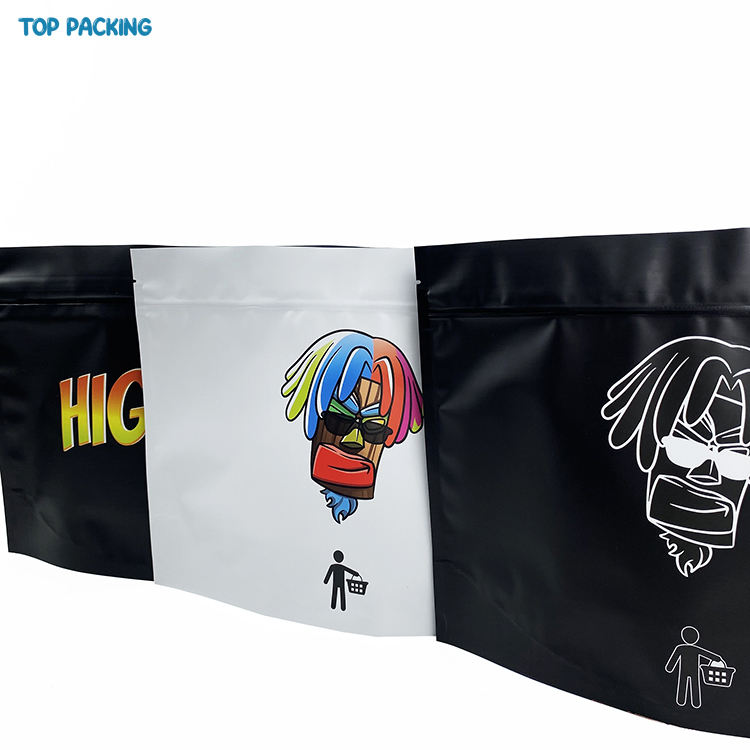
Custom printing turns the pouch into a branded packaging component for strain names, product variants, warnings, directions, and retailer or private-label information. Before artwork is released, confirm the dieline, printable area, seal exclusions, gusset visibility, zipper position, tear notch, color expectations, and finish. Artwork that crosses a fold, gusset, or seal zone may not align as expected or may reduce the usable information area.
Matte, gloss, metallic, kraft-look, and other visual treatments may be configurable, but the available finish depends on the selected substrate and printing method. Confirm whether a surface treatment changes color reproduction, scuff visibility, barcode contrast, or the readability of small regulatory text. For custom printed Mylar cannabis bags, approve a physical or production-representative sample when precise color, registration, tactile finish, or panel placement is important.
Managing Private-Label and Multi-SKU Orders
Private-label and multi-SKU buyers should define which specifications remain constant across the range. Maintaining one pouch size, closure, laminate, and finish can simplify packing and shelf presentation, while different fill weights or product densities may require separate dimensions. A shared visual system can still support multiple strain or flavor designs through controlled artwork versions.
For private-label weed pouches for multiple SKUs, prepare an artwork matrix that lists each SKU, product name, fill weight, barcode, warning content, destination market, and revision status. Confirm whether each version uses the same dieline and whether variable information is printed during pouch production or applied later. This reduces the risk of mismatched graphics, incorrect panels, or a pouch that does not provide enough space for a specific product.
Destination-Market and RFQ Review
Cannabis packaging requirements vary by destination, product category, closure design, labeling rules, and whether the package must be resealable, tamper-evident, child-resistant, or suitable for food contact. This product page does not establish certification, approval, or compliance for a particular jurisdiction. The buyer should identify the destination market and request the documentation, test evidence, labeling space, and material information required for that market.
For an efficient quotation, provide the contents, fill weight or actual product dimensions, target pouch dimensions if known, quantity, number of artwork versions, preferred material or barrier, closure requirements, finish, filling method, destination market, and compliance needs. A cannabis pouch manufacturer and wholesale supplier can then evaluate the pouch structure and confirm which details are available for the requested program. If you are comparing child-resistant cannabis stand-up pouches, also ask how the closure is defined, how the heat seal is applied, and which specifications must be approved before production.
Frequently Asked Questions
Are these pouches suitable for cannabis flower?
They can be specified for cannabis flower, but the correct pouch size depends on fill weight, flower density, product dimensions, headspace, and the desired closure and barrier structure. Confirm those details before selecting a size.
Does the Mylar material automatically make the pouch smell proof?
No. Aroma containment depends on the complete laminate, seals, closure, and manufacturing conditions. The pouch may help contain aroma when properly specified and sealed, but absolute or permanent performance should not be assumed.
Is the zipper the same as a tested child-resistant closure?
No. An ordinary resealable zipper does not automatically establish child resistance. Confirm the specific child-resistant mechanism, applicable testing, documentation, and destination-market requirements.
Can one pouch size serve every SKU in a private-label range?
Not necessarily. Different fill weights, densities, product shapes, and headspace requirements can require different pouch dimensions. A shared size may work for some SKUs after the products and filling process are reviewed.
What information should accompany an RFQ?
Provide the contents, fill weight or actual product dimensions, desired pouch dimensions, quantity, artwork versions, material or barrier preference, closure, finish, filling method, destination market, and compliance needs.
Request a Product-Specific B2B Quote
Send your contents, fill weight or actual product dimensions, desired pouch dimensions, order quantity, artwork versions, material or barrier preference, child-resistant closure requirements, finish, filling method, destination market, and compliance needs. These details allow the pouch specification, artwork layout, and RFQ scope to be reviewed together.

Reviews
There are no reviews yet.