
Custom 3.5g Child-Resistant Mylar Bags for Cannabis Packaging
These custom 3.5g child-resistant Mylar bags are die-cut cannabis packaging bags identified with an aluminum foil structure and intended for a specified 3.5g fill application. They are a practical format for cannabis brands, distributors, wholesalers, private-label programs, OEM buyers, and multi-SKU teams that need a shaped, branded pouch rather than a stock bag. The actual pouch dimensions, usable volume, barrier construction, opening system, and destination-market requirements should be confirmed before production.
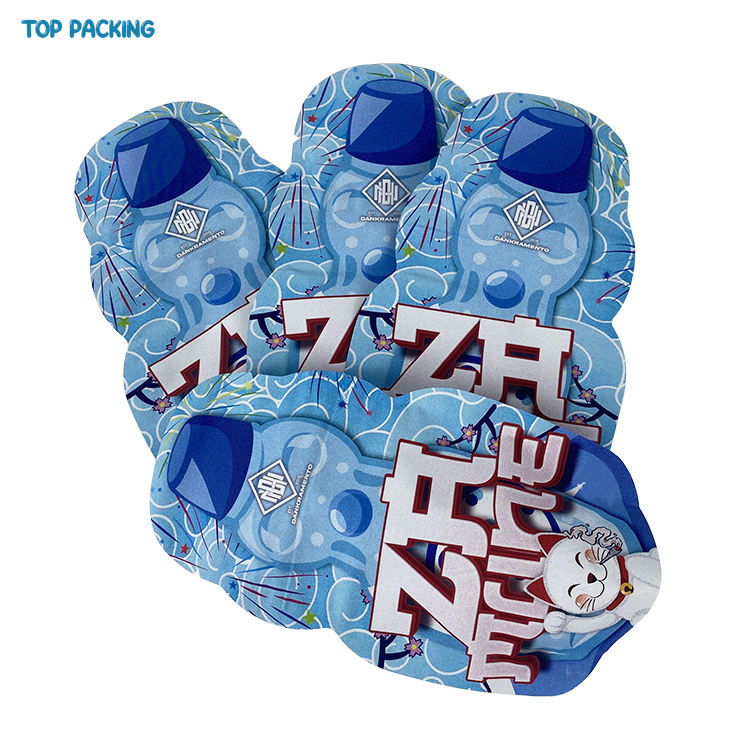
Product Specifications
| Product type | Custom die-cut Mylar bag for cannabis packaging |
|---|---|
| Stated fill reference | 3.5g; actual fit depends on product density, dimensions, and headspace |
| Material identified | Aluminum foil and Mylar; complete laminate structure requires confirmation |
| Closure or safety feature | Child-resistant; closure format and applicable testing should be confirmed |
| Bag format | Die-cut pouch; final seal geometry and opening position require approval |
| Customization | Custom packaging format and artwork options subject to specification |
| Best-fit buyers | Cannabis brands, wholesalers, distributors, private-label, OEM, ODM, and multi-SKU buyers |
What This 3.5g Die-Cut Bag Is Designed to Do
The stated 3.5g reference does not define one universal pouch size. Cannabis flower density varies by strain, trim, moisture condition, and packing method, so a bag that fits one product may be too tight or leave excessive empty space for another. Before approving a cutting die, provide the actual product dimensions or a representative sample, the target fill weight, and the desired amount of headspace.
A die-cut profile can support a distinctive shelf presentation and a controlled artwork silhouette. It also makes seal geometry especially important. The usable interior is smaller than the outside outline because of the perimeter seal, rounded or shaped corners, opening area, and any tear or zipper zone. The filling team should review whether the selected shape can be opened, filled, settled, and sealed without product entering the seal path.
Aluminum Foil and Mylar Barrier Considerations
The product is identified as aluminum foil and Mylar, but the exact laminate, thickness, adhesive system, and inner sealant are not stated. Those details should be listed on the final specification sheet. In general, an aluminum foil layer can contribute to protection from light and can form part of an aroma, moisture, and oxygen barrier system. Mylar can contribute to film strength, print support, and dimensional stability. Actual performance depends on the complete laminate and the quality of the heat seal.
For aromatic cannabis products, this structure may help contain aroma when the bag is properly sealed. It should not be described as permanently odor-proof or as a zero-leakage package without product-specific testing. If the contents are sensitive to moisture, oxidation, or light, ask for the applicable barrier targets and test method rather than relying on the appearance of a metallic film. A stronger barrier can reduce visibility and may affect stiffness, fold behavior, sealing conditions, and material cost. That is a real trade-off to resolve with the packaging supplier.
Child-Resistant Closure: Confirm the Actual Mechanism
Child-resistant is a stated product attribute, but the specific closure design and destination-market test status are not provided. An ordinary resealable zipper should not automatically be treated as a tested child-resistant closure. Confirm whether this bag uses a specialized child-resistant zipper, another safety mechanism, or a required opening sequence. Also confirm whether the finished package, including the selected laminate and seal configuration, must undergo testing in the market where it will be sold.
Ask for the closure location, opening instructions, reseal behavior, heat-seal requirements, and any required consumer-facing warning or usage area. The closure should be evaluated together with the die line because a shaped top edge or narrow opening can change hand access and filling performance.
Artwork, Printing, and Brand-System Planning
Custom printing allows a cannabis brand to coordinate strain, cultivar, potency, batch, and compliance information across a product family. For a die-cut pouch, artwork must be prepared around the approved cut line, seal margins, opening position, and any closure components. Keep critical text, barcodes, regulatory panels, and variable data away from areas that may be removed, folded, covered, or distorted during sealing.
Printing method, ink system, surface finish, color control, and substrate compatibility are subject to the selected structure. A matte, metallic, holographic, or other visual effect does not by itself prove the barrier construction. Request a dieline and production proof before releasing a multi-SKU order. If different strains or pack sizes share one design system, define which elements change and which remain fixed so that artwork approval and quality control are repeatable.
Filling, Sealing, and Multi-SKU Procurement
Review the bag with the intended filling method: manual filling, weigh-and-fill equipment, auger equipment, or another process. A narrow die-cut opening may improve visual control but slow filling, while a larger opening can simplify loading and increase the area that must be sealed. Product dust or flower fragments in the seal zone can compromise package integrity, so the filling procedure should include a clean seal area and a defined seal check.
For multi-SKU or private-label programs, standardize the common pouch dimensions, laminate, closure, seal width, and artwork rules where possible. Then document the variable elements for each strain or customer. This helps procurement compare like-for-like quotations and reduces the risk that one SKU receives a different usable volume or closure configuration. A wholesale cannabis packaging manufacturer can quote more accurately when the product, bag geometry, artwork count, and market destination are specified together.
Destination-Market and RFQ Checks
Packaging requirements differ by destination market and product category. Before requesting a final quotation, identify whether the contents are flower, pre-rolls, edibles, or another cannabis product; the required fill weight; and the warning, labeling, traceability, or child-resistant requirements that apply to the sale location. For edibles, also review moisture, grease, food-contact, and serving-information needs. These bags should not be treated as certified or compliant for a particular jurisdiction unless the relevant finished-package documentation has been verified.
For an actionable RFQ, send the actual product dimensions or sample, target 3.5g fill, desired external and internal pouch dimensions, quantity by SKU, number of artwork versions, preferred laminate or barrier target, closure mechanism, finish, filling method, destination market, and compliance documentation needs. Request a drawing showing the die line, seal area, opening position, and usable artwork area before approving production.
Frequently Asked Questions
Does a 3.5g reference guarantee one standard bag size?
No. A 3.5g reference does not establish one universal pouch size. Flower density, product dimensions, filling method, and desired headspace determine the usable volume. Confirm the actual product and dimensions before approving the die line.
Are these ordinary zipper bags or tested child-resistant bags?
The product is identified as child-resistant, but the specific mechanism and applicable testing status are not provided. Confirm the closure design, opening instructions, finished-package testing, and destination-market requirements before use.
Does the aluminum foil structure make the bag completely odor-proof?
No absolute odor claim should be assumed. The aluminum foil and Mylar structure may help contain aroma when properly sealed, but performance depends on the complete laminate, seal quality, closure, and handling conditions.
Can these die-cut bags be custom printed for multiple cannabis strains?
They are identified as custom bags, so artwork and a multi-SKU design system can be discussed. Confirm the approved dieline, print process, finish, artwork area, variable information, and number of versions before quotation.
What information should a B2B buyer provide for an RFQ?
Provide the contents, fill weight, actual product dimensions or sample, desired pouch dimensions, quantity, artwork versions, material or barrier preference, closure, finish, filling method, destination market, and compliance documentation needs.
Request a Product-Specific RFQ
Ask for a quotation and specification review for this custom 3.5g child-resistant Mylar bag by sharing your contents, actual fill weight or product dimensions, desired pouch dimensions, quantity by SKU, artwork versions, aluminum foil or other barrier requirements, closure, finish, filling method, destination market, and compliance needs. The supplier can then confirm the die line, usable volume, seal configuration, artwork limits, and the documentation required for your cannabis packaging program.
Reviews
There are no reviews yet.