
Custom Printed 3.5g Holographic Cali Mylar Bags for Cannabis Packaging
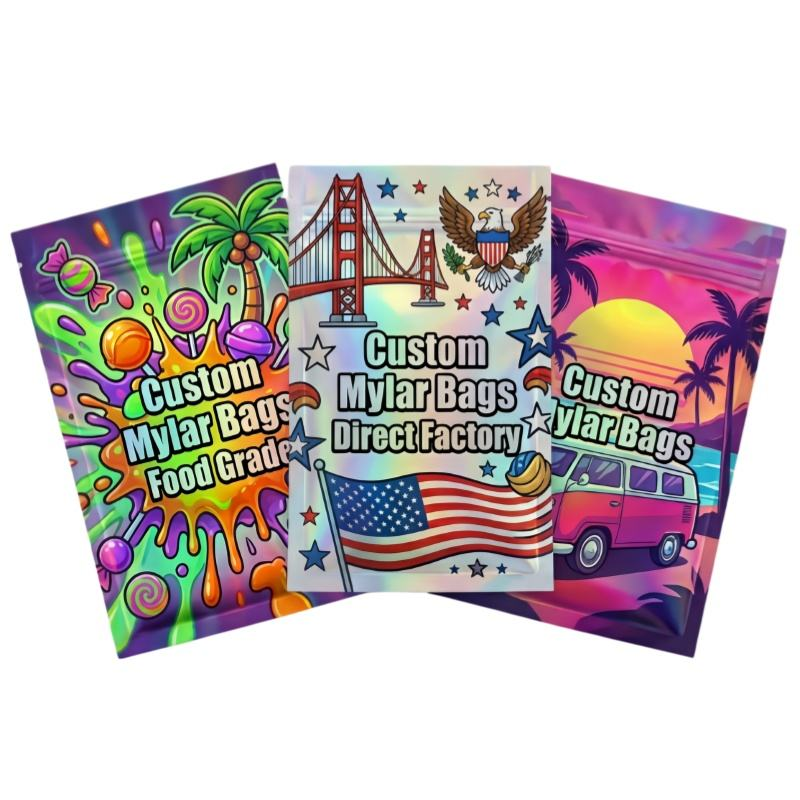
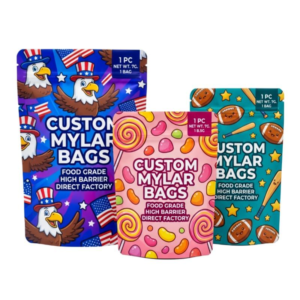
Custom printed 3.5g holographic Cali Mylar bags are food-grade Mylar packaging intended for cannabis brands, private-label programs, distributors, and wholesale buyers that need a distinctive Cali-style presentation for a nominal 3.5g product format. The holographic appearance creates a reflective visual effect for strain, brand, and compliance artwork, while the final bag structure, dimensions, closure, and sealing method must be confirmed against the actual contents and destination-market requirements.
Product Specifications
| Product type | Custom printed Mylar bag |
|---|---|
| Nominal fill reference | 3.5g; actual fit depends on product density, dimensions, and headspace |
| Visual finish | Holographic appearance |
| Material description | Mylar packaging; complete laminate structure to be confirmed |
| Food-contact positioning | Food-grade product description; confirm applicable food-contact documentation for the selected structure and market |
| Printing | Custom printing for brand and product artwork |
| Closure and seal | To be confirmed, including zipper, heat seal, tear notch, or other selected configuration |
| Intended buyer | Cannabis brands, distributors, wholesalers, private-label, OEM, ODM, and multi-SKU buyers |
Fit the Bag to the Actual 3.5g Product
A 3.5g reference does not define one universal pouch size. Cannabis flower density, nug size, moisture condition, and the desired presentation can change the volume required inside the bag. A loose, low-density product needs more usable volume than a compact product of the same weight. Ask the packaging supplier to evaluate the product’s actual dimensions, expected fill range, and preferred headspace rather than approving a bag based only on the printed weight.
Headspace affects filling speed, appearance, and seal reliability. Excess space can allow the contents to move during handling, while insufficient space can stress the top seal or make automated filling difficult. For a consistent multi-SKU program, use the same outside dimensions and seal geometry where practical, then verify that the largest or least-dense SKU does not distort the bag. A physical sample or representative fill test is useful before final artwork and production approval.
Mylar Structure, Aroma, Moisture, and Light Considerations
Mylar identifies the packaging material family, but the complete barrier structure determines how the finished bag performs. Depending on the selected laminate and sealing system, the package may help contain aroma and protect the contents from moisture, oxygen, and light. The holographic appearance alone does not establish a specific oxygen transmission rate, moisture transmission rate, or light-blocking result.
For cannabis flower, a suitable structure can help preserve the intended aroma profile and reduce exposure during normal handling when the bag is properly sealed. Puncture resistance, stiffness, and heat sealability also depend on the complete material combination, seal width, seal temperature, dwell time, and filling process. A stronger barrier may improve protection but can affect stiffness, folding behavior, printing requirements, or cost. Confirm the required barrier target and sealing equipment before approving the final construction.
Closure, Opening, and Filling Decisions
The final closure should match the distribution and use case. An ordinary resealable zipper can support repeated opening and closing, but it should not be described as a tested child-resistant closure. If child-resistant packaging is required in the destination market, specify that requirement separately and request the applicable design, testing, and documentation for the selected package.
A heat seal can provide a tamper-evident presentation when the configuration and process are correctly specified, while a tear notch can make the initial opening easier. These features can be combined with a zipper, subject to the bag design and production method. For manual filling, the opening width and standing behavior may matter more than a compact finished appearance. For automated or semi-automated filling, confirm the bag’s feed orientation, opening consistency, seal area, and tolerance requirements.
Holographic Custom Printing and Artwork Control
The holographic surface is a strong visual differentiator for Cali bags, but it must be considered during artwork development. Reflective areas can change perceived color, contrast, and fine-detail visibility. Ask for the printable area, dieline, safe zone, bleed requirements, registration expectations, and any limitations created by the holographic substrate or selected finish.
Artwork should account for the brand mark, strain or product name, net contents, required warnings, batch or lot information, and any destination-market information that must appear on the package. Do not assume that every ink effect, opaque white layer, metallic treatment, or small text element will reproduce identically on a reflective surface. A digital proof and, where appropriate, a physical print sample can help verify color and legibility before a multi-SKU release.
Multi-SKU and Private-Label Procurement
These custom printed marijuana flower pouches can support private-label, OEM, ODM, and multi-SKU packaging programs when artwork and specifications are managed systematically. Provide a SKU matrix showing each strain or product name, fill reference, artwork version, variable data, and required quantity. Keeping the pouch dimensions and closure consistent across SKUs can simplify filling and merchandising, but the artwork still needs separate checking for spelling, warnings, net content, and barcode or batch areas.
For distributors and wholesalers, define whether one common bag specification will serve several customers or whether each customer needs an independent print version. Confirm color tolerances, revision control, carton identification, and sample approval responsibilities. These details reduce the risk of mixing artwork versions or receiving bags that fit one SKU but not another.
Destination-Market and Food-Contact Checks
Food-grade wording describes the product positioning, not automatic approval for every cannabis, food, or destination market. Before ordering, identify where the packaged product will be filled and sold, then confirm the applicable cannabis packaging rules, warning and labeling space, child-resistant requirements, recycling or disposal expectations, and food-contact documentation needed for the selected material structure.
Compliance can depend on the finished package, closure, printing system, product category, and local authority. Request the documents and test evidence relevant to the exact configuration rather than relying on a general material statement. The buyer should also confirm whether the package needs tamper evidence, odor containment, light protection, or other performance criteria for its distribution environment.
What to Include in a B2B RFQ
For an accurate quotation and specification review, provide the actual contents, nominal and acceptable fill weight, product dimensions or density, desired pouch dimensions, preferred headspace, quantity by artwork version, and filling method. Also state the required Mylar or laminate barrier, holographic finish expectations, zipper or heat-seal preference, tear-notch requirement, and whether a tested child-resistant solution is needed.
Include the destination market, packaging regulations to be addressed, food-contact documentation needs, artwork files or dielines, variable-data requirements, and any sample-approval process. If you are comparing wholesale custom Mylar bag manufacturers, ask each supplier to quote the same structure and print specification so that appearance, fit, and documentation can be evaluated consistently.
Frequently Asked Questions
Are these bags suitable for a 3.5g cannabis product?
They are presented for a nominal 3.5g format, but suitability depends on product density, physical size, headspace, and the selected bag dimensions. Confirm the actual fill fit with a representative sample before approval.
Does the holographic finish guarantee light or odor protection?
No. Holographic appearance does not establish barrier performance. Aroma, moisture, oxygen, and light protection depend on the complete laminate and sealing system. The finished bag may help contain aroma when properly sealed, subject to the selected structure.
Can the bags be used for private-label and multi-SKU programs?
Yes, the custom printed format is intended for cannabis brands, private-label buyers, distributors, wholesalers, and multi-SKU programs. Submit a separate artwork and variable-data specification for each SKU.
Does a zipper make the package child-resistant?
No. An ordinary resealable zipper should be treated as a convenience closure, not a tested child-resistant closure. Specify child resistance separately and confirm the required design and documentation for the destination market.
What must be confirmed before requesting a quotation?
Confirm the contents, fill weight, product dimensions or density, desired pouch size, headspace, quantity, artwork versions, Mylar or barrier structure, holographic finish, closure, filling method, destination market, and compliance needs.
Request a Custom Packaging Specification
Request an RFQ with your contents, fill weight or actual product dimensions, desired pouch dimensions, quantity by artwork version, material or barrier preference, holographic finish, closure and seal requirements, filling method, destination market, and compliance needs. This information allows the packaging specification, fit, artwork area, and documentation requirements to be reviewed before a multi-SKU or private-label order is approved.
Reviews
There are no reviews yet.