
Custom Printed 3.5g Foil Heat-Seal Pouches for Cannabis Packaging
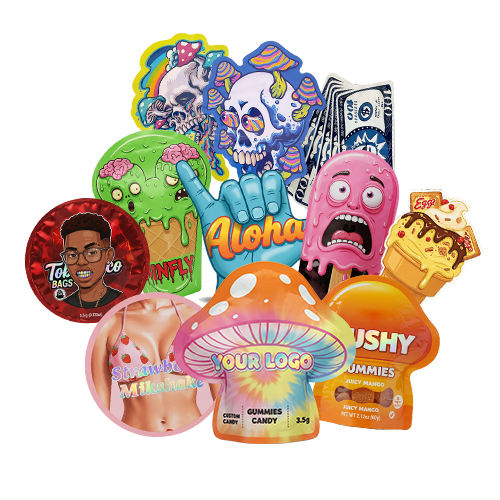
Custom printed 3.5g foil heat-seal pouches are die-cut flexible bags specified for packaging a nominal 3.5g cannabis product, subject to the product’s density, shape, and required headspace. Their defining attributes are a foil-based pouch construction, custom printed graphics, die-cut geometry, and a heat-sealable opening. They are relevant to cannabis brands, distributors, wholesalers, private-label and OEM buyers, and purchasing teams managing multiple strain or product SKUs.
Product Specifications
| Product type | Die-cut foil heat-seal pouch |
|---|---|
| Nominal fill reference | 3.5g; final fit depends on product density, dimensions, and headspace |
| Printing | Custom printed; artwork and printable area require confirmation |
| Closure | Heat seal; seal width, temperature, dwell time, and equipment should be confirmed |
| Pouch geometry | Die-cut format; finished dimensions and seal geometry require confirmation |
| Material | Foil-based construction; the complete laminate and barrier specification require confirmation |
| Intended procurement use | Cannabis packaging programs, private-label projects, OEM/ODM sourcing, and multi-SKU orders |
How the Die-Cut Format Fits a 3.5g Product
A stated 3.5g fill reference does not define one universal pouch size. Flower density varies by strain, trim, moisture condition, and handling, so two products with the same net weight can require different usable volumes. Before approving a dieline, provide the actual product dimensions, expected bulk density where available, preferred headspace, and whether the product will be inserted manually or with a filling machine.
The die-cut profile affects usable area, opening position, seal geometry, and how the pouch presents on a shelf or during secondary packing. A shaped pouch can create stronger visual differentiation, but irregular contours may reduce filling tolerance or leave less practical artwork and seal area. A buyer should review the finished dieline rather than relying only on nominal outside dimensions.
Foil Structure, Barrier Function, and Heat Sealing
Foil can contribute to protection from light, while the complete laminate determines the combined barrier, stiffness, puncture resistance, and handling behavior. It is not accurate to infer a specific oxygen transmission rate, moisture vapor transmission rate, or odor performance from the word “foil” alone. Ask for the proposed laminate structure and any available technical data if the contents are sensitive to aroma loss, moisture exchange, or oxidation.
When the selected structure is suitable and the pouch is properly sealed, the package may help contain aroma and provide a smell-resistant barrier. Actual performance depends on the film layers, seal contamination, sealing pressure, temperature, dwell time, and the quality of the finished seal. A heat-seal pouch is not automatically resealable after opening; if repeated access is required, confirm whether a zipper or another closure is available and whether it is compatible with the die-cut design.
Foil-based construction can improve light protection and stiffness, but it may limit direct product visibility compared with a clear window. Adding a window, changing the laminate, or selecting a softer film can alter barrier protection, print appearance, tear behavior, and filling performance. Treat those choices as specification decisions rather than assumed standard features.
Closure and Filling Decisions
Heat sealing provides a closed package after filling, but the sealing process must be matched to the pouch material and production equipment. Confirm the target seal width, opening tolerance, seal temperature range, dwell time, and whether the filled product can contaminate the seal area. For cannabis flower, the filling method and headspace should be reviewed together because excessive compression can affect appearance, while too much empty space can increase movement during handling.
This product description does not establish a zipper, tear notch, child-resistant closure, or tested child-resistant performance. If the destination market requires child-resistant packaging, request a separately specified and appropriately tested closure system rather than treating an ordinary heat seal as equivalent. If easy opening matters, confirm whether a tear feature can be incorporated without compromising the required seal area.
Custom Printing and Multi-SKU Control
Custom printing allows a brand to distinguish strains, product variants, or private-label programs through coordinated artwork. Confirm the printable panel, safe area, bleed, die-line tolerances, color references, barcode placement if required, and whether fine text remains clear near the seal or shaped edges. Foil appearance can influence color reproduction and contrast, so approve a production-relevant proof before releasing a large multi-SKU order.
For distributors and multi-SKU buyers, standardizing the pouch footprint can simplify cartons, filling procedures, and inventory planning. However, using one format across products with different densities may create inconsistent headspace or fit. A better purchasing decision is to compare each SKU’s actual product dimensions with the same approved dieline and identify where separate sizes or artwork versions are necessary.
Destination-Market and Artwork Review
Regulatory and labeling requirements vary by destination market and by the packaged product. Before artwork approval, confirm required warnings, net contents, batch or lot information, license or business details, recycling statements, barcode requirements, and any rules concerning cannabis, marijuana, or weed terminology. The pouch’s available print area does not by itself prove that an artwork file is compliant. The brand or importing party should obtain market-specific legal and compliance review.
RFQ Information to Confirm
For an accurate quotation and specification review, send the intended contents, nominal fill weight, actual product dimensions, target pouch dimensions, required quantity, number of artwork versions, proposed foil or laminate barrier, finish, closure requirements, filling method, destination market, and compliance needs. Also identify whether the program is private-label, OEM/ODM, wholesale, or a recurring multi-SKU purchase. These details help the supplier assess fit, die-cut geometry, artwork placement, sealing conditions, and any needed sampling or technical review without assuming unconfirmed commercial terms.
Frequently Asked Questions
Are these pouches sized for every 3.5g cannabis flower product?
No. The 3.5g reference does not establish one universal capacity because flower density, shape, compression, and preferred headspace vary. Confirm actual product dimensions and the desired finished pouch size before approving the dieline.
Does foil guarantee complete odor containment?
No. A foil-based structure may help contain aroma and provide a smell-resistant barrier when properly sealed, but performance depends on the complete laminate and sealing system. Request the proposed structure and any available technical information for odor-sensitive products.
Do these heat-seal pouches include a zipper?
The stated product specification identifies a heat-seal pouch and does not confirm a zipper. If resealability is required, ask whether a zipper can be configured and confirm how it affects the die-cut design, seal area, and filling process.
Can one pouch format support multiple cannabis strains?
Possibly, but each strain should be checked for density, product dimensions, headspace, and artwork requirements. A shared format can simplify operations, while different product behavior may justify separate pouch sizes or specifications.
What should a buyer provide for an RFQ?
Provide the contents, fill weight or actual product dimensions, desired pouch dimensions, quantity, artwork versions, material or barrier preference, finish, closure, filling method, destination market, and compliance requirements.
Request a B2B Pouch Specification Review
Send your product dimensions, 3.5g fill requirement, desired pouch dimensions, quantity, artwork versions, foil or barrier preference, finish, heat-seal or closure needs, filling method, destination market, and compliance requirements for a focused RFQ review. The final specification should be confirmed against the product fit, die line, laminate, seal process, and artwork before production.


Reviews
There are no reviews yet.