
Custom Printed Resealable Foil Ziplock Bags for B2B Food and Cannabis Packaging
Custom printed resealable foil ziplock bags are flexible food packaging bags with a foil-based structure and an ordinary resealable zipper closure. They are intended for packaged food products and can be evaluated by cannabis brands, edible producers, distributors, wholesalers, private-label buyers, and multi-SKU procurement teams that need branded packaging. The supplied product name confirms the resealable ziplock format, foil material reference, food-packaging purpose, and custom printing; dimensions, laminate construction, barrier test values, closure specification, and compliance requirements must be confirmed before production.

Product Specifications
| Product type | Custom printed resealable foil ziplock food packaging bags |
|---|---|
| Primary material reference | Foil; the complete laminate or pouch structure requires confirmation |
| Closure | Resealable ziplock; this is not automatically a tested child-resistant closure |
| Intended contents | Food products; suitability for a specific cannabis edible or other product depends on the final structure and destination-market requirements |
| Printing | Custom printing, subject to artwork, substrate, print process, and production specification |
| Dimensions and capacity | Not stated; confirm finished size, usable volume, fill weight, product density, and headspace |
| Finish | Not stated; confirm the requested surface appearance and substrate compatibility |
| Commercial details | MOQ, pricing, samples, lead time, inventory, and delivery terms require quotation |
Structure, Barrier Function, and Product Fit
The foil reference is important because a foil-containing package can help limit light exposure and, depending on the complete laminate, support resistance to moisture and oxygen transmission. It may also help contain aroma when the pouch is properly sealed. These outcomes cannot be determined from the word “foil” alone. Barrier performance depends on the foil thickness, any polymer sealing layers, adhesive or laminate construction, zipper area, heat-sealed seams, and the quality of the finished seal.
For food, edible, or cannabis-related products, specify the actual sensitivity of the contents rather than relying on a general barrier claim. Dry foods may require protection from humidity and aroma transfer. Greasy or soft edibles may need a compatible food-contact sealing layer and resistance to oil migration. Products with a strong aroma may need an evaluation of the zipper, top seal, and complete package structure. Ask for structure details or applicable test information when oxygen, moisture, light, or aroma control affects shelf-life decisions.
Foil can improve opacity and barrier potential, but it removes the product visibility provided by a clear window. A fully opaque pack may protect appearance and reduce light exposure, while a window can help consumers inspect contents but may reduce light protection in that area. The selected finish and print design should therefore follow the product’s protection needs, brand positioning, and destination-market labeling requirements.
Size, Fill Weight, and Filling Behavior
There is no universal pouch size for a stated food or cannabis fill weight. Product density, particle shape, settling behavior, and desired headspace all affect the correct dimensions. Flower, for example, occupies a different volume from a dense edible, powder, snack, or pre-portioned food item. For a reliable quotation, provide the product’s fill weight, approximate dimensions, density or volume where available, and whether the package will be filled by hand, semi-automatically, or on an automated line.
Confirm the finished width, height, opening position, seal allowance, and usable internal area. Excessive headspace can allow movement and reduce presentation quality, while insufficient headspace can make filling, zipper engagement, and top sealing difficult. If the bag will stand upright, ask whether a bottom gusset or another pouch format is required. The supplied product name confirms a bag format but does not confirm stand-up construction, gussets, or a particular capacity.
Zipper, Heat Seal, and Opening Requirements
The ziplock provides resealability after opening, which can be useful for food or edible products that are consumed over multiple occasions. It should not be described as child-resistant unless a specific closure has been tested and documented for the relevant market. If child-resistant packaging is required, state that requirement separately and request the available closure construction, testing basis, and documentation.
A resealable zipper does not replace the need for a suitable initial heat seal. Many flexible packages use a heat-sealed top area to provide tamper evidence or protect the contents before first opening, but the exact seal design is not specified here. Confirm whether the filling line needs a top seal, tear notch, easy-open feature, or a particular seal width. The zipper, sealing layer, machine temperature, dwell time, pressure, and product contamination at the seal area can affect package performance.
Custom Printing and Multi-SKU Procurement
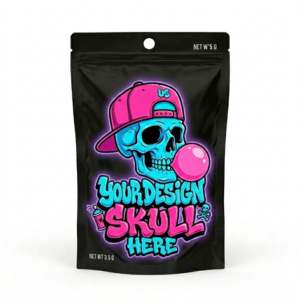
Custom printing allows a cannabis brand, food producer, private-label company, or distributor to present different product names, strain or flavor information, weights, warnings, and batch-identification areas across a coordinated pouch range. Artwork should be prepared against the approved dieline, with the zipper, seal zones, tear area, folds, and any gusset kept outside critical design elements. The printable area, color method, registration tolerance, and finish options depend on the selected substrate and manufacturing process.
For multi-SKU programs, establish one packaging architecture before creating separate artwork versions. Keep the pouch dimensions, zipper position, opening behavior, and core brand elements consistent where practical, then reserve controlled areas for variant names, product details, and regulatory information. Confirm whether each design is a separate print version, whether variable information will be added later, and how revisions will be approved. A single shared specification can improve consistency, but different contents may still require different sizes, barrier structures, or headspace.
Compliance and Destination-Market Review
Food packaging and cannabis packaging requirements vary by product, jurisdiction, and sales channel. Confirm the destination market, intended contents, required label language, warning or ingredient information, recycling or disposal statements, and any food-contact or cannabis-packaging documentation requested by the buyer. The product name alone does not establish certification, approval, child resistance, food-contact status, or compliance with a particular jurisdiction.
Also review whether the artwork could be confused with a child-oriented product, whether the package needs a tamper-evident feature, and whether the final closure and seal configuration match the applicable rules. If the product will be used for cannabis flower, pre-rolls, or edibles, identify the exact format because aroma, moisture, crush, grease, and headspace considerations differ. “Smell resistant” should be treated as a performance objective to evaluate against the final structure, not as an unconditional guarantee.
Advantages and Trade-Offs
The combination of foil reference, custom printing, and a resealable zipper can support an opaque branded presentation with convenient repeated access. It may be a practical option for dry food, selected edible formats, or other products where light and moisture protection are priorities. The trade-off is that a foil-based opaque structure generally provides less product visibility than a clear pack, and the zipper adds a functional component that must be compatible with the laminate, seal area, filling method, and required performance.
Frequently Asked Questions
Are these bags suitable for cannabis products?
They are identified as food packaging bags and may be evaluated for cannabis flower, edibles, or related products when the final material structure, closure, labeling, and destination-market requirements are confirmed. Cannabis suitability is not established by the product name alone.
Does the ziplock make the bag child-resistant?
No. A standard resealable ziplock should not be treated as a tested child-resistant closure. If child-resistant packaging is required, request a specific closure option and the documentation applicable to the destination market.
Can the bags help contain odor?
A foil-containing structure may help contain aroma when the complete laminate, zipper, heat seal, and package handling are appropriate. Odor performance depends on the finished construction and should not be represented as an absolute or permanent guarantee without supporting evaluation.
Can I order different artwork for multiple products?
Custom printing can be planned for multiple product or strain versions. Confirm the number of artwork versions, shared dimensions, variable information, print limitations, and approval process before requesting a quotation.
What information is needed to select the bag size?
Provide the contents, fill weight, product dimensions or volume, density where available, desired headspace, filling method, opening requirements, and any requested finished pouch dimensions. A fill weight alone does not establish one universal bag size.
Request a Product-Specific RFQ
For a useful quotation, send the contents, fill weight or actual product dimensions, desired pouch dimensions, estimated quantity, number of artwork versions, required foil or barrier structure, zipper and heat-seal requirements, preferred finish, filling method, destination market, and compliance needs. Also identify whether you need a standard resealable zipper, a child-resistant solution, a tear notch, or a specific opening and sealing sequence. These details allow the packaging specification to be reviewed against product protection, branding, filling behavior, and multi-SKU procurement requirements.

Reviews
There are no reviews yet.