
Custom Printed 3.5g Cali Bags for Dispensary Packaging
Custom printed 3.5g Cali bags are flexible Mylar packaging made for dispensary cannabis products commonly sold under a 3.5-gram fill designation. They combine branded printing with a barrier-oriented bag format intended to help contain aroma when the selected laminate and sealing system are appropriate. These bags are relevant to cannabis brands, distributors, wholesalers, private-label buyers, importers, and procurement teams managing multiple strains or SKUs. The 3.5g designation identifies the target net weight, but it does not establish one universal pouch size.
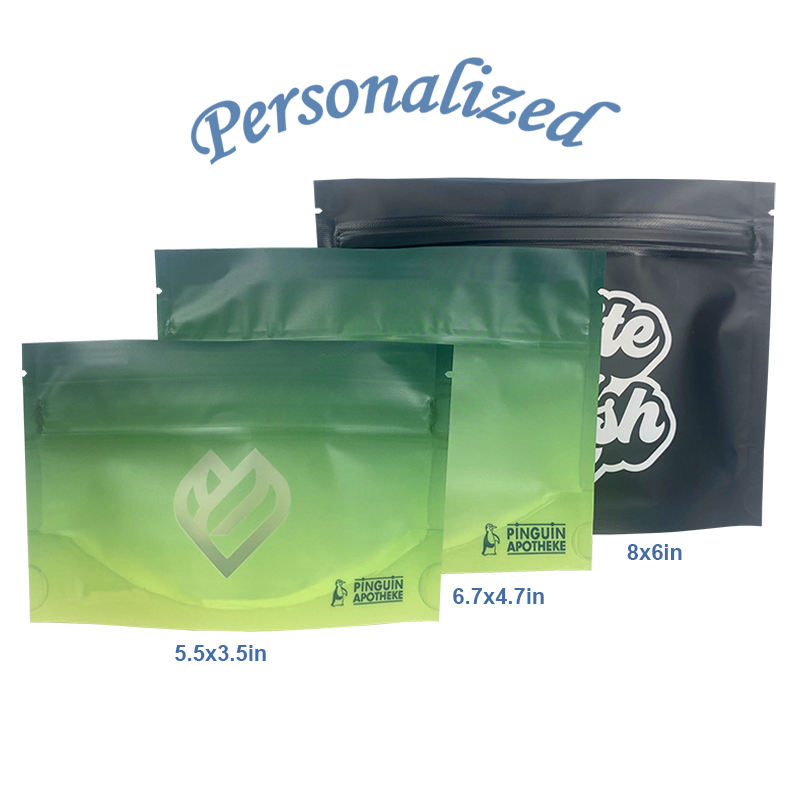
Product Specifications
| Specification | Product Detail |
|---|---|
| Product type | Custom printed flexible Mylar bag |
| Nominal fill designation | 3.5g; final dimensions must be matched to the actual product |
| Intended use | Dispensary cannabis packaging; flower or other contents must be confirmed for the project |
| Barrier function | Described as smell-proof; practical aroma containment depends on the complete laminate, closure, seals, filling process, and handling |
| Pouch dimensions | Not specified; buyer confirmation is required |
| Pouch style | To be confirmed, including flat or gusseted construction and opening position |
| Closure | Not specified; zipper, heat-seal requirements, and any child-resistant mechanism must be defined |
| Printing | Custom printed; artwork versions, print process, colors, coverage, and finish are subject to final specification |
| Destination-market requirements | Buyer must identify the sales market and applicable labeling, child-resistance, and cannabis packaging rules |
Barrier Structure and Aroma Containment
The term Mylar is commonly used for polyester-based flexible packaging, but the product name alone does not disclose the complete laminate. Odor, moisture, oxygen, and light management depend on every layer in the structure. Depending on the specification, the bag can be configured with barrier layers, an opaque or metallic layer, and an inner sealant layer suitable for the chosen filling and sealing process.
A higher-barrier structure can help protect cannabis aroma and limit environmental exposure when the package is properly closed and heat sealed. Puncture resistance matters because stems or compact flower can place localized pressure on the pouch wall. Stiffness affects shelf presentation and filling behavior, while the sealant layer affects seal formation and resistance to channel leaks. Buyers should request the intended laminate and sealing conditions rather than relying only on the phrase smell-proof.
Matching 3.5g Capacity to Flower Density
Three-and-a-half grams of cannabis flower can occupy different volumes depending on bud size, density, trim, moisture condition, and compression tolerance. A pouch sized for dense flower may be too tight for larger, less compact buds. An oversized pouch creates excess headspace, allows more internal movement, and can weaken shelf presentation.
Before fixing dimensions for these 3.5g cannabis Mylar bags, test the actual product or a representative volume sample. Confirm the usable internal space after accounting for side seals, bottom seals, any gusset, zipper position, tear notch, and top heat-seal area. External dimensions are not the same as usable fill dimensions. A physical fit test is especially useful when multiple strains vary noticeably in flower density.
Pouch Format, Filling, and Closure Decisions
The input does not establish whether this item is a flat pouch or a stand-up gusseted pouch. A flat bag can provide a compact presentation and straightforward seal geometry. A gusseted format may offer more usable volume and a standing display, but the gusset changes filling behavior, artwork placement, and dimensional calculations. The final die line should identify seals, folds, opening direction, zipper location, and no-print or tolerance zones.
A standard resealable zipper provides consumer reclosure, but it is not automatically a tested child-resistant closure. If regulations or the destination market require child resistance, specify a closure system evaluated for that purpose and confirm the finished package requirements. A top heat seal can provide tamper evidence and improve initial aroma containment. Tear notches may support opening convenience, although their position must be coordinated with the zipper and heat-seal area.
Custom Printing and Multi-Strain Artwork
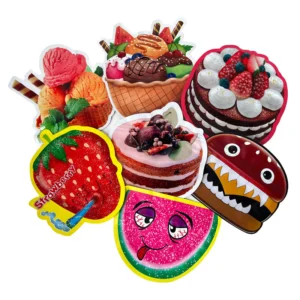
Custom printing turns the bag into a branded primary package with space for logos, strain identification, product information, warnings, and other required copy. Printing method, color handling, finish, and artwork coverage must be agreed during specification. Matte, gloss, metallic, or holographic appearances may be configurable, but appearance does not establish the underlying barrier performance.
For private-label multi-strain weed baggies, use one controlled die line and maintain consistent locations for variable strain names, color systems, potency panels, warnings, and lot information. Procurement teams should identify the number of artwork versions and quantity per version. This prevents a total project quantity from being mistaken for an equal production quantity for every SKU. Barcode readability, small text, color expectations, and any white-ink requirements should be reviewed against the selected substrate and print process.
Product-Specific Trade-Offs
An opaque high-barrier construction may improve light protection and support aroma retention, but it prevents consumers from viewing the contents. A clear window increases product visibility while reducing light protection in that area. Similarly, a thicker or stiffer laminate may improve handling and shelf shape, but it can change opening feel, sealing settings, material use, and cost. The preferred structure should balance protection, presentation, filling equipment, and destination-market requirements rather than maximizing one characteristic in isolation.
Compliance and Procurement Review
“Cali bags” is a packaging search term or style description; it does not by itself establish California origin, approval, or regulatory compliance. Cannabis packaging requirements vary by market and may address child resistance, tamper evidence, opacity, resealability, warning placement, universal symbols, serving information, and prohibited graphics. Buyers remain responsible for identifying the rules that apply to the packaged product and sales destination.
Ask the wholesale marijuana pouch supplier to document the final material specification, closure type, print proof, pouch drawing, and sealing recommendations. Any required testing, food-contact documentation, migration information, or child-resistant evidence should be expressly requested and reviewed before production. Do not infer these attributes from a rendering, finish, zipper, or Mylar description.
Frequently Asked Questions
Does the 3.5g designation establish the bag dimensions?
No. It identifies a target fill weight, but flower density, bud size, headspace, seal areas, zipper position, and pouch construction determine the dimensions. Test the actual product before approving the final size.
Are these bags guaranteed to block all cannabis odor?
No absolute odor guarantee should be inferred. The bag can help contain aroma when the laminate, seals, closure, filling process, and storage conditions are appropriate. Final performance should be evaluated with the intended contents.
Is an ordinary resealable zipper child-resistant?
Not automatically. A standard zipper provides reclosure, while child resistance requires a suitable closure system and any evidence required for the destination market. Specify this requirement before quotation.
Can multiple strain artworks use the same pouch specification?
They can be planned around one pouch size and die line if the contents fit consistently. Provide the quantity and artwork file for each version, and verify that variable text, colors, warnings, and codes remain legible.
What information is needed for a B2B quotation?
Provide the contents, target fill weight, actual product volume or sample dimensions, desired pouch dimensions, total quantity, quantity per artwork version, barrier needs, closure, finish, filling method, destination market, and applicable compliance requirements.
Request a Product-Specific RFQ
For an accurate RFQ for custom printed 3.5g Cali dispensary Mylar bags, submit the cannabis format, 3.5g product fit information, preferred flat or gusseted construction, required dimensions, quantity, number of strain artworks, laminate or barrier priorities, zipper and heat-seal needs, finish, filling method, destination market, and compliance criteria. These inputs allow the packaging specification to be evaluated without assuming an unsupported size, closure, performance level, or regulatory status.
Reviews
There are no reviews yet.