
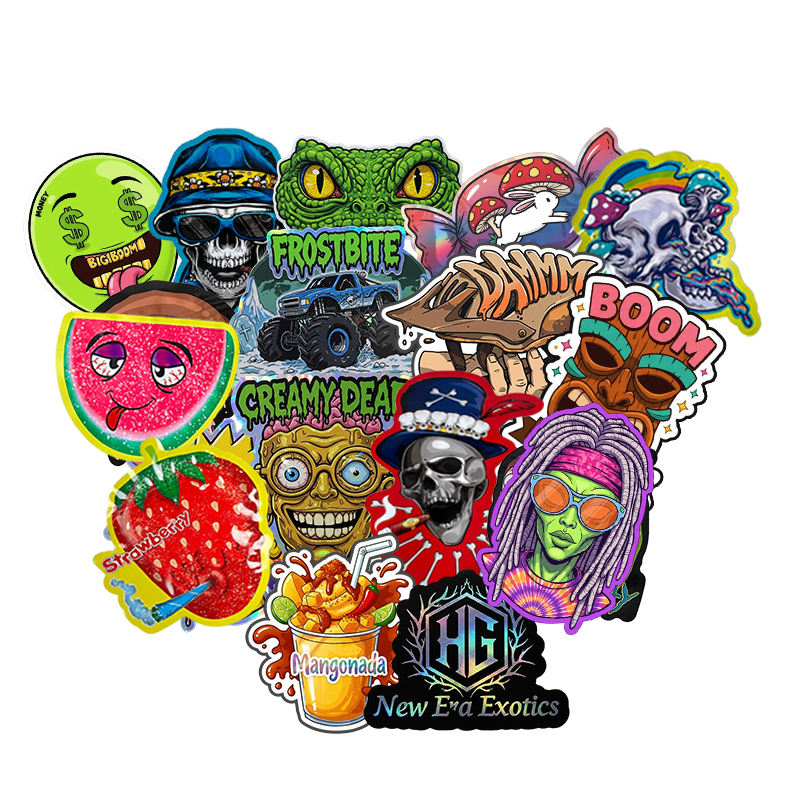
Custom Printed Holographic Shaped Zip Bags for 3.5g–1oz Cannabis Packaging
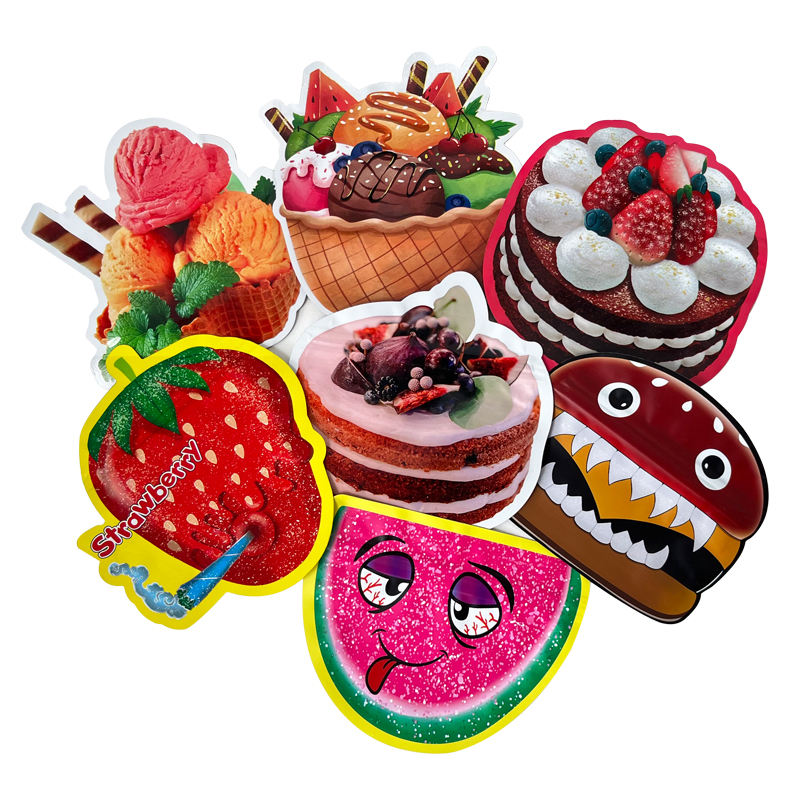
Custom printed holographic shaped zip bags are flexible cannabis packaging bags with a formed or die-cut profile, holographic appearance, resealable zipper, and custom-printing capability. They are intended for cannabis flower programs that require pack sizes from 3.5g through 1oz, subject to the selected dimensions, product density, fill method, and final pouch structure. Cannabis brands, distributors, private-label buyers, OEM/ODM programs, and multi-SKU purchasers can use this format to create a more distinctive shelf presentation while confirming the technical details required for filling, sealing, storage, and destination-market compliance.
Product Specifications
| Product type | Shaped flexible zip bag for cannabis packaging |
|---|---|
| Stated fill range | 3.5g–1oz; the correct bag dimensions must be confirmed against the actual product |
| Appearance | Holographic visual effect |
| Printing | Custom printing; artwork, print coverage, and color requirements require confirmation |
| Closure | Resealable zipper; zipper format and any additional heat-seal requirement require confirmation |
| Shape | Shaped or die-cut profile; usable fill area and seal geometry require confirmation |
| Material structure | To be selected according to barrier, stiffness, sealing, and destination-market requirements |
| Packaging use | Cannabis flower packaging programs, subject to product testing and final specification |
How the Shaped Pouch Fits Cannabis Flower Programs
A stated 3.5g–1oz range does not establish one universal pouch size. Flower density, nug size, moisture condition, trim style, and the desired headspace can change how much internal volume is needed. A bag that accommodates dense flower may not provide the same presentation or filling behavior for lighter, larger pieces. Buyers should provide the actual fill weight, representative product dimensions, and preferred headspace before approving a die line.
The shaped profile can create a differentiated silhouette, but it also makes the seal geometry and usable area more important than they would be on a basic rectangular bag. The opening must be wide enough for the filling method, while the bottom and side contours should provide sufficient room for the product without placing flower against the zipper or seal channel. A production sample filled with representative flower is useful for checking movement, appearance, closure access, and whether the printed artwork aligns with the visible front panel.
Material Structure and Barrier Questions
The holographic appearance does not, by itself, identify the laminate or prove a specific barrier level. These flexible barrier cannabis pouches can be configured with a material structure selected for the required balance of aroma containment, moisture protection, oxygen resistance, light management, puncture resistance, stiffness, and heat sealability. The complete laminate, zipper construction, seal design, and production settings affect the finished result.
For flower, a suitable structure may help contain aroma and limit exposure to moisture, oxygen, or light when properly sealed, but performance must be confirmed against the intended specification. A more protective opaque structure can improve light management, while a highly visual holographic effect may be selected primarily for branding and shelf differentiation. Buyers should request the proposed material layers, thickness or gauge, seal temperature range, and any available test information rather than treating the appearance as evidence of barrier performance.
Zipper, Heat Seal, and Opening Decisions
The integrated zipper supports resealing between openings, which can help with handling during the product-use cycle. An ordinary resealable zipper should not be described as a tested child-resistant closure. If the destination market requires child-resistant packaging, the buyer must specify that requirement at the quotation stage and request the applicable closure design, testing documentation, and market-specific evaluation.
A heat seal above the zipper may be considered when tamper evidence, additional aroma containment, or distribution protection is required. It changes the opening process because the end user must tear or cut through the sealed area before using the zipper. A tear notch can make that opening easier, but its position must work with the shaped profile and the intended seal width. Confirm whether the project needs a zipper only, zipper plus heat seal, tear notch, or another opening arrangement.
Custom Printing and Holographic Artwork
Custom printing allows a cannabis brand to coordinate strain names, product variants, regulatory panels, warnings, batch information, and brand graphics across a shaped format. The available artwork area may be smaller or less uniform than the total outside surface because of the die line, zipper zone, gussets if present, seal margins, and shaped corners. Important text should remain inside the approved safe area and away from folds or seals.
Before artwork approval, request the dieline and confirm the print process, color references, maximum print coverage, white ink or opacity requirements, registration expectations, and the interaction between the holographic effect and fine text. A strong holographic background can affect contrast and readability. A quieter panel or controlled print layer may be preferable for mandatory information, variable data, or scannable codes. The final result depends on the selected substrate and printing method, so a digital proof or physical sample may be appropriate for review.
Multi-SKU and Private-Label Planning
For private label marijuana baggies and multi-SKU cannabis programs, consistency across strains is often as important as the appearance of one bag. Confirm whether all sizes and variants will use the same shaped profile, zipper position, material structure, holographic treatment, and print specifications. Keeping the common construction stable can simplify filling and brand recognition, while separate artwork versions can distinguish strain, cultivar, potency, flavor, or pack size information.
Buyers should also decide how variable information will be applied. If batch, lot, harvest, or compliance information will be added after bag production, reserve a suitable writable or printable area and verify adhesion and legibility on the chosen finish. For distributors and wholesalers, a SKU matrix should identify each artwork version, fill weight, dimensions, carton or case requirements, and destination market so that an RFQ compares equivalent specifications.
Trade-Off: Visual Impact Versus Readability and Verification
The holographic effect offers strong visual differentiation, but reflective or changing backgrounds can reduce contrast for small text and regulatory copy. A large, uninterrupted holographic area may create more shelf impact, whereas a controlled print zone can improve readability and variable-information placement. The right balance depends on the brand layout, required warnings, scanning needs, and the final substrate. Approve the artwork on a representative sample rather than judging only a flat digital rendering.
Buyer Questions Before an RFQ
Can one bag size cover every fill from 3.5g to 1oz?
Not necessarily. Fill weight, flower density, nug size, headspace, opening size, and the desired presentation determine the usable volume. Confirm each target fill with actual product or representative samples.
Does the holographic finish prove that the bag is smell proof?
No. Holographic appearance describes the visual effect, not the barrier structure. A selected laminate and properly formed seals may help contain aroma, but odor performance should be specified and evaluated for the intended use.
Is the zipper child resistant?
The stated zipper is a resealable closure. Do not assume child-resistant performance. If that distinction matters for the destination market, request a separately specified and evaluated child-resistant solution.
Can the bags be used for several strain or private-label SKUs?
They can be considered for a multi-SKU program, with each artwork version and fill specification confirmed separately. Ask for a common dieline, consistent material structure, and a clear artwork and variable-data plan.
What should be included in the packaging quotation request?
Provide the contents, fill weight, actual product dimensions, desired bag dimensions, quantity, number of artwork versions, material or barrier target, zipper and heat-seal requirements, holographic and print preferences, filling method, destination market, and applicable compliance needs.
Request a Product-Specific B2B Quote
To evaluate these cannabis holographic shaped zip bags for your program, send the intended contents, fill weight or actual product dimensions, desired pouch dimensions, quantity, artwork versions, material or barrier requirements, closure preference, finish, filling method, destination market, and compliance needs. A packaging manufacturer or wholesale supplier can then confirm the shaped die line, usable volume, print area, closure configuration, sampling requirements, and quotation basis without assuming specifications that have not been approved.
Reviews
There are no reviews yet.