
Custom Printed 3.5g–1oz Ziplock Plastic Packaging Bags for Cannabis Brands
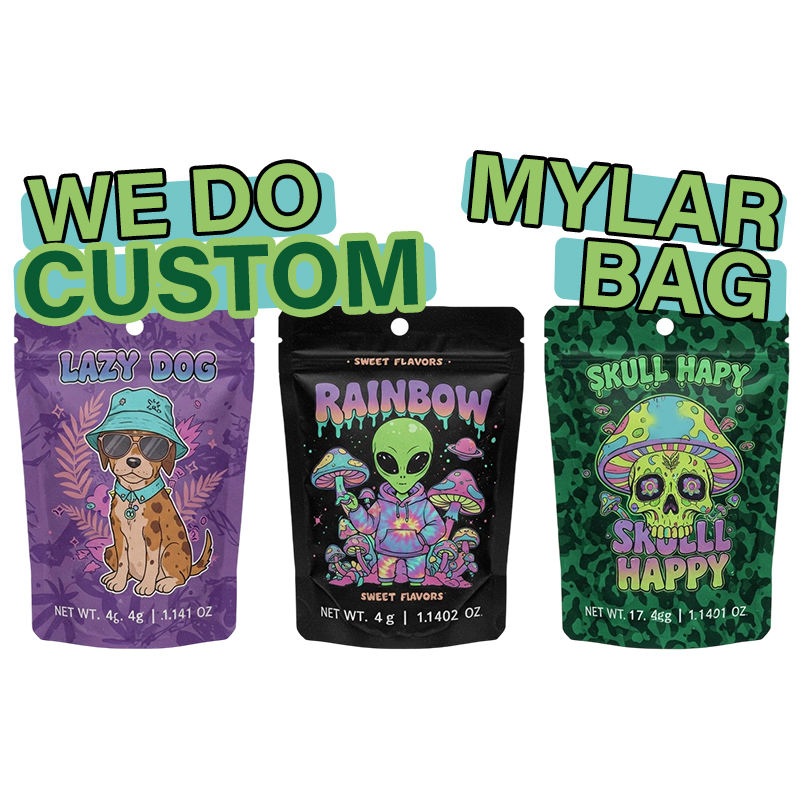
These custom printed 3.5g–1oz ziplock plastic packaging bags are resealable plastic bags intended for branded cannabis packaging programs covering products identified by approximately 3.5g through 1oz fill weights. They are a practical starting point for cannabis brands, distributors, wholesalers, private-label buyers, OEM/ODM programs, and multi-SKU teams that need one coordinated bag concept across several product variants. The stated fill range does not establish one universal bag size: flower density, product dimensions, headspace, seal geometry, and filling equipment must be confirmed before production.
Product Specifications
| Product type | Custom printed plastic packaging bags |
|---|---|
| Stated fill range | 3.5g–1oz; final usable volume depends on the product and bag specification |
| Closure | Ziplock resealable closure; closure details and seal configuration require confirmation |
| Material | Plastic; the complete film or laminate structure is subject to final specification |
| Printing | Custom printed artwork; print process, colors, coverage, and registration require confirmation |
| Intended procurement use | Cannabis brand, private-label, OEM/ODM, distributor, wholesale, and multi-SKU packaging programs |
| Dimensions and barrier data | Not stated; confirm bag dimensions, usable area, laminate, and any required barrier targets before quotation |
Match the Bag to Product Density and Headspace
A nominal 3.5g or 1oz label describes a target fill weight, not a guaranteed pouch volume. Dense, compact flower can occupy less space than light, airy flower at the same weight. Product shape also affects how much headspace is needed above the zipper and below the top seal. Ask for the actual product dimensions, expected density range, target fill weight, and preferred headspace. If several strains or grades will use the same bag, test the smallest and largest expected fill presentations rather than approving one representative sample only.
For flower, the filling method matters. Manual filling, counting, weighing, and automated equipment can place different demands on the opening width, side seals, bottom geometry, and usable internal area. A bag that looks large enough externally may lose usable volume to seals, zipper placement, and a top sealing zone. Confirm the flat dimensions, finished dimensions, opening position, and any required tear area against the equipment and filling sequence.
Plastic Structure and Barrier Decisions
“Plastic” identifies the broad packaging material but does not define the complete film structure. A single-layer film, coated film, or multilayer laminate can differ in stiffness, puncture resistance, heat sealability, aroma containment, moisture protection, oxygen protection, and light protection. Depending on the selected structure and proper sealing conditions, the bag may help contain aroma and protect contents from selected environmental exposure. These outcomes should be validated against the actual laminate, seal design, and product requirements rather than assumed from the word plastic.
Barrier choices involve trade-offs. A more protective opaque structure may reduce light exposure but prevents the buyer from viewing the contents. A clear area can improve product visibility while allowing more light through that portion. A stiffer film may support a more structured presentation and filling behavior, while a softer film may fold more easily. Matte, metallic, holographic, or kraft-style appearance describes visual treatment or surface presentation; it does not, by itself, prove the barrier level or substrate construction. Request the proposed structure and any available technical data relevant to the destination market and product.
Ziplock Resealability, Heat Sealing, and Child Resistance
The ziplock provides a resealable opening for repeated access, but an ordinary zipper should not be described as a tested child-resistant closure. If the destination market or product category requires child-resistant packaging, specify that requirement separately and request the applicable closure design, test documentation, and packaging configuration for review. Do not treat a standard resealable cannabis bag as child-resistant without evidence for the final construction.
A top heat seal can provide a separate tamper-evident or initial closure area when the design and process support it, but the required seal width, temperature window, dwell time, pressure, and equipment settings must be confirmed. A tear notch can make the first opening easier, although it changes the opening geometry and should be positioned so it does not interfere with the zipper, artwork, or seal. Ask whether the program needs a zipper only, a zipper plus heat seal, a tear notch, or a different opening arrangement.
Custom Printing for Strains and Multi-SKU Programs
Custom printing allows a cannabis brand to coordinate strain names, cultivar information, product identifiers, warning panels, batch areas, and other approved artwork across the 3.5g–1oz range. The artwork must be built around the finished bag dimensions, zipper location, top seal, side seals, die line, and any transparent or reserved areas. Confirm the printable area rather than relying on the external bag size. Print coverage, color count, surface finish, registration, and substrate compatibility can affect both appearance and quotation.
For a multi-SKU or private-label program, establish one artwork specification with controlled variation fields for strain, weight, lot information, and destination market. Consistent bag dimensions can simplify filling and merchandising, but different weights or flower densities may require different heights, widths, gussets, or headspace. Conversely, separate dimensions may improve product fit while increasing artwork versions and procurement complexity. This is a useful trade-off to resolve before finalizing a family of Cali bags, marijuana baggies, or other market-specific packaging names.
Destination-Market and Specification Review
Packaging requirements vary by destination market, product type, labeling rules, warning language, child-resistance requirements, recycling considerations, and contact-material expectations. The bag itself should not be described as compliant, approved, or certified unless the exact construction and supporting documentation have been reviewed for the relevant jurisdiction. Provide the destination market, contents, intended use, required label elements, and any buyer or regulator specifications during the RFQ process.
If the bag will hold flower, also confirm aroma expectations, moisture sensitivity, light exposure, puncture risk from stems, and whether a final heat seal is needed. If the contents are another cannabis product, identify its shape, grease or moisture behavior, temperature exposure, and contact requirements. Those details determine whether the proposed plastic structure, opening, and seal system are suitable for evaluation.
Questions Buyers Should Confirm Before an RFQ
- Does 3.5g–1oz specify the bag size? No. It states the product’s named fill-weight range; actual bag dimensions must be matched to density, product dimensions, headspace, and filling method.
- Can these bags be used for cannabis flower? They can be evaluated for cannabis flower packaging, but the buyer should confirm the required internal volume, aroma expectations, moisture and light needs, and final laminate.
- Is the ziplock child-resistant? The input identifies a ziplock closure, not a tested child-resistant closure. Specify and verify child-resistance separately when required.
- Can each strain or weight receive different printing? Custom printing supports a multi-SKU discussion, but the buyer should confirm the number of artwork versions, variable information, print coverage, colors, and final dimensions.
- What determines aroma and barrier performance? The complete film or laminate, zipper and heat-seal design, seal quality, and handling conditions all affect performance. A plastic appearance alone is not a performance specification.
Request a Product-Specific B2B Quote
To request a useful quotation for these custom printed cannabis baggies, provide the contents, fill weight or actual product dimensions, desired finished bag dimensions, expected quantity, number of artwork versions, material or barrier preference, closure requirements, finish, filling method, destination market, and compliance or documentation needs. If you are comparing private-label, OEM, ODM, distributor, or wholesale supply options, include the number of SKUs and whether one bag format should cover all variants. The final specification should be approved against a representative sample or production proof before committing the full packaging program.
Reviews
There are no reviews yet.