
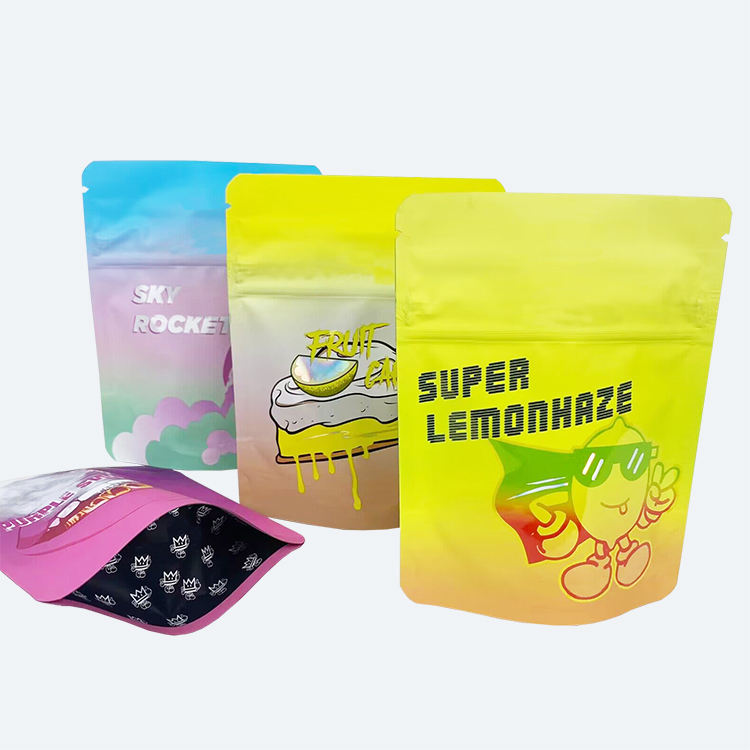
Custom Printed 3.5g Child-Resistant Mylar Bags
Custom printed 3.5g child-resistant Mylar bags are flexible cannabis packaging bags specified for a nominal 3.5g fill and supplied with a ziplock-style closure described as child-resistant. They are a practical format for cannabis brands, private-label programs, distributors, wholesalers, and multi-SKU buyers that need printed packaging for a repeatable product line. The stated fill weight does not establish one universal bag size, material structure, odor-retention level, or regulatory suitability, so those points should be confirmed before an RFQ is finalized.
Product Specifications
| Product type | Custom printed cannabis packaging bag |
|---|---|
| Nominal fill reference | 3.5g; actual usable volume depends on product density and pack configuration |
| Material description | Mylar bag; complete laminate and barrier structure require confirmation |
| Closure | Ziplock-style closure described as child-resistant; mechanism and test documentation require confirmation |
| Printing | Custom printing is specified; artwork area, print process, colors, and substrate limits require confirmation |
| Intended application | Cannabis product packaging; exact contents and destination-market requirements require confirmation |
| Dimensions | Not supplied; select from the product dimensions, density, headspace, and seal requirements |
Fit, Fill Weight, and Usable Volume
A 3.5g reference is useful for product planning, but it is not a dimensional specification. Flower density, nug size, grind, moisture condition, and the desired presentation can change the internal volume needed. A loose, bulky product may require more room than a dense product at the same weight. Buyers should provide the actual product dimensions or a representative sample, together with the desired headspace and whether the bag must accommodate a heat seal above the closure.
For cannabis flower, headspace affects filling speed, visual presentation, compression, and aroma management. Excessive empty space can make the pack look underfilled and allow more product movement, while an undersized bag can stress the zipper, wrinkle the seal area, or crush the contents during filling. Confirm the finished bag width, height, usable opening, seal zone, and any rounded or shaped corners against the filling equipment and the final retail presentation.
Mylar Structure and Smell-Resistant Performance
“Mylar” identifies the requested packaging material terminology, but it does not by itself define the complete laminate. Odor retention, moisture resistance, oxygen protection, light control, puncture resistance, stiffness, and heat sealability depend on the full film structure, seal design, and manufacturing process. A suitable structure can help contain aroma and protect the contents when the bag is properly sealed, but “smell-proof” should be treated as a performance target to verify rather than an absolute guarantee.
Ask the supplier to identify the proposed layers or barrier construction, the intended sealing method, and any available technical data relevant to the product. If light-sensitive contents are involved, appearance options such as metallic or opaque layers may be relevant, but a finish or visual effect alone does not prove barrier performance. Likewise, a printed surface does not establish moisture or oxygen protection. The final structure should be selected around the product’s sensitivity, storage conditions, and destination-market requirements.
Child-Resistant Ziplock and Sealing Decisions
The input specifies a child-resistant ziplock bag, but a standard resealable zipper should not automatically be treated as a tested child-resistant closure. Confirm how the closure is operated, whether the finished configuration has been evaluated for the destination market, and whether any required documentation or testing applies. Also clarify whether the packaging is intended to rely on the zipper, a heat seal, or both.
A heat seal can provide evidence of first opening and an additional barrier after filling, while the zipper supports resealing after opening. These functions serve different purposes. The seal width, temperature window, dwell time, and compatible filling equipment should be checked during production trials. A tear notch may improve access but can affect opening position, seal geometry, and child-resistant performance, so it should not be added without confirming the complete design.
Custom Printing for Cannabis and Multi-SKU Programs
Custom printing lets a cannabis brand separate strains, product variants, potency information, and private-label identities across a coordinated bag range. For a multi-SKU program, use a controlled dieline and reserve consistent areas for variable artwork, regulatory text, batch information, and any market-specific labeling. Keeping the pouch dimensions and primary artwork zones consistent can simplify filling, inventory planning, and visual recognition across the range.
Before approving artwork, confirm the printable area, safe margins, closure clearance, seal-free zones, color expectations, and whether the selected Mylar structure supports the desired appearance. Matte, gloss, metallic, or other visual effects may be available depending on the construction, but they should be treated as configuration choices rather than assumed features. Request a production proof or sample review to check small text, barcodes, contrast, registration, and the position of important information relative to the zipper and heat seal.
Procurement Checks for Wholesale and OEM Buyers
Wholesale, private-label, and OEM buyers should define the complete specification before comparing quotations. The nominal 3.5g reference should be linked to the actual product being packed, not used as a substitute for dimensions or capacity testing. If several strains or product types will use the same bag, test the bulkiest or most demanding SKU first. This can reveal whether the closure, opening, headspace, and printed layout remain suitable across the range.
Destination-market rules may affect child-resistant packaging, warning information, labeling space, material declarations, testing, and packaging waste obligations. Requirements vary by jurisdiction and product category. Confirm the applicable market, product contents, required documentation, and any compliance review with the responsible regulatory or legal team before production. Do not assume that a product description or closure label alone demonstrates compliance.
Questions Buyers Should Confirm Before an RFQ
- Does a 3.5g fill determine the bag dimensions?No. Product density, shape, headspace, opening size, and sealing requirements determine the suitable dimensions. Provide actual product measurements or a representative sample for more reliable sizing.
- How should the smell-resistant function be evaluated?Confirm the complete laminate, closure design, and sealing method. The selected structure may help contain aroma when properly sealed, but performance should be evaluated against the buyer’s product and requirements rather than assumed from the term “smell-proof.”
- Is the ziplock automatically tested as child-resistant?No conclusion should be drawn from the word “ziplock” alone. Confirm the exact child-resistant mechanism, the finished-bag configuration, applicable destination-market testing, and supporting documentation.
- Can the bags support multiple cannabis SKUs?They can be considered for a multi-SKU program because custom printing is specified, but each SKU should be checked for product density, artwork variation, labeling space, and consistent filling and sealing performance.
- What should be supplied for a quotation?Provide the contents, nominal fill weight, actual product dimensions or sample, desired bag dimensions, quantity, number of artwork versions, material or barrier preference, closure requirements, finish, filling method, destination market, and compliance needs.
Request a B2B Specification Review
For an accurate RFQ, send the contents, 3.5g fill target, actual product dimensions or sample, desired pouch dimensions, quantity, artwork versions, preferred material or barrier, child-resistant closure requirements, finish, filling method, destination market, and compliance needs. These details allow the bag construction, printed layout, seal arrangement, and multi-SKU plan to be reviewed against the intended cannabis application.

Reviews
There are no reviews yet.