
Custom Printed 3.5g Child-Resistant Cali Mylar Bags for Cannabis Packaging
Custom printed 3.5g child-resistant Cali Mylar bags are flexible cannabis bags specified for a stated 3.5g fill, custom branding, and a child-resistant opening format. They are suited to cannabis brands, distributors, wholesalers, private-label programs, OEM/ODM buyers, and multi-SKU teams that need a branded bag rather than an unprinted stock pouch. The 3.5g reference does not establish one universal pouch dimension because flower density, product geometry, headspace, gusset design, and the selected laminate all affect the usable volume. Confirm the final package specification before requesting production pricing.
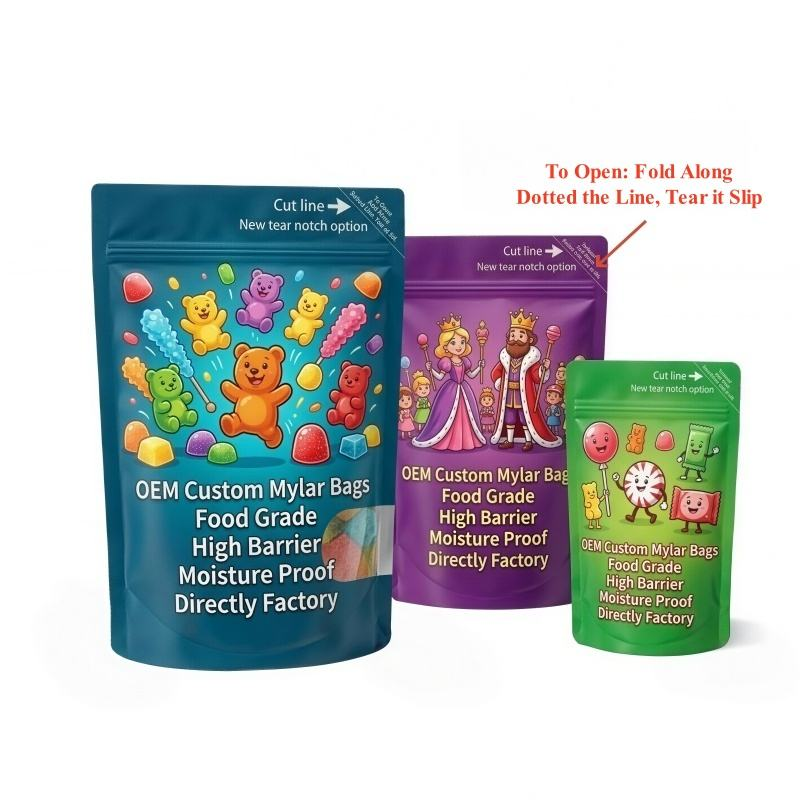
Product Specifications
| Product type | Custom printed Cali Mylar cannabis bag |
|---|---|
| Stated fill reference | 3.5g; confirm the actual product density and required headspace |
| Child-resistant feature | Child-resistant bag format stated; confirm the closure mechanism and any destination-market testing or documentation |
| Material | Mylar bag format; confirm the complete laminate, barrier layers, sealant, and substrate limits |
| Printing | Custom printing stated; confirm artwork, print colors, coverage, registration, and printable area |
| Pouch style | Bag format; confirm flat or gusseted construction, opening position, and finished dimensions |
| Finish | Confirm matte, gloss, metallic, or other requested appearance; appearance alone does not define the barrier |
| Intended procurement | Branded cannabis packaging for wholesale, private-label, OEM/ODM, or multi-SKU programs |
Match the Bag to the Cannabis Product
A stated 3.5g fill is a commercial reference, not a dimensional specification. Dried flower can vary significantly in density and particle structure. A compact, dense product may require less internal volume than a light, airy flower, while oversized buds need additional clearance to reduce compression during filling and handling. Ask for a physical sample, representative product dimensions, or a density estimate when confirming the pouch size. The buyer should also specify whether the bag must accommodate a label, insert, tamper-evident heat seal, or a particular opening position.
Headspace affects both presentation and filling behavior. Too little headspace can make filling, zipper engagement, and heat sealing inconsistent. Excessive headspace can increase movement inside the package and make the finished pack look underfilled. For flower, confirm the expected fill geometry, whether the package will be filled manually or on equipment, and whether a gusset is needed for improved standing or filling stability. A 3.5g package should therefore be approved against the actual product rather than selected from weight alone.
Laminate, Aroma, Moisture, and Protection
“Mylar” identifies the bag format commonly used for flexible barrier packaging, but the complete laminate determines much of the package performance. Depending on the selected structure, barrier layers can help limit aroma transfer, moisture exchange, oxygen exposure, and light transmission. A properly sealed bag may help contain cannabis aroma and protect product quality, but “smell proof” should not be treated as an absolute or permanent guarantee without a defined structure, seal system, and test method.
The same specification decision affects stiffness, puncture resistance, fold behavior, and heat sealability. A heavier or more protective structure may improve handling durability and barrier performance, while a thinner structure may reduce material use and alter flexibility. Metallic or opaque appearances can support light protection depending on the actual laminate; a matte, gloss, holographic, or kraft appearance does not prove a particular barrier. Confirm the intended barrier function, sealant layer, thickness, and any required oxygen or moisture performance with the supplier before approval.
Child-Resistant Opening and Seal Strategy
This product is identified as child-resistant, but an ordinary resealable zipper and a tested child-resistant closure are not interchangeable descriptions. Confirm how the child-resistant feature operates, whether the package uses a specialized interlock or opening sequence, and what documentation is available for the destination market. Do not assume that a closure is compliant merely because it is difficult to open.
Also define the relationship between the opening feature and the final seal. A heat seal can provide a separate tamper-evident or post-fill sealing step when the selected construction supports it, while a zipper is intended for repeated access. The buyer should confirm tear-notch placement, seal width, opening force, zipper engagement, and whether the intended filling process can close the bag consistently. These details influence usability, production repeatability, and the amount of artwork available near the top seal.
Custom Printing and Multi-SKU Control
Custom printing makes the bag suitable for branded strain, product-line, or private-label presentation. Before artwork is released, request the correct dieline and identify the printable panels, safe zones, seal areas, zipper clearance, tear-notch location, and any gusset distortion. Artwork should be checked at the final bag scale, particularly for small regulatory text, logos crossing folds, and variable information such as strain names, lot fields, or net contents.
For multi-SKU purchasing, establish which elements remain consistent and which change between versions. A shared bag dimension and laminate can simplify procurement, while separate artwork versions can identify strains or product formats. Consistency still requires approval of color appearance, registration, text legibility, and version control for every SKU. If a metallic, matte, transparent, or special-effect appearance is requested, confirm how that finish interacts with color reproduction and the underlying substrate.
Destination-Market Review
Cannabis packaging requirements vary by jurisdiction and product category. Before production, the buyer should confirm applicable child-resistant, tamper-evident, labeling, warning, opacity, recyclability, food-contact, and cannabis-specific requirements for the destination market. The bag’s stated child-resistant format should not be presented as universal regulatory approval. Ask what test reports, declarations, material information, or production documents are available for the exact finished structure, closure, and market.
Compliance text also affects the dieline. Required warnings, product identity, net contents, batch or lot information, manufacturer details, and other market-specific statements may reduce the available branding area. Provide the destination, product category, and final label copy early so the print layout and closure geometry can be reviewed together.
What to Confirm Before an RFQ
- State whether the contents are flower or another cannabis product, along with the actual fill weight, product dimensions, and density if available.
- Request a recommended finished pouch size, usable volume, headspace, and flat or gusseted construction based on the product sample.
- Specify the desired laminate or barrier objective, including aroma, moisture, oxygen, light, stiffness, puncture, and heat-seal priorities.
- Confirm the child-resistant mechanism, zipper or opening format, tear notch, heat-seal requirement, and any requested tamper-evident feature.
- Provide artwork versions, print coverage, finish, color expectations, dieline requirements, and the number of SKUs.
- Identify filling equipment or manual filling, destination market, compliance needs, target quantity, sampling requirements, and delivery assumptions for quotation review.
Frequently Asked Questions
Does a 3.5g fill specify the exact bag size?
No. The 3.5g reference does not establish one universal dimension. Flower density, bud size, headspace, gusset design, and filling method must be confirmed against the actual product.
Are these bags suitable for cannabis flower?
They are specified as cannabis bags with a 3.5g reference and can be evaluated for flower packaging. Confirm the actual product geometry, aroma objective, headspace, and destination-market requirements before final approval.
Is a child-resistant bag the same as a standard resealable zipper bag?
No. A standard zipper is not automatically child-resistant. Confirm the specific closure mechanism and any testing or documentation required for the destination market.
Does the Mylar appearance prove odor or moisture protection?
No. Barrier performance depends on the complete laminate and sealing system. Confirm the structure, sealant, and any required test data rather than relying on the appearance or the word Mylar alone.
Can one packaging program support multiple strain designs?
Yes, custom printing can be planned for multiple artwork versions, subject to the approved dimensions, printable area, substrate, color process, and version-control requirements. Confirm the SKU count and artwork files in the RFQ.
Request a B2B quotation by providing the contents, 3.5g fill target or actual product dimensions, desired pouch dimensions, quantity, artwork versions, laminate or barrier objective, child-resistant closure preference, finish, filling method, destination market, and compliance needs. These details allow the supplier to review fit, printability, closure suitability, and the final specification before pricing or sampling.

Reviews
There are no reviews yet.