
Custom Spout Pouches for Beverage Packaging
Custom spout pouches for beverage packaging are flexible containers configured to store, dispense and reclose pourable products through an integrated spout. They are relevant to beverage brands, including cannabis and cannabinoid beverage businesses, private-label buyers, distributors, importers and multi-SKU purchasers seeking packaging tailored to their product and filling process. Pouch dimensions, laminate, spout, cap and printing must be confirmed for the actual beverage and destination market.
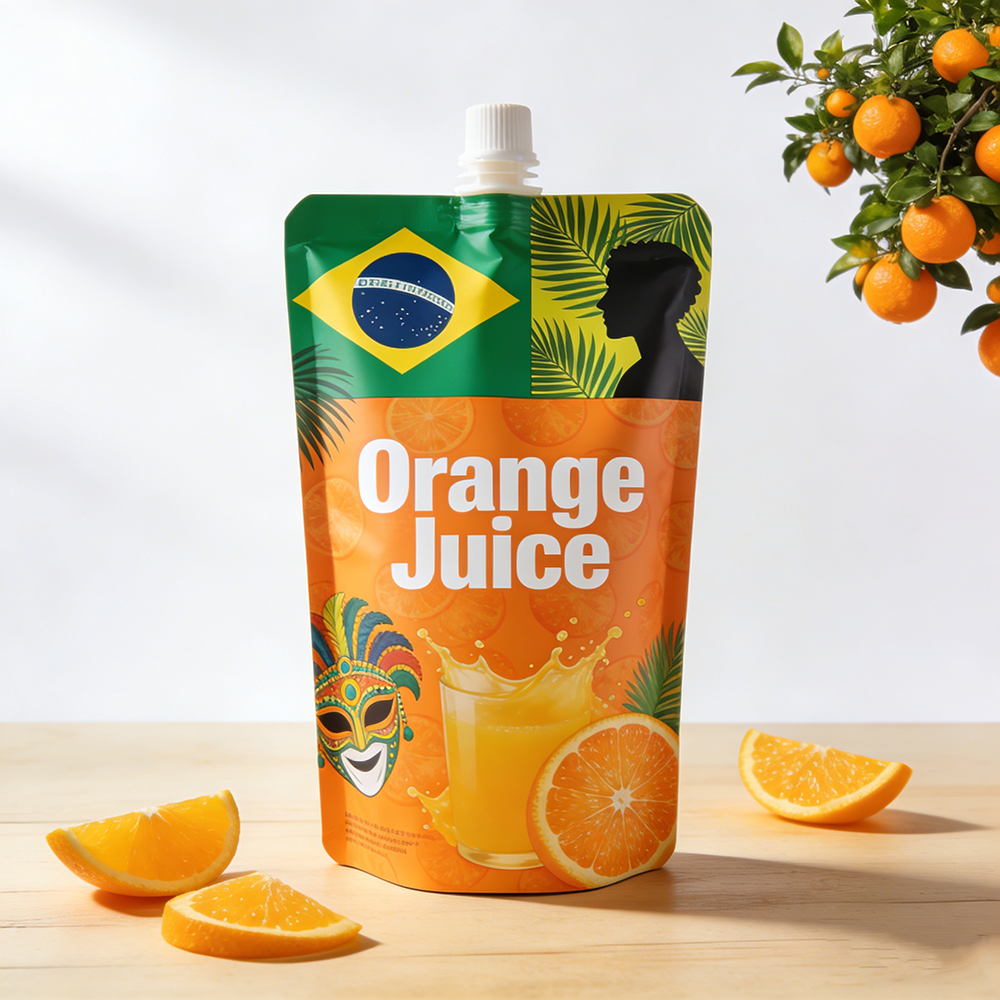
Product Specifications
| Product type | Custom spouted pouch for beverage packaging |
|---|---|
| Intended contents | Pourable beverages; product composition and processing conditions require buyer confirmation |
| Pouch structure | Flexible laminate structure to be selected according to barrier, seal and processing requirements |
| Spout and cap | Style, opening diameter, position and cap system are subject to final specification |
| Dimensions and capacity | Custom configuration based on target fill volume, beverage density, headspace and filling equipment |
| Printing | Custom printing may be configured after artwork, color and production requirements are reviewed |
| Finish | To be selected with the substrate, print process and visual requirements |
| Filling method | Manual or automated compatibility must be confirmed before production |
| Compliance | Buyer must identify the beverage type, destination market and applicable packaging requirements |
Match the Pouch to the Beverage and Filling Process
These pourable beverage packaging pouches should be specified around the liquid rather than a nominal capacity alone. Beverage density, viscosity, acidity, oils, flavor ingredients, particulates and carbonation can affect material compatibility, flow through the spout and seal performance. A thin drink and a thick syrup may require different spout openings even when their labeled volumes are similar.
Usable volume also depends on pouch dimensions, gusset geometry, seal areas and required headspace. Headspace may support filling and sealing, but excessive empty space can make the pouch feel underfilled. Buyers should provide the target fill volume or weight, product density and an actual product sample or technical profile when available. Carbonated, hot-filled, retorted or aseptically processed beverages require dedicated technical review; a standard pouch specification should not be assumed suitable.
Laminate Selection and Barrier Performance
Flexible laminate spout pouches can be configured with multiple layers, depending on the required stiffness, puncture resistance, heat sealability and protection from moisture, oxygen, aroma or light. Barrier performance comes from the complete laminate and sealing system, not from appearance alone. A matte, metallic or clear exterior does not establish a particular oxygen or moisture barrier.
For aroma-sensitive or cannabinoid-infused beverages, the selected structure may help retain aroma and limit exposure to environmental factors when properly sealed. Light-sensitive ingredients may benefit from an opaque or metallized construction, while a clear window improves product visibility but reduces light protection in that area. The buyer should identify ingredients of concern and requested shelf-life validation criteria without assuming an unstated OTR, MVTR or compatibility result.
Spout, Cap and Seal Decisions
The spout controls dispensing speed and interaction with the filling line. Its internal diameter should suit the beverage viscosity and any suspended particles. Spout position can influence pouring, pack presentation and equipment handling. The cap must also provide enough grip and appropriate reclosure behavior for the intended user.
A standard screw cap is not automatically child-resistant or tamper-evident. If cannabis beverage rules or another regulated category require child resistance, tamper evidence or a specific opening system, that requirement must be stated in the RFQ and evaluated against the finished package. Seal integrity around the spout and pouch perimeter should be validated using the final laminate, liquid, fill process and closing settings.
Custom Printing and Multi-SKU Control
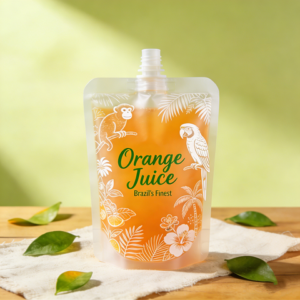
Custom printed spouted pouches may carry branding, flavor identification, preparation instructions, ingredient information, warnings, lot-code areas and other required copy. Printable area is affected by the pouch die line, spout location, seals, folds and gusset. Critical text and machine-readable codes should remain inside the approved safe area.
OEM multi-SKU beverage pouches can use a shared structure and visual system across flavors or formulations, subject to production and artwork review. Consistent dimensions, spout placement and color references can simplify line setup and brand presentation. Each artwork version should still be checked independently for text, barcode placement, color layers and destination-market statements.
Important Packaging Trade-Offs
A larger spout can improve flow for thicker beverages and make filling easier, but it occupies more panel space and may increase the risk of uncontrolled pouring for low-viscosity drinks. A smaller opening offers more controlled dispensing but may not suit pulp, inclusions or concentrated products. Likewise, a stiffer laminate can improve shelf presentation and handling while using more material than a lighter structure. The preferred configuration should balance dispensing, protection, filling efficiency and pack feel.
Procurement and Market Requirements
A wholesale spout pouch supplier needs application details before recommending a construction. Buyers should identify whether the beverage contains cannabis-derived ingredients, alcohol, dairy components, oils, acids or particulates because these factors may influence compatibility and regulatory review. Food-contact, labeling, child-resistant, tamper-evident and recycling claims vary by jurisdiction and package structure. No compliance status should be assumed until the final specification and destination-market requirements are assessed.
Frequently Asked Questions
Can one pouch size be used for every beverage with the same labeled volume?
No. Beverage density, required headspace, pouch geometry and filling behavior can change the dimensions needed for the same labeled volume.
Are these spout pouches suitable for hot filling or retort processing?
Suitability cannot be assumed. The laminate, spout, seals and processing conditions must be specified and validated for the intended temperature, pressure and dwell time.
Does a screw cap make the pouch child-resistant?
No. An ordinary screw cap or resealable closure is not the same as a tested child-resistant system. Any child-resistant requirement must be stated and verified for the finished package.
Can the pouches be printed for several flavors or cannabis beverage SKUs?
Yes, multi-SKU artwork can be evaluated, but the number of versions, shared design elements, color requirements and copy changes must be supplied for production review and quotation.
What determines the correct spout opening?
The beverage viscosity, particulates, desired pour rate, filling equipment and user experience determine the appropriate spout opening and position.
Request a Product-Specific B2B Quote
For an accurate RFQ, provide the beverage type and ingredients of packaging concern, target fill volume or weight, product density, desired pouch dimensions, estimated quantity, artwork versions, preferred barrier or appearance, spout and cap requirements, filling and sealing method, processing temperature, finish, destination market and applicable compliance needs. These inputs allow the pouch, laminate and dispensing system to be reviewed as one package rather than separate components.
Reviews
There are no reviews yet.