
7g–28g Glossy Foil Cannabis Pouches for Aroma-Sensitive Products
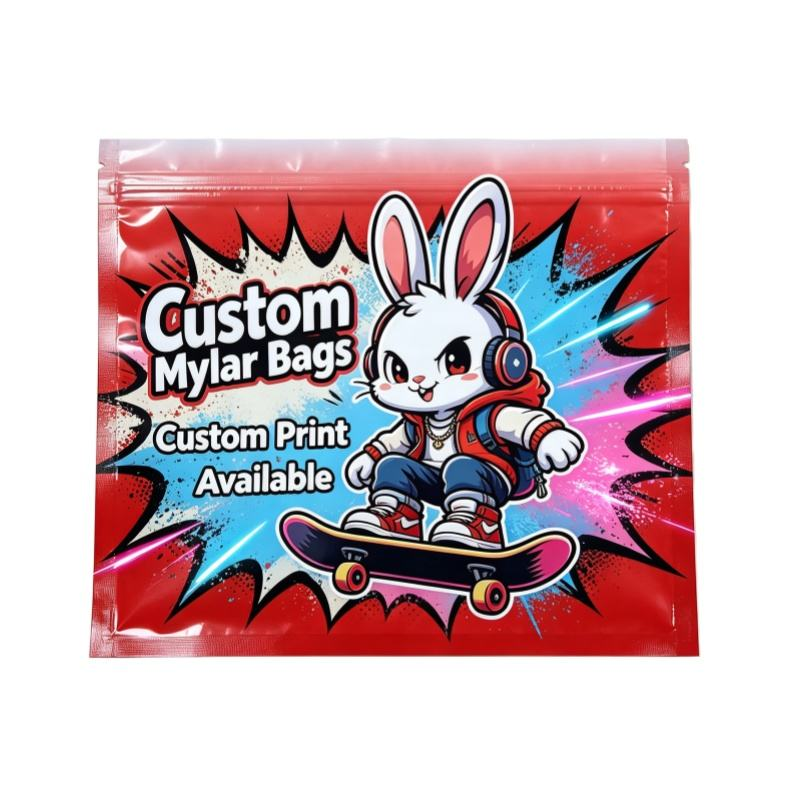
These glossy foil cannabis pouches are 3-side seal flat pouches identified for 7g–28g fill weights and designed to help contain the aroma of cannabis flower and other aroma-sensitive contents. They are relevant to cannabis brands, distributors, wholesalers, private-label buyers, and multi-SKU purchasers seeking a compact foil pouch format with a glossy presentation. Because flower density and required headspace vary, the stated weight range does not establish one universal pouch dimension.
Product Specifications
| Attribute | Product specification |
|---|---|
| Product type | Flat flexible packaging pouch |
| Fill-weight range | 7g–28g; final pouch dimensions must be matched to product density and headspace |
| Pouch style | 3-side seal |
| Appearance | Glossy foil |
| Barrier function | Aroma-barrier format intended to help contain aroma when the selected laminate and seals are suitable |
| Intended contents | Cannabis flower or other aroma-sensitive products, subject to final packaging assessment |
| Exact laminate | Not stated; confirm all material layers, thickness, and product-contact layer during quotation |
| Closure | Not stated; confirm filling opening, zipper, tear notch, and final heat-seal requirements |
| Printing | Custom printing may be configured subject to artwork, substrate, color, and production specifications |
| Compliance | Buyer must define destination-market, labeling, child-resistance, and product-contact requirements |
How the 3-Side Seal Format Works
3-side seal foil pouches are flat pouches formed with seals around three edges. Depending on the production and filling specification, the remaining edge may serve as the filling opening and then require a final heat seal. Unlike a stand-up pouch, this style does not inherently include a bottom gusset, so it normally lies flat rather than presenting on a shelf from a gusseted base.
The flat format can provide broad front and back panels for branding, strain identification, warnings, and variable SKU information. However, the seal areas and opening position reduce the usable artwork zone. Buyers should obtain the final die line before approving layouts, especially when several strain designs must share consistent logo, warning, and regulatory positions.
Foil Laminate and Aroma Management
The glossy foil appearance identifies the presentation of the pouch but does not, by itself, define every laminate layer or prove a specific barrier value. Aroma, moisture, oxygen, and light performance depend on the complete structure, including the barrier layer, sealant layer, material thickness, edge seals, and final filling seal. The exact construction should therefore be confirmed rather than inferred from appearance alone.
When properly specified and sealed, an aroma-barrier structure can help reduce aroma transmission and protect flower from external moisture and oxygen exposure. Foil also commonly supports light-blocking performance, but the finished structure must be reviewed before making product-protection claims. Puncture resistance and stiffness likewise depend on the complete laminate, not simply the glossy surface.
Commercial descriptions such as aroma-barrier weed bags or smell-resistant pouches should be treated as functional search language, not as a promise of permanent or absolute odor containment. Seal contamination, trapped flower, wrinkles, handling damage, and an unsuitable seal temperature can reduce package integrity.
Selecting Capacity for 7g, 14g, and 28g Flower
A nominal flower weight does not determine usable volume. Seven grams of dense flower can occupy less space than seven grams of larger, lower-density buds. The same issue becomes more significant at 14g and 28g, where excess compression can damage flower while excessive headspace can create unnecessary movement and an oversized retail presentation.
For dimension selection, buyers should evaluate representative product samples, expected density variation, desired headspace, filling equipment, and the area needed for a clean final seal. The seal zone must remain free of flower and debris. Manual filling may require a different opening width than semi-automatic equipment, so the intended filling method belongs in the RFQ.
Closure, Heat Seal, and Child-Resistance Decisions
A 3-side seal pouch does not automatically include a resealable zipper, tear notch, tamper-evident feature, or child-resistant mechanism. Each feature must be specified. A conventional press-to-close zipper can support consumer reclosure after opening, while a final heat seal can provide an initial sealed edge when correctly applied.
An ordinary zipper must not be described as child resistant. If the destination market requires child-resistant cannabis packaging, the buyer must request an appropriate closure system and confirm the applicable testing, documentation, labeling, and use conditions. Closure selection can also affect opening convenience, available artwork space, pouch dimensions, and filling speed.
Custom Printing and Multi-SKU Control
Custom printed cannabis pouches can be configured for brand graphics, strain names, cannabinoid information, warnings, lot-coding areas, and other required content, subject to the selected printing process and substrate. The glossy surface can deliver a reflective, high-impact appearance, although glare may reduce readability if fine text or low-contrast colors are used.
For OEM multi-SKU marijuana packaging, use one controlled die line and a shared placement system for logos, warnings, net-weight statements, and variable strain elements. Buyers should identify the number of artwork versions and quantity per version rather than providing only one combined order quantity. Color targets, barcode contrast, small text, metallic areas, and any planned overprint or date coding should be reviewed during artwork preparation.
Product-Specific Trade-Offs
The foil structure and glossy finish can provide strong shelf impact and support aroma and light management, depending on the full laminate. The trade-off is that an opaque foil pouch prevents consumers and filling teams from viewing the contents through the package. Adding a clear window may improve visibility, but it can reduce light protection in that area and may alter barrier performance.
The flat 3-side seal construction also uses space efficiently before filling and offers broad print panels, but it does not provide the self-standing presentation of a bottom-gusset pouch. Buyers should choose between compact flat handling and stand-up merchandising based on filling, display, and distribution requirements rather than appearance alone.
Destination-Market and Procurement Review
A wholesale cannabis pouch supplier needs the destination market before recommending a final specification. Rules may address child resistance, tamper evidence, opacity, warning placement, symbols, serving information, product-contact materials, and package reclosability. Requirements can differ by country, state, province, product category, and sales channel.
Buyers remain responsible for validating the finished package with their product and packing process. Confirm the laminate declaration, artwork proof, closure design, seal settings, and any required supporting documentation before production. Do not rely on the terms foil, aroma barrier, or cannabis pouch as evidence of approval or compliance.
Frequently Asked Questions
Does 7g–28g indicate one universal pouch size?
No. Flower density, bud size, desired headspace, and filling method affect the required dimensions, so representative contents should be evaluated before dimensions are finalized.
Are these pouches guaranteed to be smell proof?
No absolute or permanent smell-proof claim should be assumed. Aroma containment depends on the complete laminate, closure, seal quality, handling, and whether the pouch is properly sealed.
Does a 3-side seal pouch automatically include a zipper?
No. A zipper, tear notch, filling opening, and final heat-seal arrangement must be specified during quotation because they are not established by the pouch style alone.
Is a standard resealable zipper child resistant?
No. A conventional resealable zipper is distinct from a tested child-resistant closure. Buyers must define applicable child-resistance requirements for the destination market.
What artwork information is needed for multiple strains?
Provide the number of artwork versions, quantity per version, shared brand elements, variable strain content, color targets, required warnings, and any barcode or lot-coding areas.
Request a Product-Specific B2B Quotation
For an accurate RFQ, provide the contents, target fill weight, representative product density or sample dimensions, desired pouch dimensions, total quantity, quantity per artwork version, laminate or barrier requirements, closure and tear features, glossy finish expectations, filling method, destination market, and applicable compliance needs. These details allow the 7g–28g glossy foil 3-side seal pouch to be evaluated against the actual product rather than weight alone.

Reviews
There are no reviews yet.