
Custom Printed 3.5g 7g Herb Packaging Bags for Cannabis Brands
These custom printed 3.5g 7g herb packaging bags are flexible bags for packaging measured quantities of cannabis flower, herbs, or similar dry products. They are intended for cannabis brands, distributors, wholesalers, private-label and OEM buyers, and multi-SKU programs that need branded packaging for both 3.5g and 7g fills. The stated smell-proof positioning means the selected bag structure and sealing method should be assessed for aroma containment; performance depends on the complete material construction, closure, and seal quality.
Because a 3.5g or 7g fill weight does not determine one universal pouch dimension, the final bag should be selected around the product’s density, flower structure, headspace, filling method, and desired presentation. A procurement review should confirm the construction and dimensions before artwork or production is finalized.
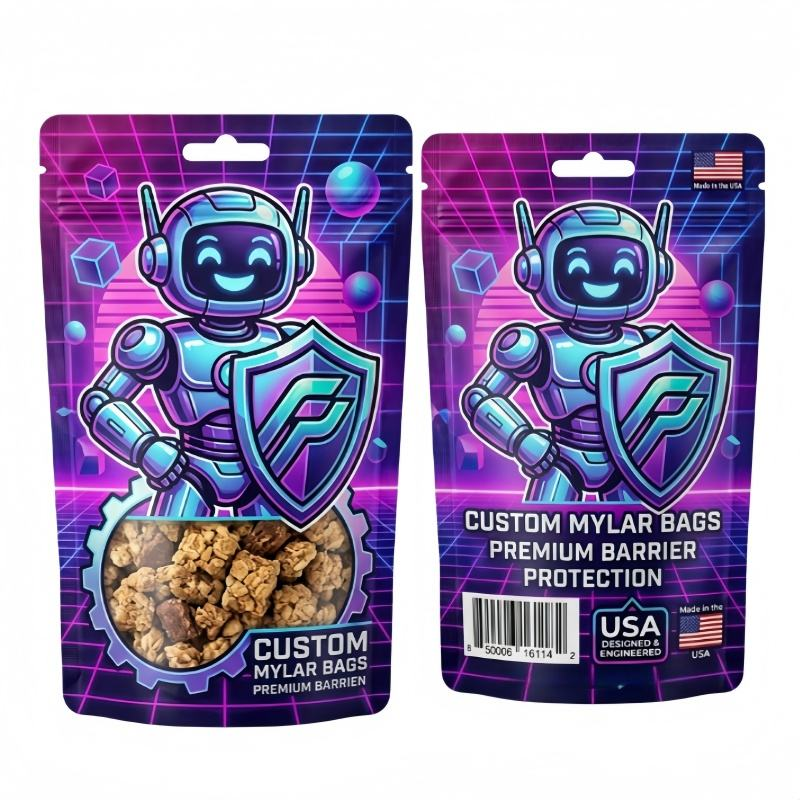
Product Specifications
| Product type | Custom printed flexible herb packaging bags |
|---|---|
| Stated fill options | 3.5g and 7g; actual usable volume depends on product density and fill presentation |
| Intended contents | Cannabis flower, herbs, or another compatible dry product, subject to buyer confirmation |
| Odor positioning | Smell-resistant or smell-proof positioning; confirm target performance against the selected structure and closure |
| Printing | Custom printed artwork; printable area, colors, and finish depend on the selected substrate and production specification |
| Material structure | To be confirmed; barrier performance depends on the complete laminate and sealing system |
| Closure and pouch style | To be confirmed based on filling, resealability, sealing, and destination-market requirements |
| Commercial format | Suitable for brand, wholesale, private-label, OEM, ODM, and multi-SKU discussions |
How the Bag Structure Affects Aroma and Product Protection
Odor containment is not created by the printed surface alone. The laminate, inner sealing layer, opening design, zipper or heat seal, and seal geometry work together. A suitable barrier structure can help contain aroma and reduce exposure to moisture, oxygen, or light, depending on the selected materials. If the bag uses a clear window, the buyer should weigh product visibility against the reduction in light protection in that area. Matte, metallic, holographic, or kraft appearance also does not identify the underlying barrier structure.
For cannabis flower, ask for the proposed laminate and sealing system rather than relying only on the phrase “smell-proof.” The bag may be configured with an odor-resistant structure, but the expected result depends on proper filling, clean seal areas, closure engagement, and handling. If long-term aroma retention or moisture control is important, request the supplier’s available construction details and define the required evaluation method before approval.
Choosing the Right Size for 3.5g and 7g Flower
Fill weight is only one sizing input. Dense flower may occupy less space than airy flower, while large buds require more internal room and may need additional headspace to avoid crushing. Too little headspace can make filling and zipper engagement difficult; too much headspace can increase movement and create a less consistent shelf presentation.
For a 3.5g and 7g program, confirm the actual product dimensions, average density, bud size, target headspace, and whether the bag will be filled manually or on equipment. If both weights use one visual family, confirm whether separate dimensions are needed to maintain consistent proportions. A sample filled with the real product is the most useful way to check fit, opening access, seal placement, and display position.
Closure, Seal, and Filling Considerations
The closure should match the intended workflow. A resealable zipper can support repeated opening and closing, but an ordinary zipper should not be described as a tested child-resistant closure. If child-resistant packaging is required for the destination market, specify that requirement separately and confirm the applicable design, testing, and documentation with the packaging supplier.
A heat seal can provide a tamper-evident presentation when properly designed and sealed, while a zipper can improve consumer resealability. These functions may be combined, but the combination affects opening height, usable volume, filling speed, and the printed seal-free area. Confirm whether the bag is flat, stand-up, or another format, and whether gussets are needed for filling stability. For equipment filling, provide the machine method and seal temperature range for technical review rather than assuming every bag construction will run identically.
Custom Printing and Multi-SKU Control
Custom printed barrier weed pouch packaging can support strain names, product variants, brand graphics, and information panels across a coordinated product line. Before quotation, identify the number of artwork versions, whether 3.5g and 7g require separate layouts, and which elements must remain consistent across every SKU. Confirm the printable area, dieline, registration limits, color expectations, finish, and any transparent or metallic effects.
Artwork should leave sufficient space for required market information, batch or lot identification, labels, and any variable data that will be added later. Destination-market rules differ, so the buyer should provide the intended market and compliance brief. The supplier can then confirm whether the selected material, printing process, closure, and available artwork area are suitable for the requested specification. Do not treat custom printing as evidence that the package itself is compliant for every jurisdiction.
Trade-Off: Aroma Protection Versus Product Visibility
A highly opaque barrier construction can provide stronger light protection and a more controlled branded presentation, while a clear window can help buyers see the flower. The window may reduce protection in that portion of the package and can affect the available artwork area. Similarly, a heavier barrier may improve stiffness or protection but can influence folding, sealing, cost, and equipment handling. Select the priority—visibility, aroma containment, light protection, stiffness, or filling efficiency—before approving the final structure.
Buyer Questions Before an RFQ
Are these bags suitable for both 3.5g and 7g cannabis flower?
They are positioned for 3.5g and 7g fills, but one universal size should not be assumed. Confirm the flower density, bud dimensions, headspace, and desired presentation for each fill weight.
Are the bags genuinely smell-proof?
The product is presented as smell-proof, but odor containment depends on the laminate, closure, heat seals, and handling. Request the proposed structure and define any required evaluation before making a performance claim.
What material are the bags made from?
The product input does not specify a confirmed material or laminate. Ask for the available structures and compare their aroma, moisture, oxygen, light, puncture, stiffness, and heat-sealing properties for the intended contents.
Can the bags be custom printed for multiple strains?
Yes, custom printing is part of the product description. Confirm the number of SKUs, artwork versions, dieline, printable area, finish, color requirements, and any variable information needed on each version.
Does a zipper make the package child-resistant?
No. A standard resealable zipper should be distinguished from a tested child-resistant closure. If child resistance is required, state it in the RFQ and request the relevant design and documentation for the destination market.
What should be included in the quotation request?
Provide the contents, actual fill weight, product dimensions, desired bag dimensions, quantity, artwork versions, material or barrier preference, closure, finish, filling method, destination market, and compliance requirements.
Request a Product-Specific Quote
For an accurate B2B RFQ, send the intended contents, 3.5g or 7g fill weight, actual flower dimensions and density where available, desired pouch dimensions, quantity, number of artwork versions, preferred material or barrier, closure, finish, filling method, destination market, and compliance needs. These details allow the packaging specification to be reviewed around aroma containment, headspace, printing, sealing, and multi-SKU consistency rather than relying on fill weight alone.
Reviews
There are no reviews yet.