
3.5g Cannabis Mylar Bags for Flower Packaging
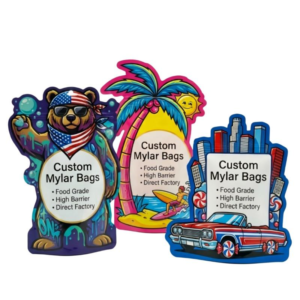
These 3.5g cannabis mylar bags are food-grade, matte-finish bags for brands packaging approximately 3.5 g of cannabis flower. Their Cali-style appearance and smell-proof positioning suit licensed cannabis brands, distributors, wholesalers, private-label programs, and multi-SKU packaging buyers that need a compact bag format with a distinctive shelf presentation. The exact pouch dimensions, laminate structure, closure, and odor-barrier performance should be confirmed before production.
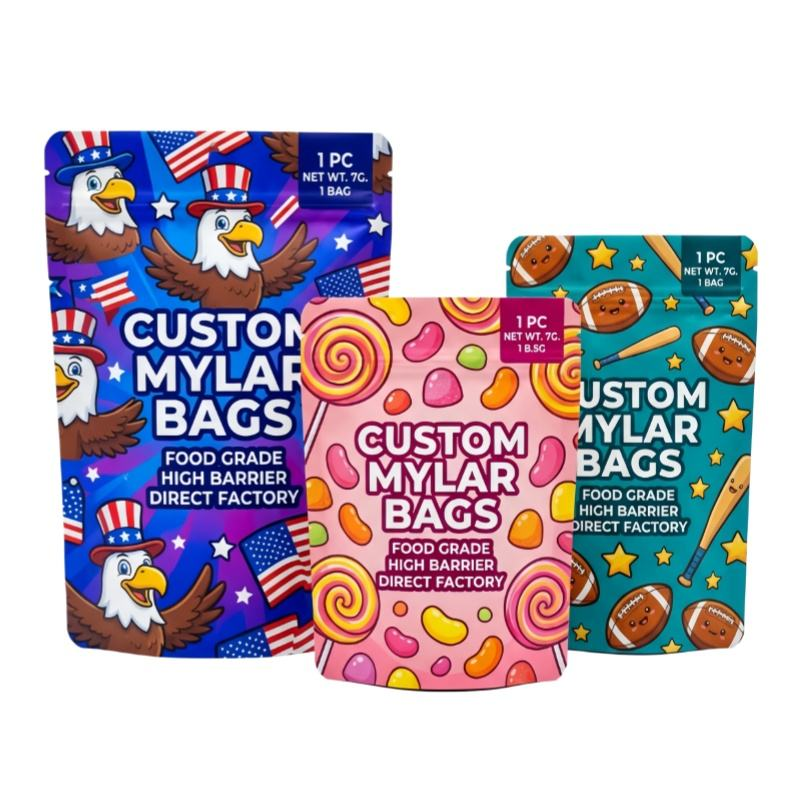
Product Specifications
| Product type | 3.5g cannabis mylar bags |
|---|---|
| Reference fill weight | Approximately 3.5 g; actual usable volume depends on flower density, trim, and headspace |
| Material description | Food-grade product positioning; the complete film and laminate structure should be confirmed for the intended contents and market |
| Finish | Matte appearance |
| Style | Cali-style cannabis bag; exact pouch geometry and seal layout require confirmation |
| Odor function | Smell-proof positioning; practical aroma containment depends on the selected structure and properly sealed package |
| Printing | Custom printing and artwork options should be confirmed with the supplier |
| Commercial use | Wholesale, private-label, OEM, ODM, and multi-SKU cannabis packaging programs |
Fit the Bag to Flower Density and Headspace
A stated 3.5 g fill weight does not establish one universal bag size. Cannabis flower varies significantly in density, moisture condition, nug size, and degree of grinding. A dense flower may occupy less volume than a light, airy cultivar at the same weight. Ask for the bag’s internal dimensions, usable fill area, seal width, and recommended fill range rather than selecting a pouch from weight alone.
Headspace affects both presentation and handling. Excessive empty space can allow flower to move during transit and may make the package look underfilled. Too little space can compress larger buds, interfere with the zipper or heat seal, and make automated or manual filling less consistent. For a serious RFQ, provide a representative sample or the actual product dimensions, including typical nug size. A filling trial can help confirm whether the chosen 3.5g food-grade matte mylar bags hold the flower without excessive compression.
Material, Aroma, and Barrier Questions
The matte surface describes appearance, not the complete barrier construction. A bag may use a flexible film or multilayer laminate, but the exact layers, thickness, sealant, and barrier properties must be confirmed for the final specification. These factors influence stiffness, puncture resistance, light protection, oxygen transmission, moisture transmission, and heat-seal behavior.
For cannabis flower, aroma containment depends on the complete package system. A suitable laminate and correctly formed seal can help contain aroma, while a poorly adjusted seal, contaminated seal area, or damaged film can reduce performance. Treat “smell-proof” as a product-positioning term until the supplier provides structure details and any relevant test information. If terpene retention, moisture control, or extended storage is important, request the applicable barrier data and define the storage conditions before approval.
The trade-off is practical: a heavier or more complex barrier structure may improve protection against light, oxygen, moisture, and aroma transfer, but it can change stiffness, folding behavior, seal settings, print compatibility, and cost. A matte appearance alone does not prove a high-barrier structure. Confirm whether the visual finish is integrated into the film or applied as a coating, and whether the selected material supports the required sealing process.
Closure and Filling Configuration
The input identifies the product as Cali Mylar Bags but does not establish whether the final format is flat, stand-up, gusseted, zipper-equipped, or heat-sealed only. Confirm the pouch geometry, bottom construction, opening position, and seal layout. A gusset can help a pouch stand and may provide additional filling tolerance, while a flat format can use less material and present differently during packing and display.
Also distinguish an ordinary resealable zipper from a tested child-resistant closure. A standard zipper may support repeated opening and closing, but it should not be described as child-resistant without appropriate testing and documentation for the destination market. A heat seal can add tamper evidence and aroma containment when properly formed, but it normally requires opening with a tear feature or cutting tool. Confirm whether the bag includes a tear notch, whether the zipper is above the seal, and how the package will be filled and closed.
Matte Cali Presentation and Custom Printing
The matte finish gives these smell-resistant Cali cannabis bags a subdued surface that can support premium strain, cultivar, or brand artwork. Before approving files, request the dieline or printable-area diagram. The usable artwork area depends on the bag’s seal zones, zipper position, gussets, tear notch, and any required warning or regulatory panel. Do not place essential text across a fold, seal, or opening path.
For custom printed 3.5g weed pouches, confirm the printing process, color references, proofing method, minimum text size, registration tolerance, and whether the finish changes color perception. Metallic, transparent, or special-effect elements should be treated as specification questions rather than assumed capabilities. If several strains share one format, define the fixed brand elements and variable SKU elements separately. This helps reduce artwork errors across a multi-SKU order and makes version control easier for private-label and OEM buyers.
Market and Documentation Review
Food-grade wording should be matched to the intended contents and destination-market requirements. Ask the supplier what food-contact or material documentation is available for the exact laminate and ink system, but do not assume that a product description alone proves certification or regulatory approval. Cannabis packaging may also require specific warning text, opacity, tamper evidence, child-resistance, labeling space, or restrictions on imagery. Those requirements vary by jurisdiction and product category.
Before artwork release, have the importing brand, compliance team, or local adviser confirm the applicable rules for cannabis flower packaging. This is especially important when the same Cali-style bag will be used across multiple states, provinces, or countries. Keep the approved specification tied to the destination market, contents, closure, and final artwork rather than relying on a generic bag description.
Multi-SKU and Wholesale Purchasing Checklist
These private label marijuana packaging bags can be evaluated as one SKU or as part of a broader strain and cultivar range. For consistent purchasing, compare the same dimensions, material structure, finish, closure, seal geometry, and print coverage across every version. Confirm how color variation will be controlled between print runs and whether each artwork version uses the same dieline.
- Contents and actual flower fill weight
- Representative product dimensions, density, and typical nug size
- Desired external and internal bag dimensions with acceptable headspace
- Flat, stand-up, gusseted, zipper, or heat-seal format
- Required laminate, barrier priorities, opacity, and food-contact documentation
- Matte finish, artwork versions, print colors, and warning-panel space
- Filling method, sealing equipment, tear feature, and closure requirements
- Quantity by SKU, destination market, and applicable compliance needs
FAQ for B2B Buyers
Are these bags sized for exactly 3.5 g of every cannabis flower?
No. The 3.5 g reference does not determine one universal pouch size because flower density, nug size, and headspace vary. Confirm the desired dimensions using a representative product sample or actual product measurements.
Does the matte finish prove that the bag has a high-barrier laminate?
No. Matte is an appearance attribute, not proof of a specific laminate or barrier level. Request the complete structure and relevant barrier information for the final bag specification.
Are the Cali Mylar Bags automatically child-resistant?
No. A Cali-style bag or ordinary zipper should not be treated as child-resistant without applicable testing and documentation. Confirm the closure type and destination-market requirements separately.
Can these bags be custom printed for several cannabis strains?
Custom printing may be configurable, but the printable area, process, finish compatibility, dieline, and artwork limits should be confirmed. Multi-SKU buyers should approve each strain version against the same specification.
What should a buyer provide for a quotation?
Provide the contents, fill weight, product dimensions, desired pouch dimensions, quantity by artwork version, material or barrier preference, closure, finish, filling method, destination market, and compliance needs.
Request a Product-Specific RFQ
For a useful quotation on these cannabis mylar bag manufacturer wholesale requirements, send the intended flower, actual 3.5 g fill sample or dimensions, target bag size, quantity by SKU, artwork count, matte and material preferences, closure and sealing method, destination market, and compliance documentation needed. The supplier can then confirm the laminate, usable volume, headspace, printing area, closure configuration, sampling requirements, and final production specification without treating the nominal fill weight as a universal size guarantee.
Reviews
There are no reviews yet.