
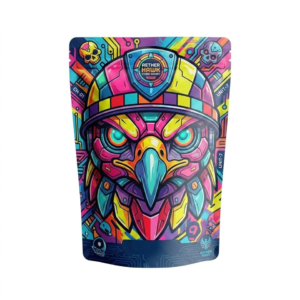
Printed Glossy Ziplock Mylar Stand-Up Pouches for Cannabis Packaging
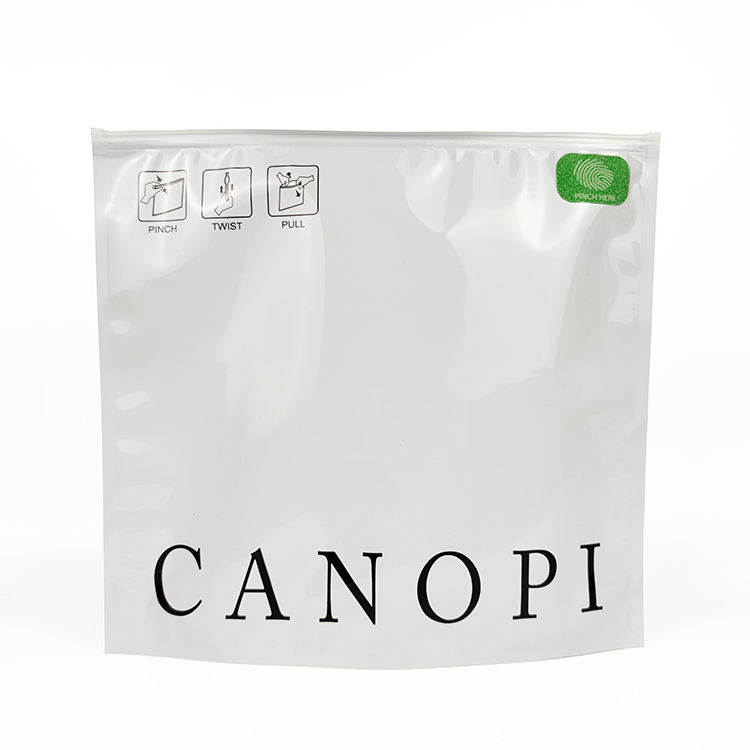
Printed glossy ziplock Mylar stand-up pouches are resealable flexible bags with a glossy printed appearance, a stand-up pouch format, and a ziplock closure. They can be evaluated by cannabis brands, distributors, wholesalers, private-label buyers, and multi-SKU packaging teams for products such as flower, pre-roll accessories, or selected edible formats, subject to the final pouch structure, dimensions, closure specification, and destination-market requirements.
Product Specifications
| Product type | Printed glossy ziplock Mylar stand-up pouch |
|---|---|
| Pouch format | Stand-up flexible pouch with a bottom gusset, subject to the final construction |
| Closure | Ziplock resealable closure; child-resistant performance is not established by the product name and must be confirmed separately |
| Appearance | Glossy exterior with printed artwork |
| Material | Mylar-based packaging description; the complete laminate and barrier layers require confirmation |
| Dimensions and capacity | To be selected according to the product, fill weight, density, usable volume, and headspace |
| Printing | Custom printed artwork can be discussed; print method, colors, coverage, and artwork limits require specification |
| Commercial use | For B2B cannabis packaging evaluation, private-label programs, wholesale sourcing, and multi-SKU projects |
How the Stand-Up Format Affects Filling
The bottom gusset allows the pouch to stand after filling, which can support carton packing, shelf presentation, and organized case handling. The usable volume is not determined by the nominal pouch dimensions alone. Flower density, product shape, fill weight, internal movement, and required headspace all affect the working size. A pouch selected for dense flower may not provide the same fit for a lighter, bulkier product at the same stated weight.
Before requesting a quotation, buyers should provide the actual product dimensions or fill weight, the approximate bulk density where relevant, and the desired headspace. Pre-roll-related contents need particular attention to length, diameter, movement, and crush risk. Edible products may require a different internal volume and sealing approach depending on moisture, grease, serving format, and food-contact requirements.
Material, Barrier, and Sealing Decisions
“Mylar” identifies the product language used for this pouch, but the appearance alone does not establish the complete barrier structure. The laminate selected for production influences resistance to moisture, oxygen, light, puncture, and aroma migration. A suitable structure may help contain aroma and protect contents when the pouch is properly sealed, but actual performance depends on the complete film combination, seal design, filling conditions, and storage environment.
Buyers should confirm the film layers, thickness, barrier targets, heat-seal compatibility, and intended contents before approving production. A glossy finish can support strong color contrast and a reflective branded appearance, while it does not by itself prove a particular oxygen or moisture barrier. If a clear window, metallic layer, or special visual effect is requested, ask how that feature changes printable area, light protection, and the available laminate structure.
Ziplock Closure Versus Child-Resistant Requirements
The ziplock gives the pouch a resealable opening for repeated access. It should not automatically be described as a child-resistant closure. Cannabis brands selling into regulated markets must determine whether the destination market requires child-resistant packaging, specific warning placement, tamper evidence, labeling, or other packaging controls. Any child-resistant claim should be supported by the appropriate selected closure and relevant testing or documentation, not inferred from the presence of a standard zipper.
For products that need additional tamper indication, buyers can ask whether a heat seal above the zipper, tear notch, or another opening feature can be incorporated. A heat seal can improve evidence of initial opening, but it changes the consumer opening sequence and should be checked against filling-line and usability requirements.
Custom Printing and Multi-SKU Consistency
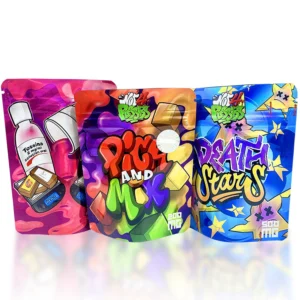
Custom printed cannabis pouch packaging allows a brand to coordinate strain names, product variants, regulatory panels, batch fields, and visual identifiers across a product family. Artwork should be reviewed against the pouch die line, zipper position, gusset folds, seal zones, tear-notch location, and any required blank area. The printable face is not necessarily identical to the total front-panel area because edges and seals may be unavailable for critical text.
For private-label or multi-SKU programs, establish a master layout before releasing individual artwork versions. Confirm color references, version control, variable information, barcode placement if applicable, and whether every SKU will use the same dimensions and material structure. Consistency is valuable, but different contents may still require different pouch sizes, headspace, or barrier specifications. Do not force one format across flower, pre-roll-related products, and edibles without reviewing the physical and regulatory differences.
Procurement Trade-Off: Glossy Presentation and Functional Specification
The glossy appearance can create a high-contrast, retail-facing presentation that supports detailed printed branding. However, a visual finish should be treated separately from functional protection. Selecting a finish for appearance without confirming the underlying laminate, heat-seal behavior, and closure compatibility can create specification gaps. Conversely, prioritizing a higher barrier or thicker structure may affect stiffness, fold behavior, cost, and available print treatment. The correct balance depends on the contents, destination market, filling equipment, storage conditions, and the brand’s artwork priorities.
Buyer Questions Before an RFQ
Can these pouches be used for cannabis flower?
They can be evaluated for cannabis flower packaging, but the correct size depends on flower density, fill weight, product volume, desired headspace, barrier requirements, and destination-market rules. Confirm the complete laminate and closure specification before approval.
Does the ziplock make the pouch child-resistant?
No. A standard ziplock provides resealable access, but child-resistant performance must be confirmed through a separately specified closure and the documentation or testing required for the applicable market.
Are the pouches smell proof?
Do not treat “smell proof” as an absolute claim. The selected laminate, zipper, heat seals, and filling quality may help contain aroma when properly specified and sealed, but performance depends on the complete packaging system.
Can each strain or product variant have different artwork?
Yes, custom printed artwork can be planned for multiple SKUs, subject to the selected print process, artwork coverage, die line, minimum production requirements, and version-control process. Confirm these details before releasing files.
What information is needed for a quotation?
Provide the contents, fill weight or actual product dimensions, desired pouch dimensions, estimated quantity, artwork version count, material or barrier preference, closure requirements, finish, filling method, destination market, and applicable compliance needs.
Request a B2B Pouch Specification Review
For an accurate RFQ, send the intended contents, fill weight or physical dimensions, desired pouch size, estimated quantity, number of artwork versions, preferred material or barrier structure, ziplock and heat-seal requirements, glossy finish expectations, filling method, destination market, and compliance needs. These details allow the pouch format, headspace, sealing system, and multi-SKU artwork plan to be reviewed before a commercial specification is finalized.
Reviews
There are no reviews yet.