
Food-Grade Matte Mylar Bags with Strong Resealable Zipper
Food-grade matte Mylar bags are flexible pouches with a low-gloss matte appearance and a strong resealable zipper for brands evaluating packaging for cannabis flower, edibles, or other dry products. They are relevant to cannabis brands, distributors, wholesalers, private-label and OEM buyers, and purchasing teams managing multiple SKUs. The stated food-grade construction and resealable format provide a useful starting point, but the final bag must be specified around the contents, dimensions, barrier structure, closure requirements, artwork, quantity, and destination market.
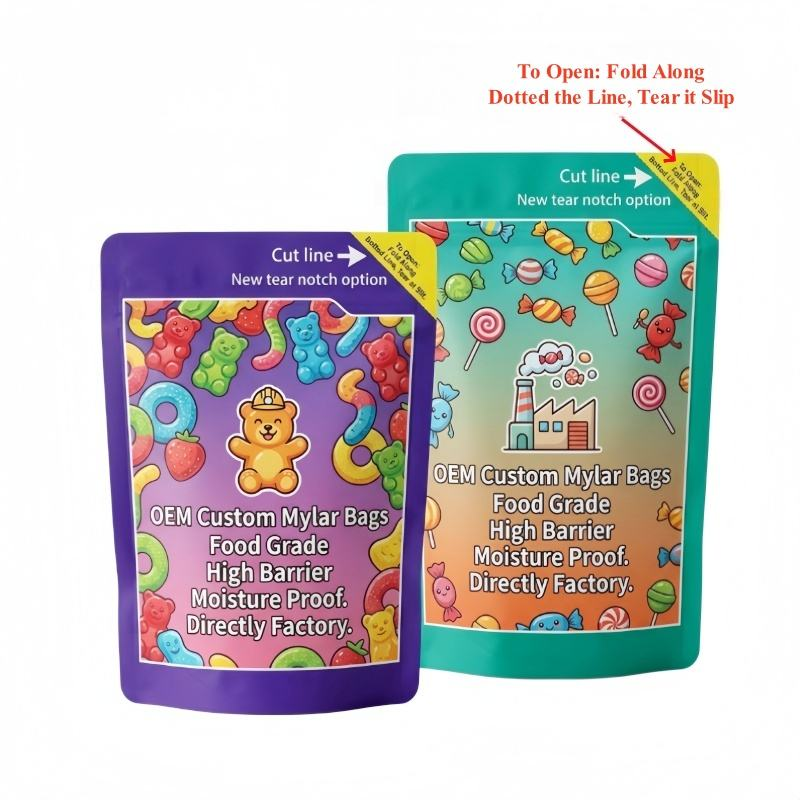
Product Specifications
| Product type | Flexible Mylar bag with a resealable zipper |
|---|---|
| Stated material description | Mylar; confirm the complete laminate or film structure before ordering |
| Food-contact positioning | Food-grade product description; confirm documentation and destination-market requirements for the selected structure |
| Surface | Matte finish |
| Closure | Strong resealable zipper; confirm whether a separate heat seal or tear feature is required |
| Typical evaluation uses | Cannabis flower, dry edibles, and other suitable products, subject to product and compliance review |
| Dimensions and capacity | Not specified; confirm desired bag size, usable volume, fill weight, and product density |
| Printing | Confirm available custom printing, artwork area, colors, and substrate limitations |
How the Bag Structure Affects Product Protection
The matte appearance identifies the outside finish, not the full barrier construction. A Mylar bag may be configured with different film or laminate layers, and those layers influence resistance to moisture, oxygen, light, puncture, and aroma transfer. For cannabis flower, a suitable structure can help contain aroma and protect the pack from routine handling when the bag is properly sealed. It does not establish a permanent or absolute smell-proof claim without structure-specific testing.
Ask for the proposed laminate, thickness, sealing layer, and any available technical data when the product is sensitive to moisture or oxygen. Flower buyers should also consider terpene and aroma retention, while edible buyers may need to review moisture migration, grease contact, and food-contact documentation. Matte film can support a subdued, premium visual presentation, but it does not by itself prove a specific oxygen transmission rate, moisture vapor transmission rate, or light barrier.
Choosing Size, Fill Weight, and Headspace
Bag size should follow the actual product rather than a nominal fill-weight label. Cannabis flower density varies by strain, grind, moisture condition, and handling, so the same stated weight may require different internal volume. A buyer should provide the target fill weight, product dimensions, density information if available, and the amount of headspace needed for filling and closing.
Too little headspace can interfere with zipper engagement, heat sealing, and clean presentation. Excessive headspace can increase movement, reduce shelf efficiency, and make the package look underfilled. For edibles, specify the item dimensions, count, wrapper or tray format, grease exposure, and whether the product must remain separated inside the pouch. Sampling with the real product is the safest way to confirm usable volume and closure performance.
Zipper, Heat Seal, and Child-Resistance Considerations
The strong resealable zipper supports repeated opening and closing for the consumer or end user. It should not automatically be treated as a child-resistant closure. If the destination market or product category requires child-resistant packaging, request a separately specified and tested closure system rather than assuming that an ordinary zipper meets that requirement.
A heat seal above the zipper can provide tamper evidence or an additional closure step if it is included in the final design. A tear notch may improve opening convenience, but its position must not compromise the seal area or zipper function. Confirm zipper profile, opening direction, seal width, tear-notch location, and filling equipment compatibility before production. The correct choices depend on the intended use and applicable market rules.
Custom Printing and Multi-SKU Programs
For custom printed Mylar bags, confirm whether the selected structure supports the required printing process, ink coverage, color targets, and matte appearance. Request the dieline before preparing final artwork. The available print area may be reduced by the zipper, top seal, side seals, bottom seal, gusset if present, and required warning or regulatory space. A matte surface can change perceived color and contrast compared with a glossy proof, so physical samples may be useful for approval.
Private-label cannabis bags are often ordered across several strains, flavors, strengths, or product variants. A multi-SKU plan should define the common bag specification and the variable artwork elements separately. Confirm barcode placement, lot or batch coding space, net contents, ingredient or warning panels where applicable, and version-control procedures. Consistent dimensions and closure placement can simplify filling and secondary packing, but different product densities may still require separate size validation.
Trade-Off: Matte Presentation Versus Product Visibility
The matte finish reduces reflectivity and can make printed graphics easier to view under strong retail or warehouse lighting. The trade-off is that the product is less visible than it would be through a clear window. A window can help identify flower or edible contents, but it may reduce the available printed area and alter light exposure depending on its design and the rest of the laminate. If light-sensitive contents are involved, ask how any window or transparent section affects the intended protection.
What to Confirm Before a Wholesale RFQ
A Mylar bag manufacturer wholesale quotation should be based on a complete specification rather than only a product name. Send the intended contents, fill weight, actual product dimensions, desired pouch dimensions, target quantity, number of artwork versions, material or barrier preference, closure requirements, finish, filling method, and destination market. Also identify whether the package needs a heat seal, tear notch, child-resistant solution, coding area, or special food-contact documentation.
Request a physical sample or structure confirmation before approving a large multi-SKU program. Review zipper engagement, seal geometry, fill fit, headspace, artwork registration, matte appearance, and handling durability using the intended product. Any performance or compliance documents should correspond to the exact final laminate, closure, printing system, and manufacturing specification.
Frequently Asked Questions
Are these bags suitable for cannabis flower?
They can be evaluated for cannabis flower packaging because the resealable format supports repeated access and the selected structure may help contain aroma when properly sealed. Confirm size, headspace, barrier construction, and destination-market requirements with a sample filled using the actual flower.
Does the matte finish make the bag smell proof?
No. Matte appearance describes the surface finish and does not prove odor performance. Aroma containment depends on the complete laminate, seal quality, zipper engagement, and handling conditions. Use qualified performance language unless structure-specific testing supports a stronger statement.
Is the zipper child resistant?
The product is described as having a strong resealable zipper, but an ordinary resealable zipper should not be assumed to be child resistant. If child-resistant packaging is required, specify a suitable closure and confirm the applicable testing or documentation for the destination market.
Can these bags be custom printed for several SKUs?
Custom printing may be configurable, subject to the selected substrate, printing method, artwork area, and production specification. For several SKUs, provide the common bag dimensions and separate artwork files while confirming print limits, coding space, and version control.
What information is needed for a quotation?
Provide the contents, fill weight or actual product dimensions, desired bag dimensions, quantity, artwork versions, material or barrier preference, closure and finish, filling method, destination market, and any food-contact, warning, tamper-evidence, or child-resistant requirements.
Request a B2B Specification Review
For an accurate RFQ, send your contents, fill weight or product dimensions, desired pouch dimensions, quantity, artwork versions, preferred material or barrier, zipper and heat-seal requirements, matte finish expectations, filling method, destination market, and compliance needs. The final specification can then be reviewed for fit, headspace, closure function, print area, and the performance information that must be confirmed before production.
Reviews
There are no reviews yet.